What to Expect Emotionally When Using Donor Eggs to Get Pregnant

Most people research the medical side of donor egg IVF before they research the emotional side. That’s understandable. But for many intended parents, the harder question isn’t whether it will work — it’s whether they’ll feel okay about how it worked.
If you’ve just been told donor eggs are your best path to pregnancy, you’re probably carrying a complicated mix of feelings right now: relief that there’s still a path, grief about what that path means, fear that it won’t work again, and uncertainty about whether you’ll bond with a child who isn’t genetically yours. All of that is normal — and expected.
At Lucina Egg Bank, we work with intended parents at exactly this stage of the decision. This guide covers what the emotional experience of a donor egg pregnancy actually looks like, what catches people off guard, and what helps.

What the Emotional Experience of Donor Egg Pregnancy Actually Looks Like

The emotional experience of using donor eggs doesn’t follow a single arc. It isn’t grief that resolves into acceptance, or fear that resolves into confidence. Most intended parents describe something messier: two or three feelings coexisting at the same time, sometimes reversing order.
For many, the decision to use donor eggs comes after a long battle with infertility — miscarriages, failed IUI cycles, multiple rounds of IVF that didn’t work. By the time donor eggs enter the conversation, emotional reserves are already depleted. That context matters, because the feelings that come up during donor egg IVF aren’t only about the eggs. They’re also about everything that came before.
Understanding what’s coming emotionally — before you’re in the middle of it — is one of the most useful things you can do at this stage. It doesn’t make the feelings smaller, but it does make them less disorienting when they arrive.
Common Emotions Intended Parents Experience
Every person’s experience is different, but these are the feelings that come up most often — including the ones that don’t get talked about much.
Grief. You may grieve that your child won’t carry your genetic material, share your features, or inherit your family’s traits. This is real loss. It doesn’t mean you shouldn’t proceed — but it’s worth giving it space rather than trying to skip past it.
Fear. After previous failed cycles, it makes sense to be afraid this won’t work either. That fear doesn’t go away just because the odds improve with donor eggs. In 2022, Lucina’s clinical pregnancy rate was 61.5%, compared to a 47.6% industry average — but statistics don’t fully quiet that kind of fear.
Guilt. Some intended parents feel guilty — about the financial and emotional strain on their partner, about needing a donor at all, or about choosing to continue when others would stop. That guilt is common and doesn’t reflect anything wrong with your decision.
Jealousy. Jealousy can show up in unexpected places. Toward the donor, whose body could do what yours couldn’t. Toward a partner who shares a genetic connection with the baby when you don’t. Toward people who conceived without any of this. None of these feelings are shameful — they’re honest.
Relief. Many people feel genuine relief when they finally have a clear path forward. After years of uncertainty, donor egg IVF can feel like solid ground. That relief is also real and worth acknowledging.
Gratitude. Most intended parents feel deep gratitude toward their donor. That feeling often grows stronger as the pregnancy progresses and becomes most vivid when they hold their baby for the first time.
Will I Bond with a Baby Born from a Donor Egg?
This is the question most intended parents are actually asking when they research the emotional side of donor egg pregnancy. The fear isn’t just about pregnancy — it’s about what comes after.
Research on donor-conceived families consistently finds that intended parents bond just as strongly with donor-conceived children as with genetically related ones. The ASRM’s guidance on gamete donation acknowledges this, and the clinical experience of families who’ve been through it confirms it. Carrying a pregnancy — feeling movement, hearing a heartbeat, delivering — builds biological and psychological attachment that has nothing to do with whose genetics started the process.
That said, the anxiety about bonding is real before you’re pregnant. Most people find that it lessens substantially once the pregnancy is established and the physical experience of carrying the baby takes over. The worry tends to be loudest in the gap between the decision and the positive test.
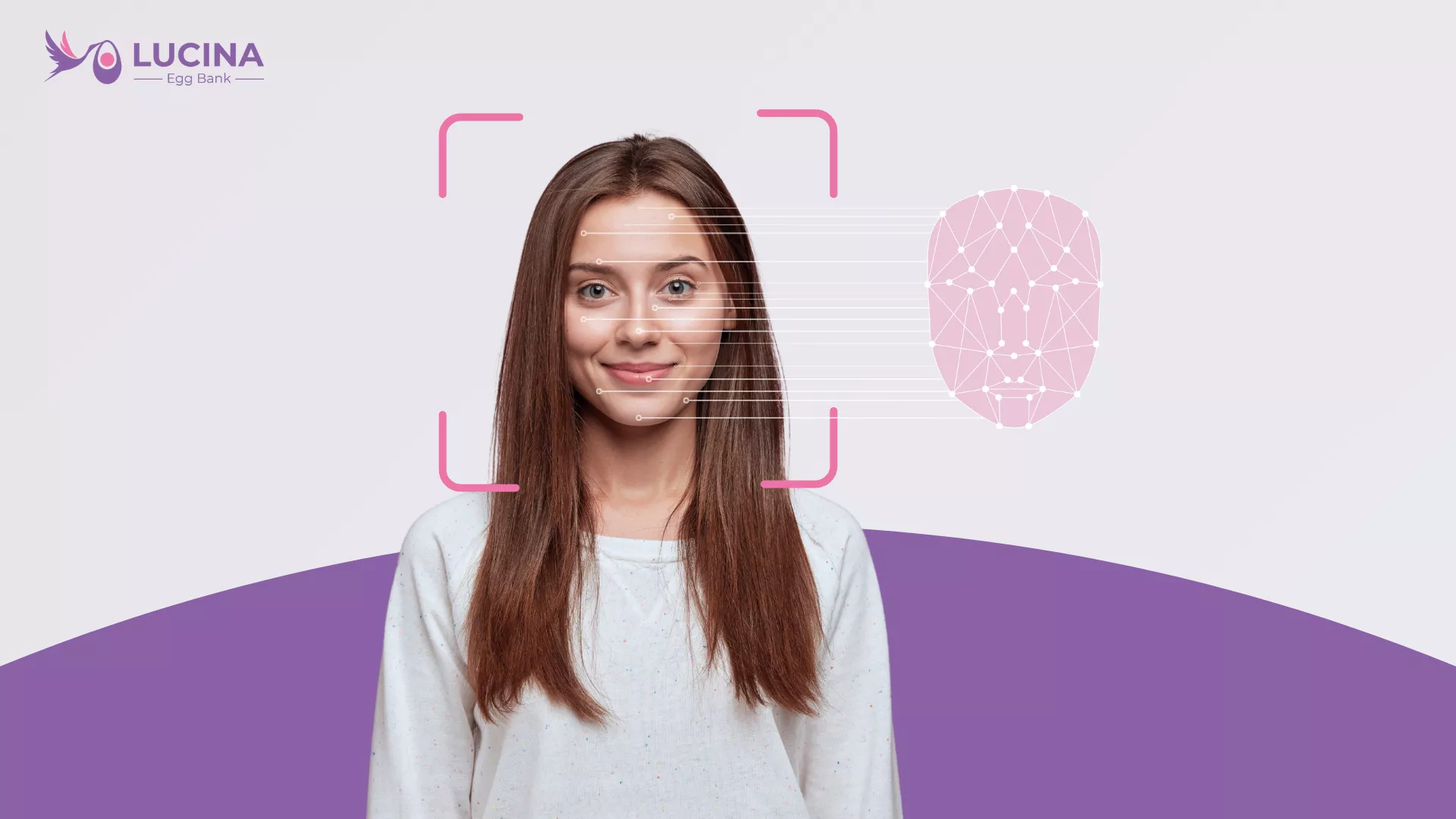
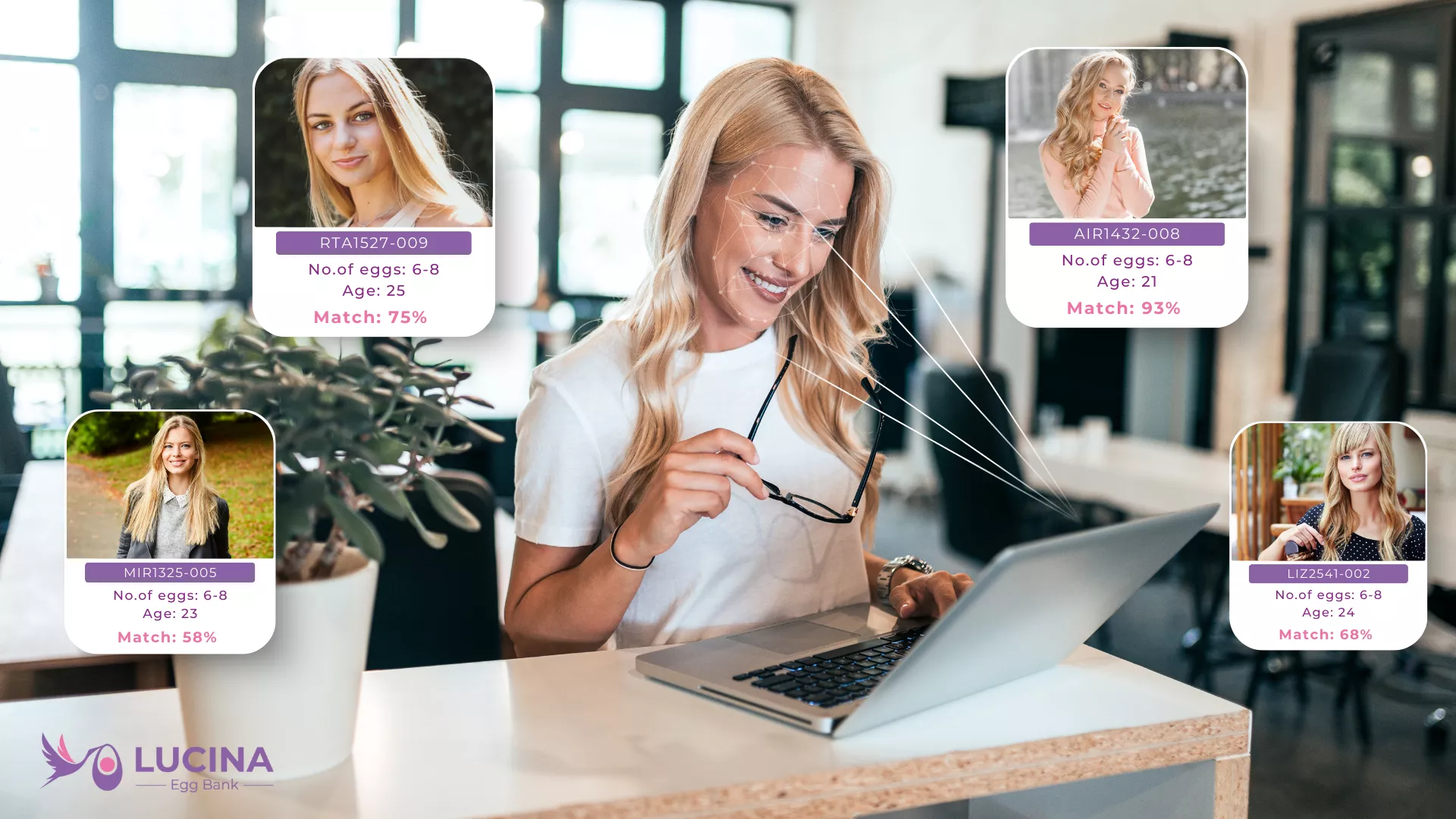
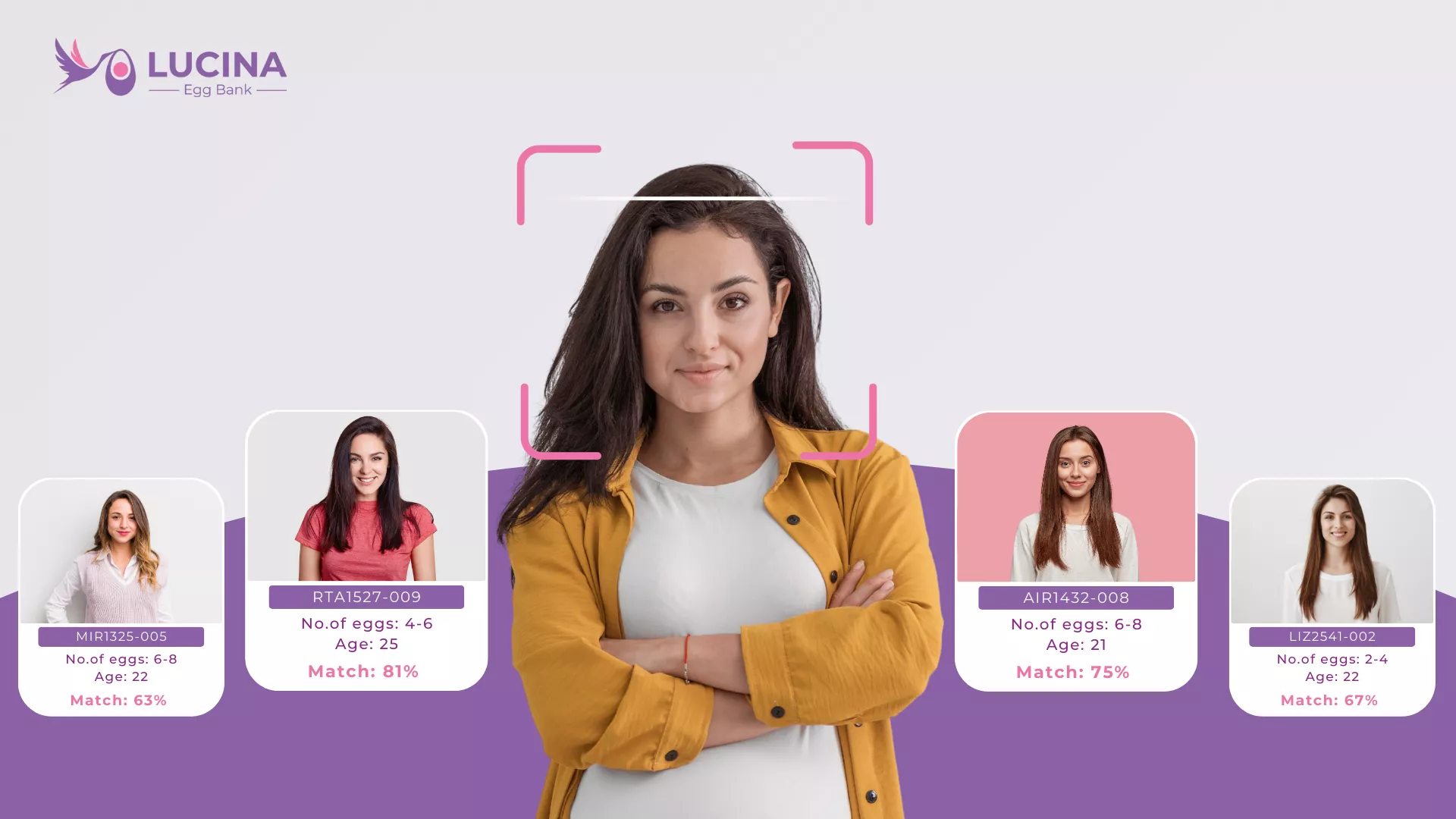
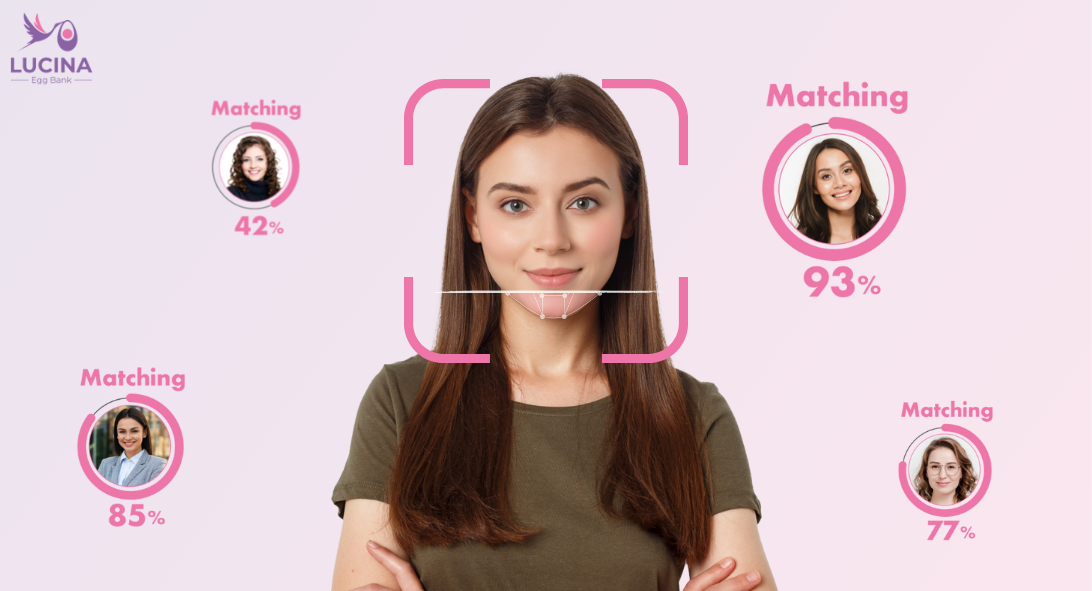
If you’re concerned about resemblance specifically — whether your child will look like you — that’s a separate, solvable part of the equation. Lucina’s ReflEggction® AI matches donors to your facial features using facial recognition technology, which many intended parents find meaningfully reduces that particular anxiety. You can read more about whether a donor egg baby will look like you before making any decisions.
How to Manage Your Emotions Before and During the Process
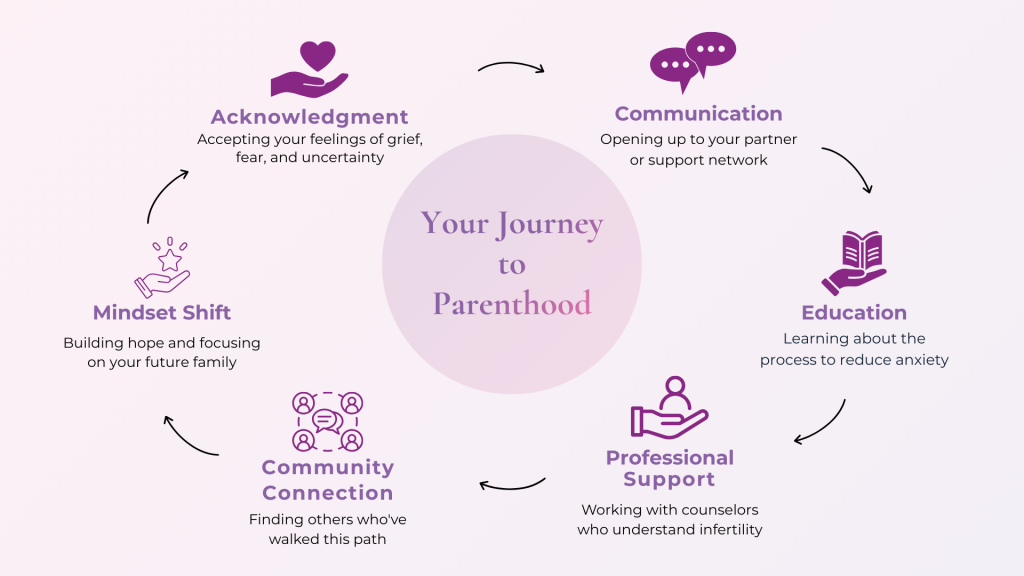
Managing the emotional experience of donor egg pregnancy isn’t about staying positive. It’s about not being blindsided. These are the things that actually help.
Accept What You’re Feeling Instead of Managing It Away
The instinct is to push difficult feelings aside — to decide you’ve grieved enough and move on. That tends to backfire. Feelings that get suppressed during the pre-conception period often resurface during pregnancy or after the birth, when they’re harder to process.
Accepting a feeling doesn’t mean agreeing with it or letting it make decisions. It means acknowledging it’s there and giving it some space. Most people find that acknowledged feelings move through faster than suppressed ones.
Have the Hard Conversation with Your Partner First
Before starting the process, have a direct conversation with your partner about the things neither of you has said out loud yet. Will they feel differently about a child they’re not genetically related to? Are they afraid it won’t work? Do they have doubts about disclosure — whether to tell the child, and when?
These conversations are uncomfortable. They’re also much better to have before the cycle than during it, when the emotional stakes are higher and there’s less capacity to process.
If you’re pursuing this as a single parent, identify one person in your support network you can be honest with — not just update, but actually be honest with about what you’re going through.
See a Counselor Who Specializes in Third-Party Reproduction
A general therapist can help with stress and anxiety, but a counselor who specializes in infertility or third-party reproduction understands the specific territory. They’ve heard the jealousy toward a donor, the grief about genetics, the fear of not bonding — and they know how to work with it.
Going before you start the process is more useful than going when you’re already in crisis. It gives you frameworks and language for what you’re about to experience, rather than catching up while you’re experiencing it.
Connect with People Who’ve Done It
Online communities for egg donation have changed what this experience looks like for most intended parents. Ten years ago, most people navigated this in isolation. Now there are forums, Facebook groups, and RESOLVE chapters full of people who are either in the process or have come out the other side.
The value isn’t just emotional support — it’s practical reality-checking. People in those communities tell you what the waiting actually felt like, what surprised them, and what they wish they’d known. That kind of specific, firsthand information is difficult to get anywhere else. You can also read about what successful donor egg cycles look like to get a clearer picture of what’s possible.
Learn the Process So Uncertainty Isn’t the Enemy
A significant portion of pre-cycle anxiety is about the unknown — what happens when, what each step involves, how long things take. Learning the egg donation process in enough detail to know what to expect removes a layer of stress that has nothing to do with the emotional substance of the decision.
Ask your clinic questions. Read about what the transfer process involves. Understanding the mechanics doesn’t resolve the emotional complexity, but it does separate it from the logistical anxiety — which is easier to address.
Building a Positive Mindset Without Toxic Positivity
There’s a difference between building a constructive mindset and performing optimism you don’t feel. The latter tends to make things worse. These approaches actually work.
Anchor to Your Reason
When the process feels overwhelming, come back to the specific reason you’re doing it. Not “I want to be a parent” in the abstract — but the actual, specific thing. What does that look like? Who are you picturing? What does the day-to-day of that life feel like? Specificity grounds this better than general hope does.
Stop Comparing Your Path
Comparing your path to someone else’s conception story is a reliable way to feel worse. Your child’s story is different — it isn’t lesser. The families who’ve been through this process are often the ones who feel most clearly how much they wanted their child, because the wanting was so visible and so sustained.
Shift Focus from What’s Lost to What’s Possible
One of you won’t have a genetic connection to this child. That’s a real loss and it’s worth grieving properly. But at some point, the question shifts from “what am I giving up?” to “what am I building?” The families who navigate this best tend to be the ones who can hold both truths: the loss was real, and what came after was worth it.
Be Deliberate About Your Inputs
The people around you and the content you consume shape your emotional state more than you’d expect during this period. Limit time with people who are dismissive of what you’re going through or who make you feel worse about the choice you’re making. Seek out accounts from people who’ve been through donor egg IVF — not the curated highlight reel, but the honest ones.
Talking About Egg Donation with Family and Your Future Child
Deciding whether — and when — to tell people you used a donor egg is one of the most personal parts of this process. There’s no universally right answer, but there are some patterns that tend to work better than others.
Choosing When to Tell Family
Some people share early to have emotional support through the process. Others wait until they’re pregnant, or until after the birth. Both are legitimate. What tends to work less well is telling people who will make you feel you owe them updates at every stage — or telling people who will be openly ambivalent about the choice you’ve made.
Be honest with yourself about which people in your life will be supportive and which will add to the weight you’re already carrying. You don’t owe anyone this information on their timeline.
Telling Your Child
Child development experts and reproductive psychologists generally recommend early, age-appropriate disclosure rather than waiting until a child is older. The reason is practical: children told from a young age integrate the information as part of their story. Children told later — especially during adolescence — sometimes experience it as a secret that was kept.
You don’t need a prepared speech. Simple language, introduced early and revisited as the child grows, is more effective than a single “big conversation” that treats it as a revelation rather than a fact of their origin.
Handling Difficult Reactions
Some family members react poorly — with discomfort, judgment, or questions that feel intrusive. Give them time to process. Most people who are initially uncomfortable come around once they’ve had a chance to think and learn more about how egg donation actually works. What’s perceived as hostility is often just unfamiliarity.
Set clear limits on what you’re willing to discuss. You don’t owe anyone details about your health history, the donor’s identity, or the specifics of your fertility situation. Being firm about that doesn’t require being rude.
What to Consider Before You Choose a Donor
The emotional experience of donor egg pregnancy starts with the donor selection itself. For many intended parents, choosing a donor is the first moment the process becomes real — and it brings up its own set of feelings.
Some people find the selection process empowering. Others find it uncomfortable — the act of choosing a genetic contributor for their child feels strange or clinical. Both reactions are common. What helps is having a clear sense, before you start browsing, of what actually matters to you and what doesn’t.
Genetics matter, but they’re one input. Personality, health history, education, and values are also things intended parents weigh. And for many, physical resemblance to themselves or their partner is high on the list — which is where tools like ReflEggction AI, which matches donors by facial features, make the process feel more personal and less like a database query. You can learn more about how to prioritize genetics, looks, and health in donor selection.
Lucina’s donor pool includes 3,500+ screened profiles, and the gallery is free to browse before you commit to anything. There’s no pressure to decide before you’re ready — which matters a lot when the emotional stakes are this high.
Browse 3,500+ Donor Profiles at Lucina
See real donor profiles, photos, and backgrounds before you commit to anything. $0 to browse — and ReflEggction AI can match donors to your facial features to help with the hardest part of the decision.
3,500+ screened donor profiles · 92.2% frozen egg survival rate (2022) · 61.5% clinical pregnancy rate (2022)
$0 to browse the gallery. Triple Guarantee programs available. ReflEggction AI matches donors by facial recognition.
FAQs
Julianna Nikolic
Chief Strategy Officer Julianna Nikolic leads strategic initiatives, focusing on growth, innovation, and patient-centered solutions in the reproductive sciences sector. With 26+ years of management experience and a strong entrepreneurial background, she brings deep expertise to advancing reproductive healthcare.

Table of Contents
- What the Emotional Experience of Donor Egg Pregnancy Actually Looks Like
- Common Emotions Intended Parents Experience
- Will I Bond with a Baby Born from a Donor Egg?
- How to Manage Your Emotions Before and During the Process
- Building a Positive Mindset Without Toxic Positivity
- Talking About Egg Donation with Family and Your Future Child
- What to Consider Before You Choose a Donor
- FAQs