PGT-A With Donor Eggs: What the Research Shows and Who It’s Right For

If you’re planning a donor egg IVF cycle, there’s a good chance Preimplantation Genetic Testing for Aneuploidy (PGT-A) has come up. It screens embryos for chromosomal abnormalities before transfer, with the goal of improving implantation rates and reducing miscarriage risk.
Here’s what most intended parents don’t know going in: PGT-A with donor eggs operates differently than PGT-A with your own eggs. The research is more layered, the benefits depend heavily on your specific situation, and the decision deserves a real conversation with your care team — not a default yes or no.
At Lucina Egg Bank, we offer a PGT-A Guarantee program because we’ve seen it genuinely change outcomes for the right intended parents. We also won’t recommend it if it isn’t the right fit for your situation — the goal here is to help you make an informed decision, not to upsell a service that may not move the needle for you.

What PGT-A Is and How It Works
PGT-A screens embryos for aneuploidies — chromosomal abnormalities where an embryo has too many or too few chromosomes. A normal human embryo has 46 chromosomes arranged in 23 pairs. Most aneuploid embryos fail to implant, miscarry early, or result in conditions such as Down syndrome.
The test works by biopsying a few cells from a day-5 embryo (a blastocyst) before transfer. Those cells are analyzed for chromosomal count. Embryos flagged as euploid, meaning chromosomally normal, move forward. Aneuploid embryos are set aside or discarded.
For patients using their own eggs, particularly women in their late 30s and 40s, the data generally supports the logic. Aneuploidy rates can exceed 70% for a 40-year-old using her own eggs. Screening meaningfully changes what’s available to transfer.
Donor egg cycles start from a different baseline. Our donors are ages 19–31. Aneuploidy rates are significantly lower in that age group. That doesn’t make PGT-A irrelevant in donor cycles — it means the calculus is different, and the decision depends more on your individual circumstances than on a general rule.
What the Research Says About PGT-A in Donor Egg Cycles
The research on PGT-A in donor egg cycles is more layered than most clinics present it. Two evidence sources are worth knowing: the American Society for Reproductive Medicine’s (ASRM) 2024 committee opinion and a large registry-based analysis of real-world donor cycles. Together, they make the case for individualized decision-making — not a blanket rule either way.
What ASRM’s 2024 Opinion Actually Says
ASRM’s 2024 Committee Opinion on PGT-A reviewed the full body of evidence across IVF populations. It found that the evidence doesn’t support applying PGT-A by default to every single donor egg cycle — but it is equally clear that this is not a statement against the test itself.
The distinction matters. “Not routinely recommended for everyone” is very different from “shouldn’t be used.” PGT-A remains well-supported for specific clinical situations, and many reproductive endocrinologists recommend it for patients with particular histories. The question is whether your situation is one of them.
What the Registry Data Shows
A large SART CORS retrospective study examined donor egg IVF cycles and found PGT-A did not improve overall live birth rates in frozen-thawed donor cycles. That’s an important finding — and it’s exactly why we don’t push PGT-A as a default add-on for every intended parent.
But the same data showed a consistent benefit: cycles with PGT-A had significantly higher rates of single embryo transfer (SET), which reduced multiple pregnancies. For intended parents where carrying twins would create meaningful medical risk, that’s a real reason to consider it.
A separate 2020 paired cohort study in Human Reproduction looked specifically at vitrified donor oocyte cycles and found PGT-A did not improve live birth rates in the first transfer cycle overall. For intended parents without specific risk factors, the donor egg baseline is already strong.
The picture shifts when specific clinical factors are present. Research on recurrent pregnancy loss, for example, has found PGT-A associated with improved outcomes in that population — a meaningful finding for intended parents who’ve experienced repeated implantation failures. Population-level averages don’t predict individual outcomes, which is exactly why your RE’s assessment of your specific history matters.
Why Donor Egg Cycles Are a Different Conversation
Understanding why PGT-A plays a different role in donor cycles helps you ask better questions when making this decision. A few factors explain the difference.
- Donor age changes the baseline. Chromosomal abnormality rates in embryos are closely tied to the age of the egg at retrieval. Donors in the 19–31 range produce eggs with a lower aneuploidy rate than patients in their late 30s or 40s. The pool of chromosomally normal embryos is already larger, which reduces the proportional benefit of screening.
- Donors are already medically screened. Before a single egg enters our inventory, donors undergo extensive evaluation: genetic carrier screening, complete medical and family health history review, psychological assessment, and compliance with FDA and ASRM standards. That upstream screening addresses many of the genetic risk factors PGT-A is designed to catch downstream. Read more about what egg donor screening involves.
- Embryo pool size matters. A donor egg cohort typically contains six eggs. After thaw, fertilization, and development to blastocyst, you may have two to four embryos to work with. PGT-A removes any flagged embryos from that pool. If the test flags an embryo that would have implanted successfully, that’s a real cost — especially when the cohort is on the smaller side.
- Mosaic results add complexity. Some embryos come back as mosaic: a mix of chromosomally normal and abnormal cells. These fall into a gray zone where guidance varies by clinic, and some mosaic embryos do result in healthy pregnancies. ASRM acknowledges that existing data cannot support firm recommendations on how to handle mosaic results. Ask your clinic upfront about their approach before committing to testing.
PGT-A screens for chromosomal count. It does not screen for all genetic conditions. Donors already undergo separate genetic carrier screening covering hundreds of inherited conditions. Declining PGT-A doesn’t mean your cycle is genetically unscreened, and adding PGT-A doesn’t replace the carrier screening your donor has already completed.
Who Benefits Most From PGT-A in a Donor Egg Cycle
PGT-A isn’t the right call for every intended parent — but for some, it’s a genuinely valuable tool. The situations below are where the data supports using it. Your reproductive endocrinologist can assess whether your clinical picture fits one of them.
If either partner carries a chromosomal structural rearrangement such as a translocation, your embryos carry elevated aneuploidy risk even with young donor eggs. In this case, PGT-A or PGT-SR (Preimplantation Genetic Testing for Structural Rearrangements) may be clearly appropriate.
PGT-A supports single embryo transfer (SET) by identifying which embryo to prioritize. If avoiding a twin pregnancy is medically important in your case and you have multiple blastocysts, PGT-A gives your clinic a clearer basis for choosing one to transfer first.
If you’ve experienced multiple failed donor egg transfers with good-quality embryos, your clinic may use PGT-A diagnostically to rule out chromosomal issues. Research on recurrent pregnancy loss has found PGT-A associated with improved outcomes in this population — different from routine screening after a first cycle.
Some intended parents want the information PGT-A provides regardless of how it changes the transfer plan. Knowing the chromosomal status of embryos gives some people meaningful confidence going into a transfer, and that’s a real factor worth weighing.
What Drives Outcomes in Donor Egg IVF
PGT-A is one variable in a cycle with many. Understanding what else drives outcomes helps you put this decision in context and have a more complete conversation with your care team.
- Egg quality at vitrification. Post-thaw survival rate reflects the egg bank’s vitrification protocols and lab standards. Our 2022 post-thaw survival rate is 92.2%, versus an industry average of 63.5%. Learn more about frozen donor egg benefits and how vitrification affects egg quality.
- Fertilization rates. After thaw, eggs are fertilized using Intracytoplasmic Sperm Injection (ICSI). Our 2022 ICSI fertilization rate is 89.1%. A high fertilization rate translates directly to more embryos available — which affects how much weight any single PGT-A result carries.
- Embryo development to blastocyst. Day-5 blastocysts have higher implantation potential than day-3 embryos. An egg bank’s ability to reliably produce blastocysts from its donor cohorts is a strong predictor of what you’ll have to work with going into a transfer.
- Uterine receptivity. The recipient’s uterine environment plays a significant role. Endometrial preparation protocols, transfer timing, and addressing any structural uterine issues all contribute to implantation outcomes independently of embryo chromosomal status.
- Donor age and screening. All of our donors are between 19 and 31, each passing extensive medical and genetic screening. Donor age at retrieval is one of the strongest predictors of egg quality and chromosomal integrity. See the full picture of how our donor screening works.
These figures reflect what happens at the egg bank level, before any downstream decisions about PGT-A or transfer protocol are made.
How Lucina’s PGT-A Guarantee Works
If you decide PGT-A is right for your situation, our PGT-A Guarantee is designed to protect you financially if things don’t go as planned. It’s one of three components in the Triple Guarantee Program, alongside the Blastocyst Guarantee and the Pregnancy Guarantee.
The guarantee is structured around a specific outcome — a chromosomally normal embryo ready for transfer. It doesn’t guarantee pregnancy, but it does guarantee that your financial commitment is protected if the testing itself doesn’t produce what you need to move forward.
PGT-A and Frozen vs. Fresh Donor Eggs
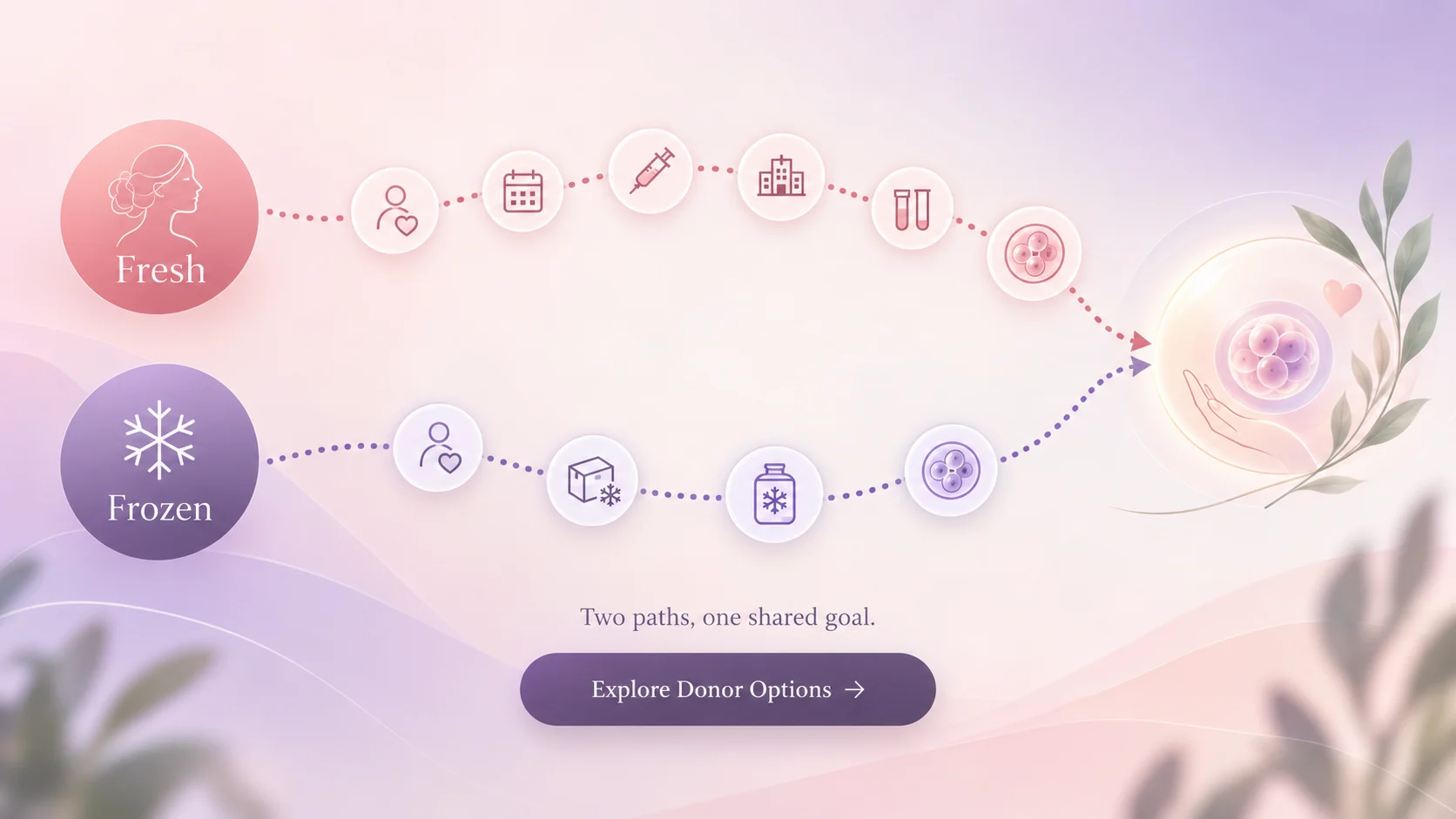
One nuance worth knowing: the SART CORS data found PGT-A performed differently depending on whether cycles used fresh or frozen donor eggs. For frozen-thawed cycles, there was no statistically significant improvement in live birth rates. For fresh cycles, the association was negative.
Lucina works exclusively with frozen eggs — which is worth knowing when you’re reading PGT-A research. The benefits and risks cited in studies may differ depending on which type of cycle the data covers. Read our fresh vs. frozen donor egg comparison for a fuller picture of how the two approaches differ.
Questions Worth Bringing to Your Care Team
Whether you’re leaning toward PGT-A or weighing it carefully, these questions will help you have a more informed conversation with your reproductive endocrinologist before your cycle.
Bring these to your next appointment. A reproductive endocrinologist who knows your history can apply this research to your specific situation in a way no article can.
- “Based on my history, is there a clinical reason PGT-A would benefit me specifically?” This shifts the conversation from a general recommendation to your actual situation, including any chromosomal conditions, prior transfer history, or medical factors that change the picture.
- “How many blastocysts do you expect from this cohort?” The answer shapes how much weight to give any individual PGT-A result. A smaller embryo pool means each embryo in it matters more.
- “How does your clinic handle mosaic embryo results?” Clinics vary significantly in their approach to mosaics. Knowing the answer upfront helps you understand what the full range of outcomes looks like before you commit to testing.
- “Does my transfer history suggest factors PGT-A wouldn’t address?” Sometimes implantation failure has more to do with uterine receptivity than embryo chromosomal status. Ruling that in or out before adding PGT-A is worth the conversation.
- “Am I a good candidate for Lucina’s PGT-A Guarantee?” If your care team does recommend PGT-A, asking about how our guarantee program provides financial protection is a practical next step.
Making the Right Decision for Your Cycle
PGT-A with donor eggs can be a meaningful part of your cycle — when it fits your situation. For the right intended parent, it adds real information and real financial protection. For others, the strength of the donor egg baseline already gives them what they need, and adding PGT-A won’t change the outcome.
We offer PGT-A because we believe in it as a tool — not as a default. If your care team or our clinical advisors think it won’t move the needle for your specific case, we’ll say so. The goal is a successful cycle, not a longer invoice.
If you’re weighing PGT-A donor eggs as part of your plan, our donor gallery is a good place to start understanding what’s available. Browse 3,500+ screened donors for free with no upfront cost, and create your account to see full profiles, photos, and medical backgrounds when you’re ready.
Frequently Asked Questions

Julianna Nikolic
Chief Strategy Officer Julianna Nikolic leads strategic initiatives, focusing on growth, innovation, and patient-centered solutions in the reproductive sciences sector. With 26+ years of management experience and a strong entrepreneurial background, she brings deep expertise to advancing reproductive healthcare.

Table of Contents
- What PGT-A Is and How It Works
- What the Research Says About PGT-A in Donor Egg Cycles
- Why Donor Egg Cycles Are a Different Conversation
- Who Benefits Most From PGT-A in a Donor Egg Cycle
- What Drives Outcomes in Donor Egg IVF
- How Lucina's PGT-A Guarantee Works
- PGT-A and Frozen vs. Fresh Donor Eggs
- Questions Worth Bringing to Your Care Team
- Making the Right Decision for Your Cycle
- Frequently Asked Questions