
Not all egg banks are equivalent. Success rates, donor pool depth, post-thaw survival rates, screening standards, and pricing transparency vary enough between programs that the bank you choose has a real effect on your outcomes — not just your experience of the process.
This guide covers what to actually evaluate when comparing egg banks, which questions cut through marketing language, and how Lucina Egg Bank measures up against the criteria that matter most. If you’re comparing programs or looking for a starting point, here’s what to look at before committing to any program.
What Separates the Best Egg Banks from Average Ones
Most egg banks describe themselves in similar terms — large donor pool, rigorous screening, high success rates, compassionate care. The differentiation is in the specifics: actual numbers, actual program terms, actual tools. Here’s what to compare.

Post-Thaw Egg Survival Rate
This is the single most outcome-relevant metric an egg bank can publish. It measures what percentage of vitrified eggs survive the thawing process before fertilization — and it applies to every donor in the pool, regardless of individual donor history.
The industry average post-thaw survival rate is 63.5%. Lucina’s 2022 rate was 92.2% — a 28-point gap that directly affects how many viable eggs you have to work with at the embryo stage. A bank that won’t publish this number is a bank you should ask twice before committing to.
Clinical Pregnancy Rate
Post-thaw survival gets eggs to fertilization. Clinical pregnancy rate reflects outcomes further down the line — after fertilization, embryo development, and transfer. In 2022, Lucina’s clinical pregnancy rate was 61.5%, compared to a 47.6% industry average.
Ask any bank you’re evaluating for their published outcomes data, with the year clearly attributed. Banks that cite only general success rates without specifying the metric, the year, or the denominator are not giving you usable information.
Donor Pool Size and Search Tools
Pool size determines how long finding a match takes. A bank with hundreds of donors can leave you cycling through profiles for months without finding someone who fits your specific criteria. Lucina maintains 3,500+ screened donor profiles — one of the largest frozen egg bank pools in the U.S.
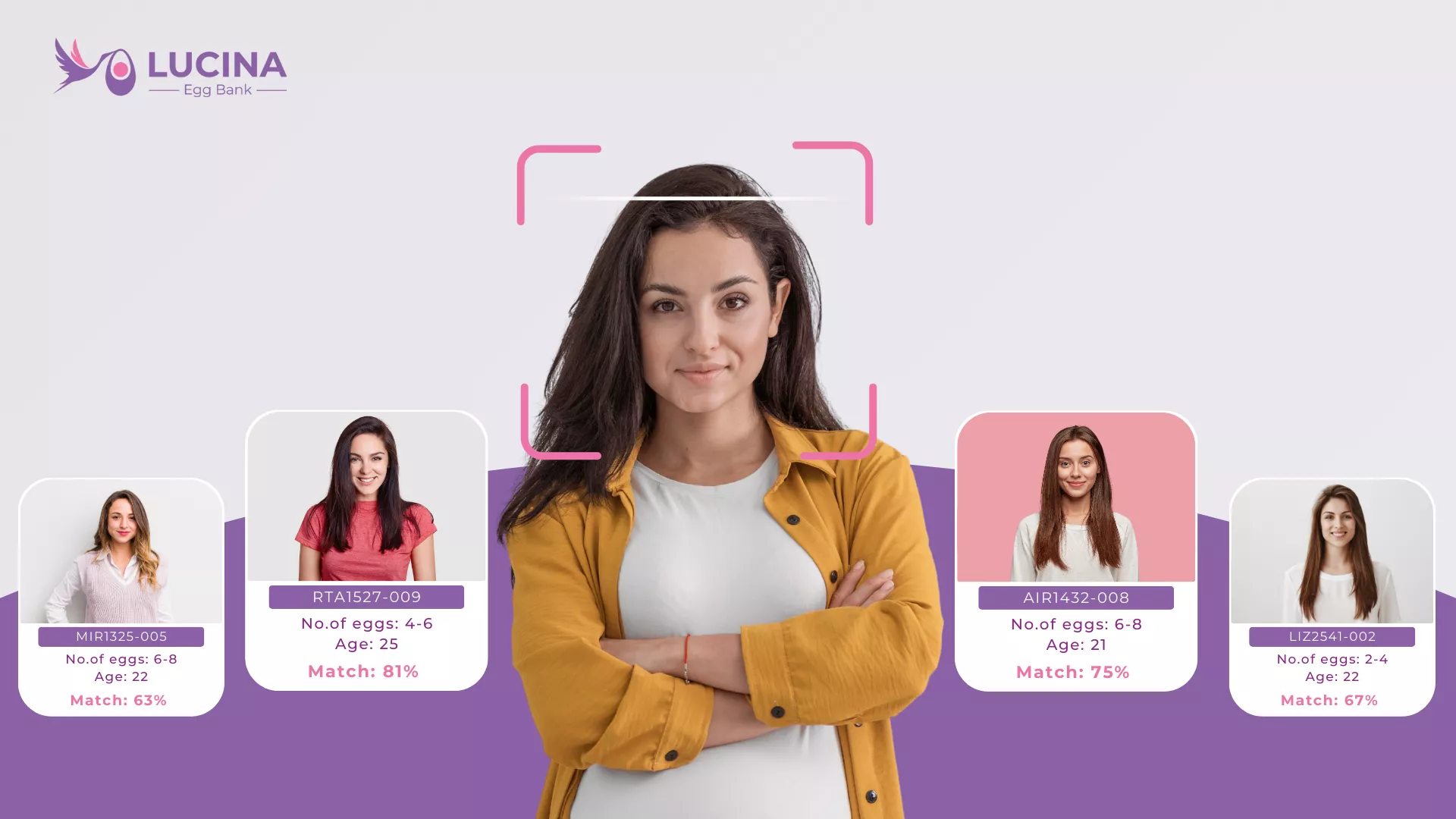
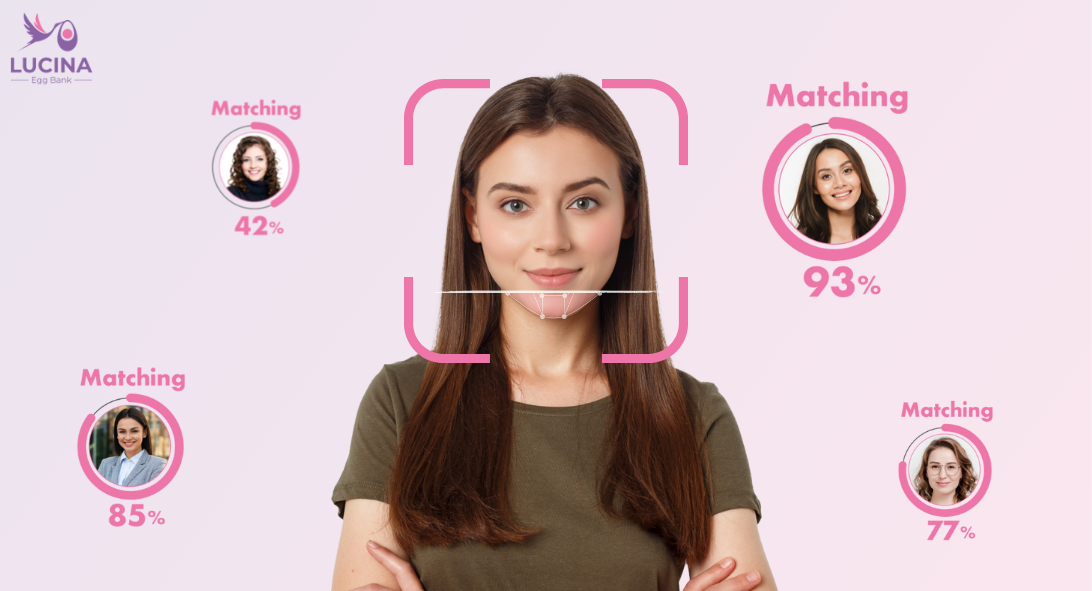
Search tools matter as much as pool size. Most banks offer basic trait filters (hair color, eye color, ethnicity, height). Lucina’s ReflEggction® AI goes further: upload a photo and it surfaces donors with the closest facial resemblance using phenotypic analysis, cutting average search time by up to 70%. It’s the first AI-powered facial recognition matching tool in the U.S. — no other egg bank currently offers a comparable capability. You can read more about how AI is transforming egg donor matching and what that means in practice.
Donor Screening Standards
All reputable egg banks must meet FDA requirements and ASRM screening standards as a baseline. Within that, screening depth varies. The key questions are: what genetic carrier panel do they use (basic panels cover 20–30 conditions; expanded panels cover 200–500+), and what does the psychological evaluation actually involve?
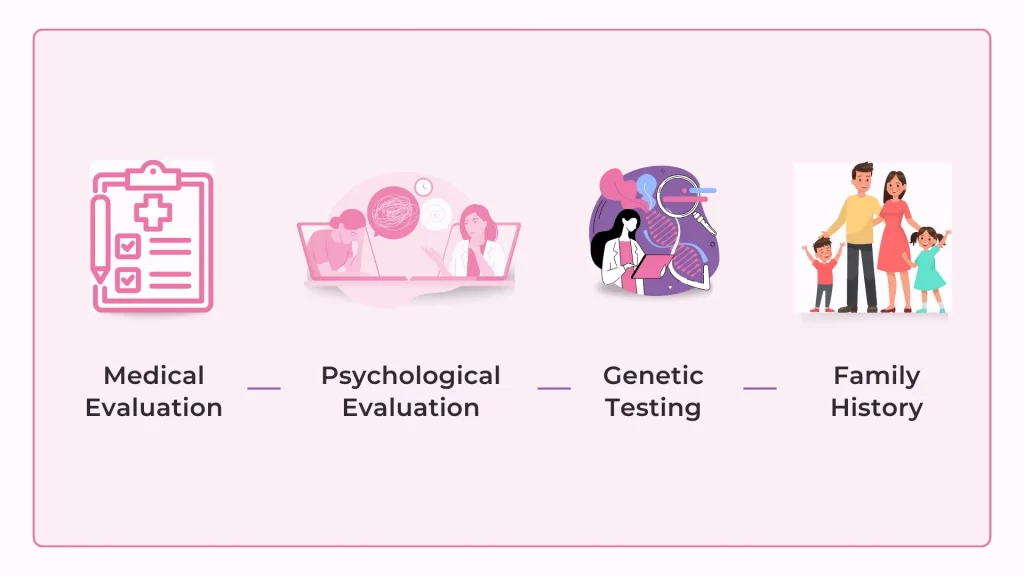
Lucina donors undergo comprehensive genetic testing, complete medical and psychological evaluation, and a detailed family health history review going back at least three generations. All donors are between 19 and 31 — the age range associated with highest egg quality. You can review exactly what egg donor screening covers and what each test is designed to catch.
Guarantee Programs
Guarantee programs vary enormously between banks. Some offer a replacement cohort if embryos don’t develop. Others extend to PGT-A (preimplantation genetic testing for aneuploidy) failure or live birth outcomes. The terms — what triggers the guarantee, how many cohorts it covers, and under what conditions you receive a refund — are what matter.
Lucina’s Triple Guarantee covers three stages: Blastocyst Guarantee (embryo development), PGT-A Guarantee (after genetic testing), and Pregnancy Guarantee (available at $49,800, covering up to 6 cohorts if conditions are met). These are financial protection programs, not pregnancy guarantees — but they provide meaningful protection for intended parents who’ve already been through failed cycles. Read the full details on Lucina’s guarantee programs before comparing to other banks.
Pricing Transparency
Donor egg IVF has multiple cost layers: the egg cohort itself, your clinic’s embryology and transfer fees, medications, legal documentation, and storage. A good egg bank is transparent about which of these are included in their per-cohort price and which will be billed separately by other parties.
Lucina’s pricing is flat and all-inclusive per cohort: 2 cohorts at $33,000+ ($16,500 per cohort, 6 eggs per cohort). There are no upfront fees to browse the donor gallery — you only pay when you’re ready to move forward. If you want to understand the full cost picture, our breakdown of donor egg costs covers what’s typically included and what’s not.
Reputation and Accreditation
Beyond outcomes data, external verification signals matter. Look for FDA compliance and ASRM adherence as the floor. BBB accreditation is a useful secondary signal — it reflects how a bank handles disputes, not just whether they exist.
Lucina has been BBB Accredited since April 2025 with an A rating. Reading reviews on the BBB, Google, and fertility forums gives a more complete picture than any bank’s own marketing — including what happens when something goes wrong and how it was resolved.
Fresh vs. Frozen: Which Type of Egg Bank Is Right for You?

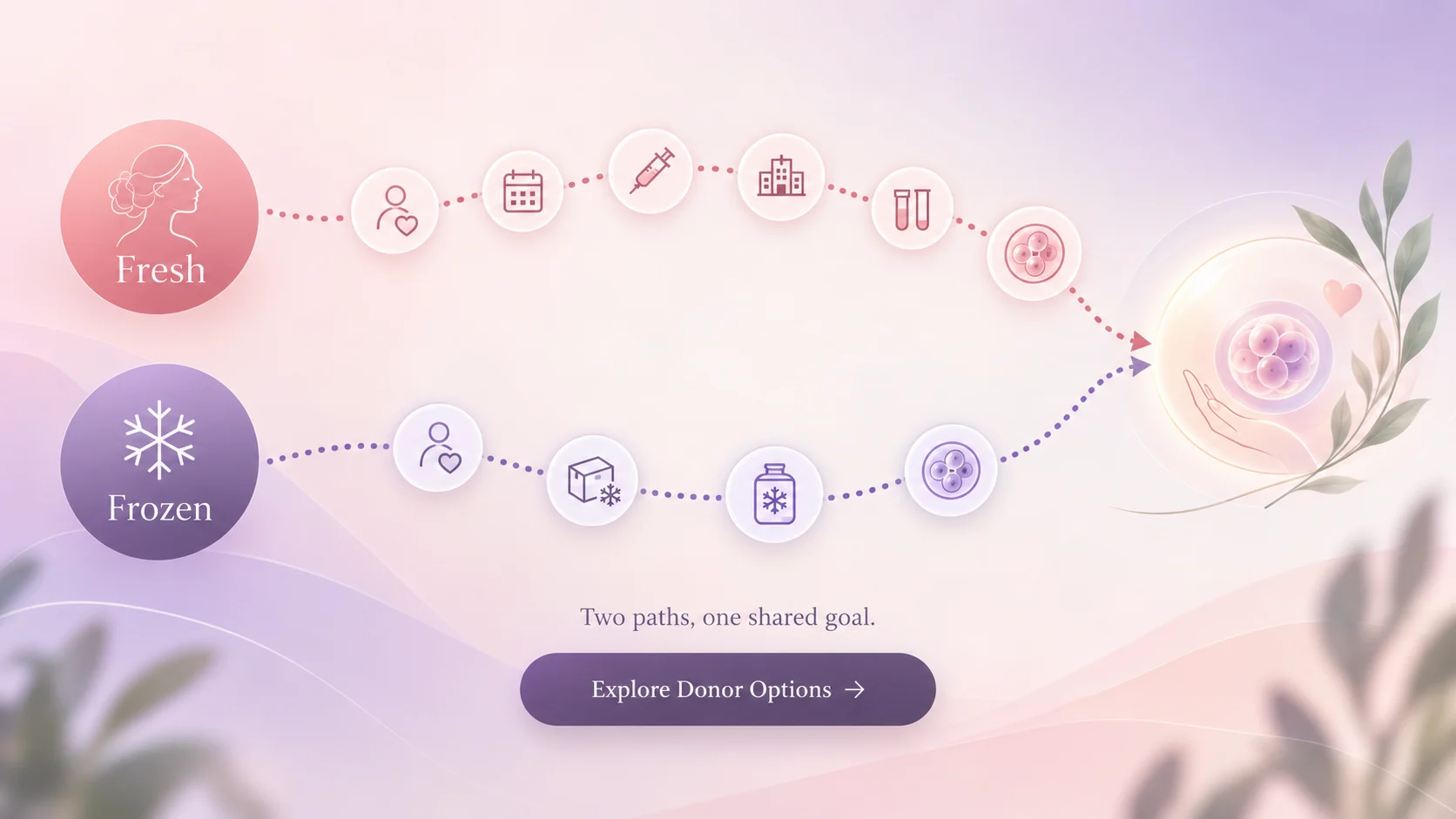
Egg banks operate in two distinct models — frozen and fresh — and the differences affect cost, timeline, and how much control you have over the process.
With a frozen egg bank, eggs are vitrified after retrieval, banked, and available immediately. Intended parents browse an existing pool of screened donors, select a cohort, and their clinic coordinates the transfer. No cycle synchronization required. Lucina operates exclusively as a frozen egg bank — eggs are ready to ship to your clinic within a week.
With a fresh donor cycle through an agency, a donor is recruited and cycled specifically for you. This means cycle synchronization with the recipient, longer wait times (often three to six months), and higher per-cycle costs because the intended parent absorbs the full cost of that donor’s retrieval. The tradeoff is knowing the eggs were retrieved for your specific cycle. You can review a detailed comparison of fresh versus frozen egg donor costs if that decision is still open for you.
Egg Storage and Shipping: What to Ask
Vitrification quality and shipping protocols are infrastructure questions that are easy to overlook during donor selection — but they directly affect post-thaw survival. Ask any bank you’re evaluating:
- What cryopreservation technique do you use, and what is your published post-thaw survival rate?
- How are eggs transported, and what monitoring is used during transit to protect viability?
- What is your protocol if eggs arrive compromised?
- Do you ship internationally, and to which countries?
Lucina ships globally via secure cryogenic transport, with 2,000+ frozen eggs ready to ship within a week. The shipping infrastructure is the reason frozen egg IVF timelines can be compressed compared to fresh cycles — but only when the logistics are handled properly.
Legal Considerations When Using Donor Eggs
Donor egg IVF involves legal agreements covering donor anonymity, parental rights, and the intended use of the eggs. These agreements protect all parties — donor, intended parents, and the egg bank — and vary by state and program.
Confirm that any bank you’re considering operates in full compliance with FDA tissue regulations and HIPAA requirements. Ask whether legal documentation is included in their program fees or billed separately. Your fertility attorney (or the one your clinic recommends) should review any contracts before you sign.
Legal requirements for donor egg IVF vary by state and country. Consult a reproductive attorney familiar with your jurisdiction before signing any donor agreements. This article provides general educational information and is not legal advice.
How Lucina Compares to Other Egg Banks
Lucina is a frozen egg bank — not a clinic, not an agency, not a fresh egg provider. That distinction matters for how the process works and what you’re comparing when you evaluate programs. Here’s how Lucina’s verified data stacks up against publicly available competitor information.
3,500+ screened donor profiles. 92.2% post-thaw survival rate and 61.5% clinical pregnancy rate (2022 data, vs. 63.5% and 47.6% industry averages). ReflEggction® AI matching. Triple Guarantee (Blastocyst, PGT-A, Pregnancy). Flat pricing at $16,500/cohort. $0 to browse. BBB Accredited since April 2025, A-rated. Global shipping within one week.
20+ year incumbent with approximately 55 clinic locations. No AI donor matching. Claims donor compensation up to $60,000 cumulative. Large clinic partner network is a key differentiator for intended parents who want an integrated clinic relationship.
Claims “#1 frozen donor egg bank.” Per-cycle compensation of $10,000–$20,000 and advertises up to $90,000 cumulative donor pay. Clinic-partner model. No AI donor matching reported.
Budget option with lower per-cycle pricing of $4,000–$8,000. Smaller pool. No AI matching. Suited for cost-sensitive buyers who have flexibility on donor selection criteria.
For a more detailed side-by-side comparison, our guide to the best egg banks and agencies covers additional programs with specific criteria breakdowns.
Browse 3,500+ Donor Profiles at Lucina
See the donor pool, outcomes data, and guarantee programs for yourself before making any decisions. $0 to browse — no upfront payment required.
3,500+ screened donor profiles · 92.2% frozen egg survival rate (2022) · 61.5% clinical pregnancy rate (2022)
$0 to browse the gallery. Triple Guarantee programs available. ReflEggction® AI matches donors by facial recognition.
FAQs

Julianna Nikolic
Chief Strategy Officer Julianna Nikolic leads strategic initiatives, focusing on growth, innovation, and patient-centered solutions in the reproductive sciences sector. With 26+ years of management experience and a strong entrepreneurial background, she brings deep expertise to advancing reproductive healthcare.