
Donor egg IVF is a fertility treatment in which eggs from a screened donor are fertilized with sperm in a laboratory, and the resulting embryo is transferred to the uterus of the intended parent or a gestational carrier.
Many intended parents describe the decision to use donor eggs as one of the hardest pivots of their fertility journey – and then, once they’re in it, one of the most hopeful.
This guide covers everything you need: who it’s right for, how the process works, what a realistic timeline looks like, what success rates actually mean, and how to think about cost.

Key Takeaways
- • Donor egg IVF works – and works well. Success rates of 40–55% per transfer are among the highest in reproductive medicine, and they hold relatively steady regardless of your age as the recipient.
- • Frozen donor eggs put you in control. Unlike a fresh cycle, frozen eggs from an egg bank are ready when you are. Most families go from choosing a donor to pregnancy test in 6-10 weeks.
- • The baby is yours. You carry the pregnancy, you shape the environment the child grows in, and epigenetics research shows that this influences development in real, measurable ways.
- • It’s right for more people than you might think. Donor egg IVF is recommended for diminished ovarian reserve, premature ovarian insufficiency, repeated IVF failure, heritable genetic conditions, and treatment-related fertility loss, and it’s central to how LGBTQ+ families and single parents build their families too.
- • Screening is rigorous. Only about 5% of donor applicants clear the full medical, genetic, and psychological evaluation process.
- • Cost is significant but predictable. Most frozen donor egg cycles run $20,000–$35,000 all-in. Guarantee programs convert that into a fixed commitment with a full refund if agreed milestones aren’t reached.
Who Is Donor Egg IVF Right For?
While every path to parenthood is unique, donor egg IVF offers a reliable, high-success alternative for many individuals and families facing specific fertility challenges or life circumstances.
Diminished ovarian reserve or poor egg quality
When egg supply or quality has declined – through age, prior treatment, or genetics – donor eggs give you access to eggs from a young, screened donor rather than more cycles with unpredictable results.
Premature ovarian insufficiency
When ovarian function declines before 40, donor eggs paired with hormonal support make pregnancy achievable regardless.
Repeated IVF failure with own eggs
When multiple well-managed cycles haven’t led to pregnancy – particularly where embryos failed to implant – egg quality is often the explanation. Donor eggs address this directly.
Genetic conditions
When there’s a heritable condition you don’t want to pass on, donor eggs remove that risk without requiring embryo-by-embryo genetic testing to screen it out.
Cancer and treatment-related fertility loss
For survivors who didn’t have the opportunity to freeze eggs before treatment, donor egg IVF opens a door that might otherwise feel closed.
LGBTQ+ families and single parents
For gay male couples and single fathers working with a gestational carrier, donor eggs are central to the journey. For lesbian couples, donor eggs support reciprocal IVF – where one partner provides the eggs and the other carries – creating a meaningful shared biological connection to the child.
Absent or non-functional ovaries
Women born without ovaries, or who’ve had them removed, can still carry a pregnancy with hormonal preparation and donor eggs.
Frozen vs. Fresh Donor Eggs: Why It Matters
Most intended parents who work with an egg bank use frozen donor eggs. Understanding the difference shapes how you experience the process as a whole.
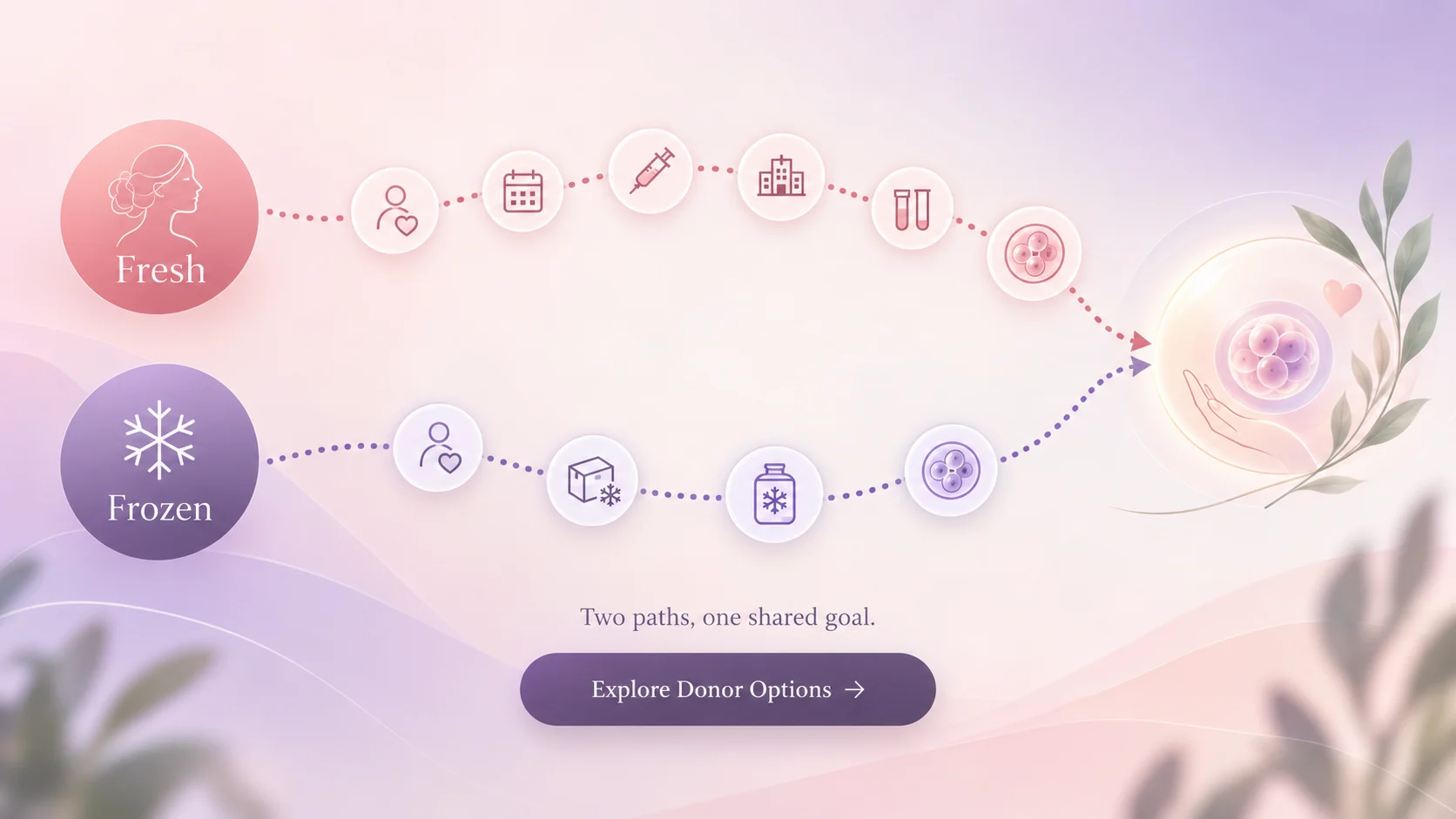
In a fresh cycle
A donor is recruited and matched specifically for you. Her cycle must be synchronized with yours. She travels for the retrieval, and the eggs are fertilized immediately. It’s a longer process – typically adding three to five months with more moving parts.
With frozen eggs
The eggs have already been retrieved, vitrified, and quality-checked. You choose from an existing gallery. Once you’ve decided, eggs ship to your fertility clinic within days, and your preparation begins on your schedule.
Frozen eggs are more affordable than a fresh cycle. Advances in vitrification mean survival rates after thaw now rival those of fresh eggs. The detailed comparison between fresh and frozen – including how costs, timelines, and success rates actually differ is worth reading before you decide.
How Does Donor Egg IVF Work? Step by Step
While the medical science behind it is advanced, the practical experience of donor egg IVF is designed to be a clear, guided journey that moves on your schedule.
Step 1: Choosing your donor
Every donor in a reputable egg bank’s gallery has already cleared a full screening process before you see them. At Lucina, around 5% of applicants are accepted – a meaningful signal about what you’re choosing from.
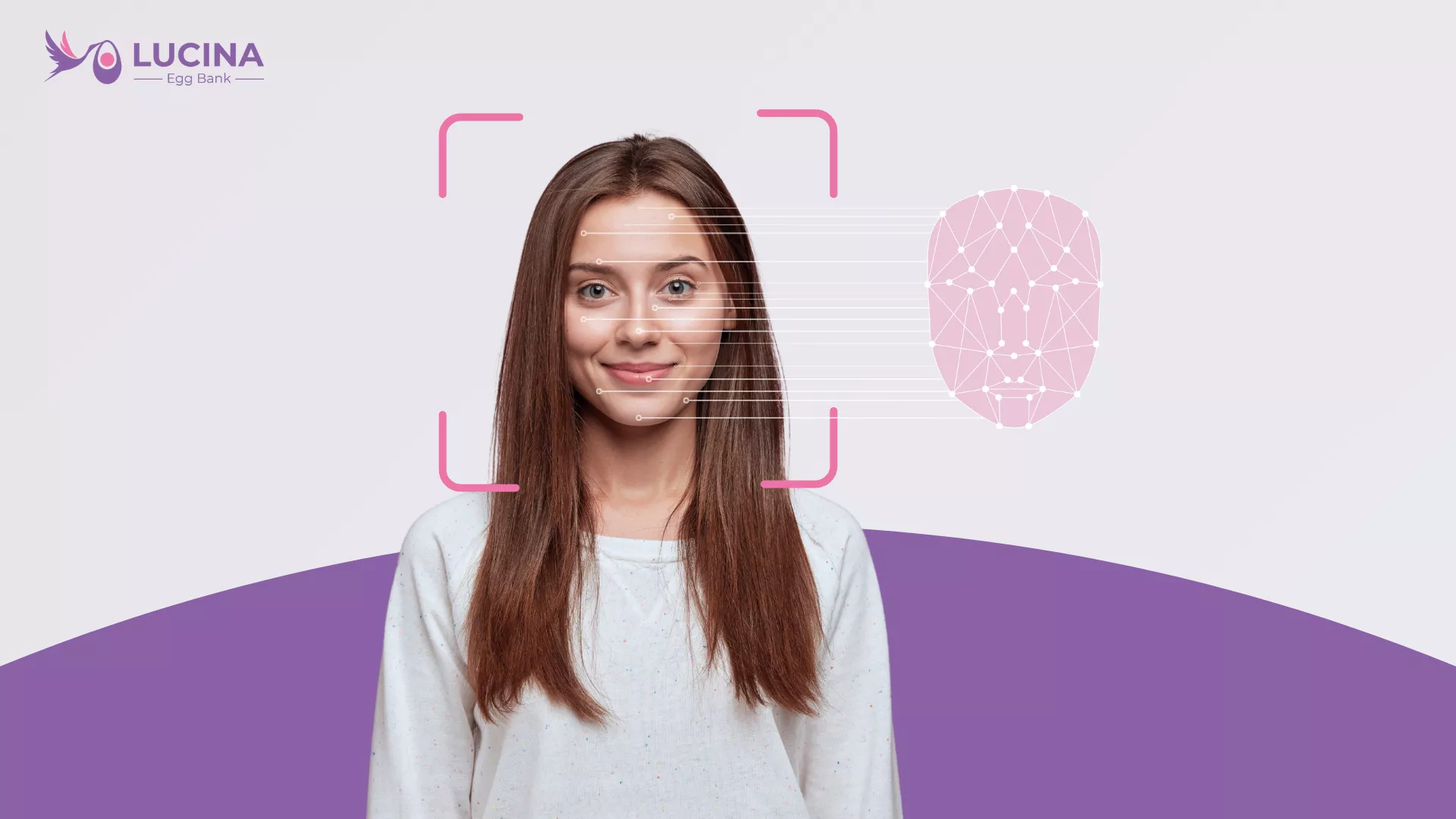
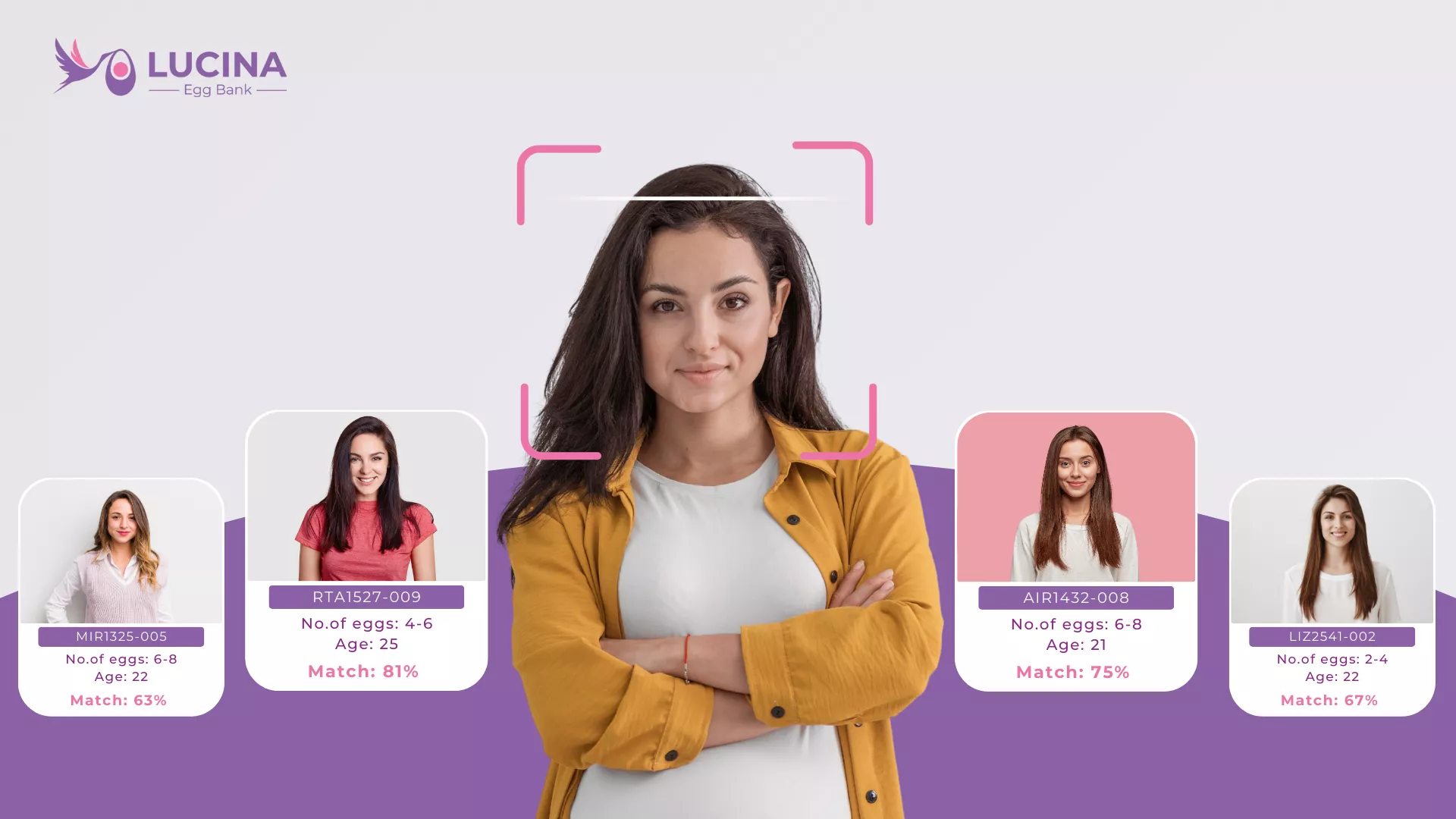
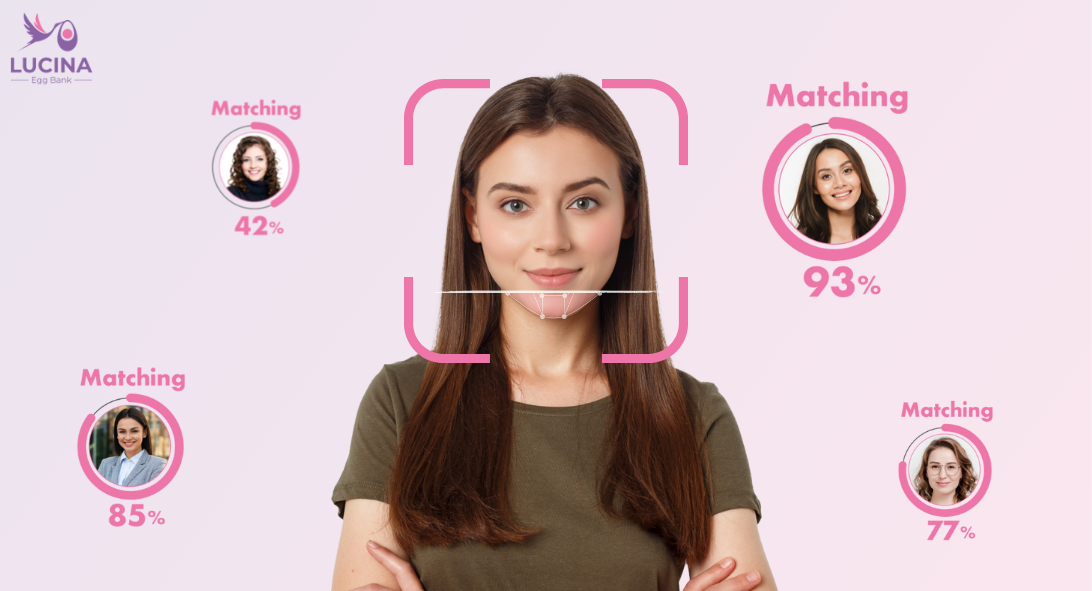
There’s no single right way to make the choice. Some intended parents prioritize physical resemblance. Others focus on ethnic background, health history, or the personality that comes through in a donor’s essays. The ReflEggction AI matching tool – the first biometric facial-matching tool of its kind in the US – compares your features to a database of 3,000+ donor profiles and surfaces the closest matches, turning a search that can feel overwhelming into something far more intuitive.
Step 2: Fertilization
Once your frozen egg cohort arrives at your clinic, the eggs are thawed and fertilized using sperm from your partner or a sperm donor. Most clinics use ICSI (intracytoplasmic sperm injection), injecting a single sperm directly into each mature egg.
Over five to six days, fertilized eggs develop into embryos. Those that reach the blastocyst stage on day 5 or 6 are preferred for transfer – they carry the highest implantation potential.
At this stage, you and your doctor may discuss preimplantation genetic testing (PGT-A), which screens embryos for chromosomal abnormalities before transfer. Some families choose PGT-A for the added genetic confidence it provides; others proceed without it based on their clinical picture. It’s a decision best made with your reproductive endocrinologist – and what the research shows about PGT-A in donor egg cycles is worth reviewing before that conversation.
Step 3: Preparing the uterus
The person carrying the pregnancy begins a hormonal preparation protocol – estrogen to build the uterine lining, then progesterone to prepare it for implantation. Your clinic monitors lining thickness via ultrasound and blood tests. Most transfers proceed once the lining reaches 7-10mm. This phase takes two to four weeks.
If you’re working with a gestational carrier, she follows the same protocol. The full overlap between surrogacy and donor egg IVF – including timeline and coordination is covered separately for families taking that path.
Step 4: Embryo transfer
The transfer takes about 15 minutes. Using ultrasound guidance, your doctor passes a thin catheter through the cervix and deposits the embryo into the uterine cavity. No anesthesia is needed. Most people describe it as similar to a routine pelvic exam.
Most clinics transfer one embryo at a time to minimize the risk of multiple pregnancy while preserving frozen embryos for future cycles if needed.
Step 5: Pregnancy confirmation
About 10-14 days after transfer, a blood test measures hCG levels to confirm implantation. A positive result is followed by repeat testing, then an ultrasound at around six to seven weeks to confirm a heartbeat.
If the first transfer doesn’t result in pregnancy, frozen embryos from the same cohort can be used in a subsequent frozen embryo transfer – a shorter process that typically takes three to four weeks.
What Are the Success Rates for Donor Egg IVF?
What Does Donor Egg IVF Cost?
Lucina structures its programs as guarantees rather than per-cycle fees, which means you know your financial commitment upfront, with defined milestones and refund terms rather than open-ended costs.
Please note: These guarantees cover your donor egg cohorts; medications and local clinic fees are separate.
For the full cost breakdown, including what’s typically included in clinic fees and how fertility financing works, that page covers every line item.
Frequently Asked Questions About Donor Egg IVF
What is the difference between donor egg IVF and regular IVF?
Will I have a genetic connection to my baby?
Will my donor egg baby look like me?
Can I use donor eggs after menopause?
How many embryos will I get from a cohort?
Is the process different for same-sex couples or single parents?
Will I regret it?
Taking the First Step
Browsing the donor gallery is free, commitment-free, and often the moment where this shifts from abstract consideration to something real and yours.

Julianna Nikolic
Chief Strategy Officer Julianna Nikolic leads strategic initiatives, focusing on growth, innovation, and patient-centered solutions in the reproductive sciences sector. With 26+ years of management experience and a strong entrepreneurial background, she brings deep expertise to advancing reproductive healthcare.