
The question arrives after months or years of trying. At some point, age enters the conversation, and with it the fear that time has already run out. For many intended parents considering donor eggs, that fear is the thing standing between them and the next step.
The clinical picture is more encouraging than that fear suggests. There’s no fixed upper age limit for donor egg IVF set by any medical authority. What matters is your health, the quality of the donor eggs used, and an honest conversation with your fertility specialist about what a safe pregnancy looks like for you specifically.
At Lucina Egg Bank, we work with intended parents across a wide age range. Our screened donor pool of 3,500+ profiles (with donor ages from 19–31) is built to give recipients the highest possible baseline for success, regardless of where they are in their reproductive journey.

What ASRM Says About the Maximum Age for IVF With Donor Eggs
ASRM sets no fixed upper age limit for IVF with donor eggs. For women over 50, ASRM advises careful evaluation of pregnancy-related health risks. Because success rates with donor eggs reflect the donor’s biology rather than the recipient’s, many older intended parents achieve pregnancy rates comparable to younger recipients using the same high-quality frozen eggs.
The American Society for Reproductive Medicine’s position is grounded in individual health assessment, not calendar age. ASRM’s published guidance on oocyte donation to women of advanced age emphasizes that no arbitrary age cutoff is medically defensible. Each candidate is evaluated on her own health, not on her birthday.
For women in their 40s, the guidance is generally permissive when health conditions are well-managed. For women over 50, ASRM advises more thorough evaluation given higher rates of pregnancy-related complications: gestational hypertension, gestational diabetes, and cardiovascular strain are more common, and carry implications for both maternal and fetal health.
Individual fertility clinics set their own policies, and some do impose age limits (typically around 50 to 55) based on their clinical judgment and risk frameworks. These limits reflect institutional caution, not any ASRM prohibition. If one clinic declines to proceed, it’s worth consulting others or asking specifically what health criteria would need to be met.

Why the Donor’s Age Matters More Than Yours
For recipients using donor eggs, the biological bottleneck isn’t their own age; it’s the quality and viability of the egg used. Because the egg comes from someone else, the recipient’s reproductive age becomes largely irrelevant to the embryo’s chromosomal health and development potential.
This is the foundational reason donor egg IVF success rates remain relatively stable across recipient age groups, while success rates with own eggs fall sharply after 35. A 45-year-old recipient using eggs from a 24-year-old donor is working with the biology of a 24-year-old egg.
All Lucina donors are 19–31 and have cleared extensive ovarian reserve testing, genetic screening, and medical review before their profiles are listed. The eggs in our pool reflect that biology: high survival rates through the vitrification process, strong fertilization rates, and consistent blastocyst development.
Health Factors That Matter More Than Age
For intended parents over 40 or 50, the evaluation that matters isn’t a comparison of your age to a cutoff. It’s an honest look at your current health. These are the factors your fertility specialist will assess before recommending donor egg IVF:
- Uterine health. A receptive uterus is the primary requirement for embryo transfer. Fibroids, polyps, or structural issues can affect implantation, regardless of recipient age. These are correctable in many cases before proceeding.
- Blood pressure and cardiovascular health. Gestational hypertension is more common in older recipients and carries risks for both mother and baby. Blood pressure stability is evaluated before clearance.
- Metabolic health. Gestational diabetes risk increases with age and BMI. Pre-existing conditions are factored into your candidacy assessment and may require management before proceeding.
- Hormonal baseline. FSH, estradiol, and AMH levels establish your body’s current hormonal environment. These affect uterine receptivity during the embryo transfer preparation phase.
- General physical fitness. Pregnancy at any age places demands on the body. Older recipients are assessed for their capacity to carry a pregnancy safely through delivery.
These factors are assessed by your fertility clinic, not by the egg bank. Lucina’s role is to provide the donor eggs; whether you’re medically ready to use them is a determination made by your reproductive endocrinologist.

Browse 3,500+ screened donor profiles at no cost. ReflEggction AI narrows your search by up to 70%.
Find Your Donor →How Lucina Egg Bank Supports Intended Parents
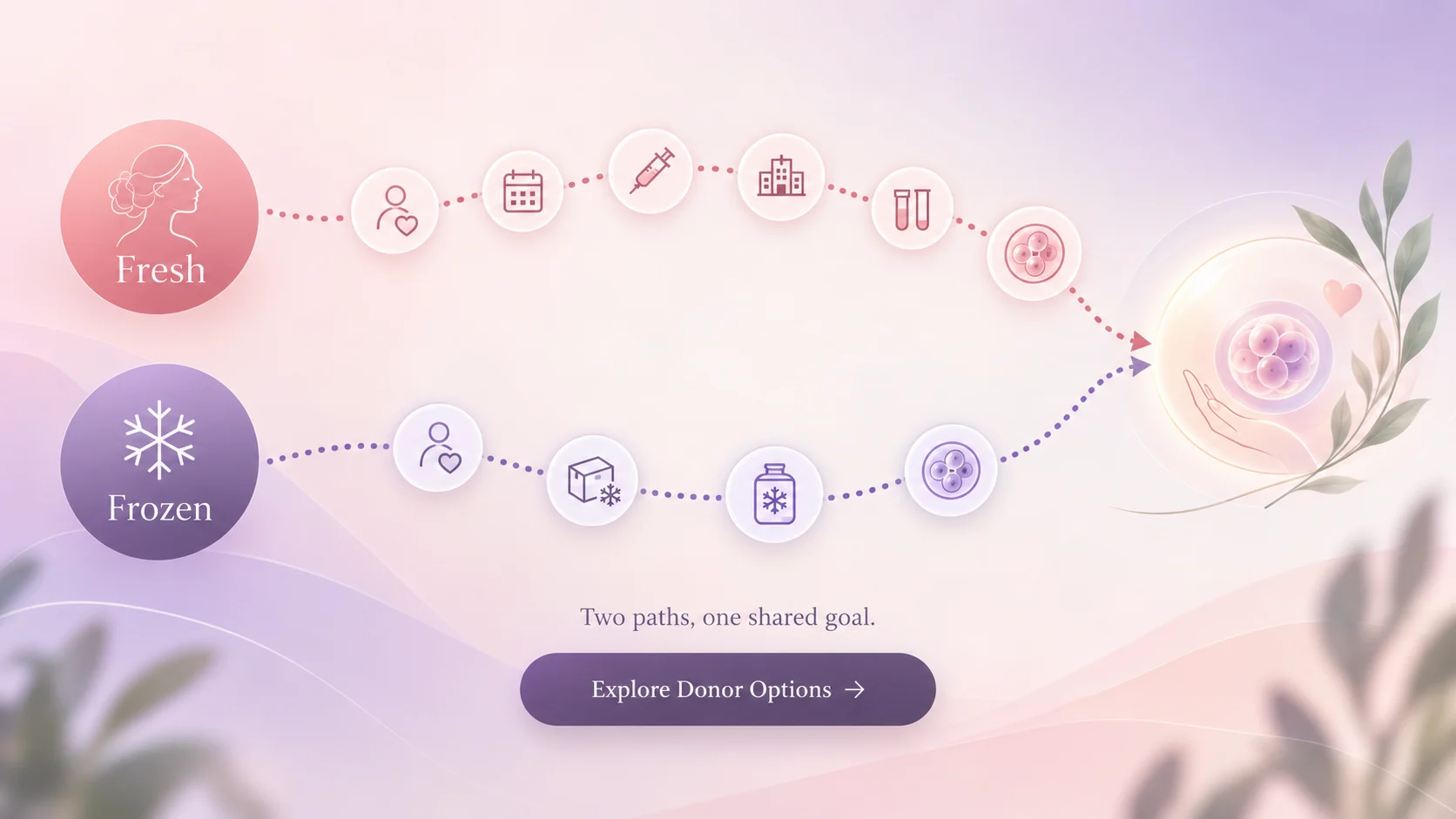
Lucina is a frozen egg bank, not a fertility clinic. The distinction matters: we provide the donor eggs, screened and frozen; your own fertility clinic performs the IVF. The two relationships work in parallel, not as a single package.
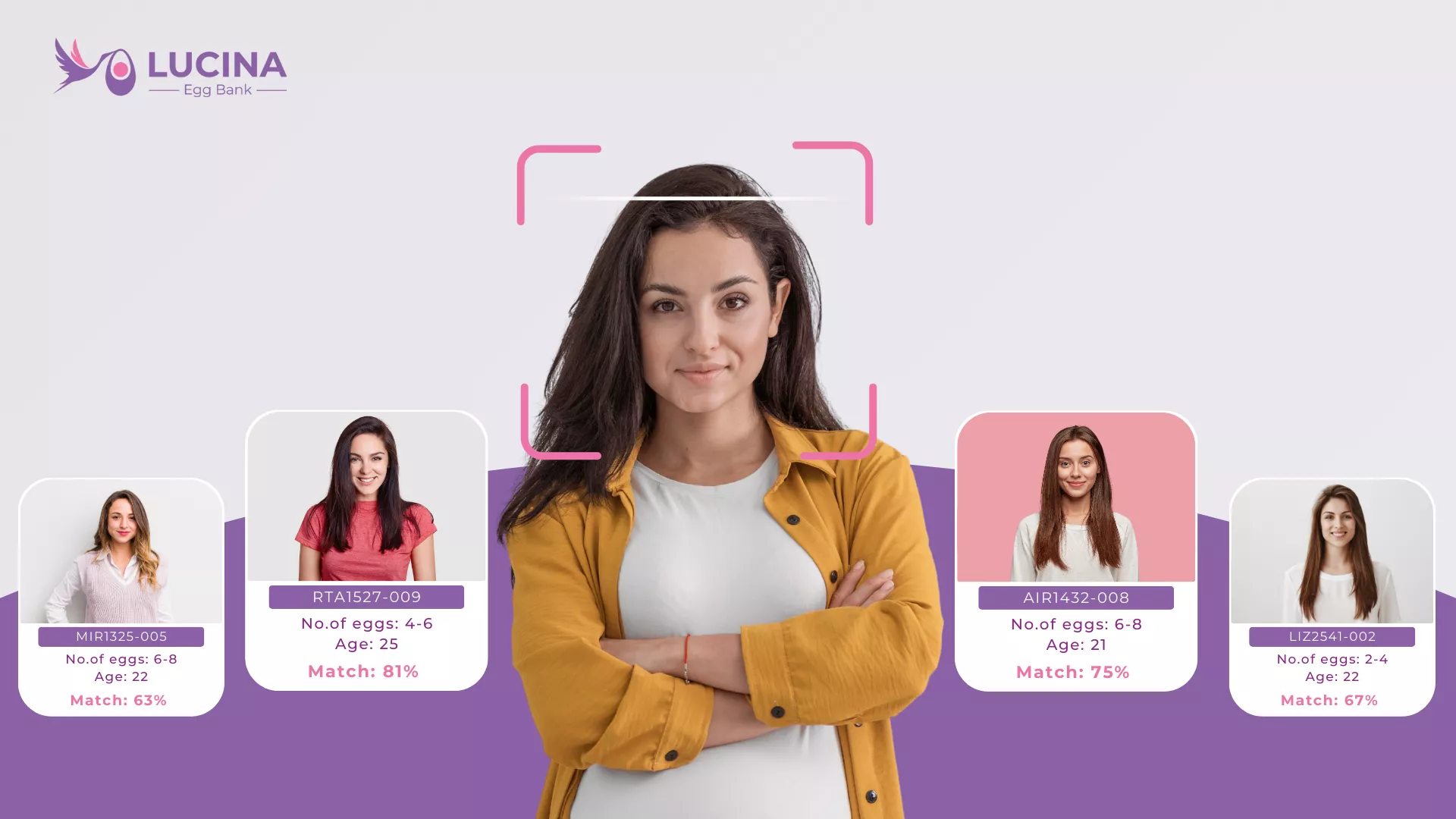
Our donor pool spans a wide range of ethnicities, physical characteristics, and educational backgrounds. Every profile includes detailed medical history, genetic screening results, and photography so intended parents can identify the right match with confidence. Profiles are available to browse at no cost, and our team is available to help narrow the search.
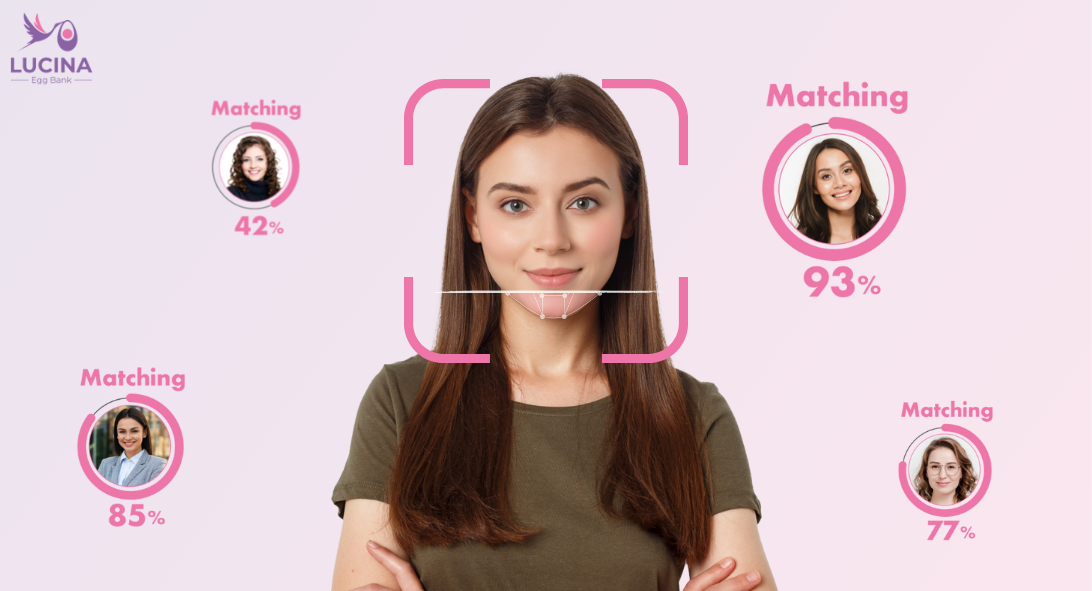
For intended parents who want to find a donor whose features resemble their own, our ReflEggction AI technology uses facial recognition to surface profiles with similar physical characteristics, the first AI-powered matching tool of its kind in U.S. egg donation. It reduces search time by up to 70%, which matters when time is already a consideration.
For recipients who want financial protection alongside their medical care, our guarantee programs offer options including our Pregnancy Guarantee, a financial protection program, not a medical guarantee. If qualifying thresholds for blastocyst development, PGT-A results, or Pregnancy aren’t met under program terms, eligible participants receive complimentary cohorts.
Questions about donor egg resemblance and family building are ones our team addresses regularly.
Age Is a Factor, Not a Verdict
The maximum age for IVF with donor eggs isn’t a fixed number; it’s a health conversation. ASRM’s position and the available research both point to the same conclusion: with well-managed health and high-quality donor eggs, older intended parents achieve meaningful pregnancy rates that their age alone would never predict.
The path forward starts with two conversations: one with your fertility specialist about your health candidacy, and one with us about your donor options. Those conversations can happen in parallel. Many intended parents browse our donor profiles while their clinic is completing their medical evaluation, so the two tracks move together.
Lucina covers global shipping to partner clinics worldwide, so geography is rarely a barrier. If you’d like to understand more about how we work and what distinguishes our outcomes from industry averages, our why choose Lucina page covers the full picture.
Browse 3,500+ Screened Donor Profiles
Every Lucina donor is 19–31, FDA-screened, and ASRM-compliant. Browse profiles at no cost. Our ReflEggction AI can narrow your search by up to 70% based on physical characteristics.
3,500+ screened donor profiles · 92.2% frozen egg survival rate (2022) · 61.5% clinical pregnancy rate (2022)
$0 to browse the gallery. Triple Guarantee programs available. ReflEggction AI matches donors by facial recognition.
Frequently Asked Questions

Julianna Nikolic
Chief Strategy Officer Julianna Nikolic leads strategic initiatives, focusing on growth, innovation, and patient-centered solutions in the reproductive sciences sector. With 26+ years of management experience and a strong entrepreneurial background, she brings deep expertise to advancing reproductive healthcare.