
Most intended parents expect donor selection to feel like browsing a database. What they don’t expect is that finding the right donor involves two separate evaluation tracks running at the same time: the profile match (appearance, background, personality, education) and the genetic match (carrier screening results, blood type, inherited condition risk).
Both matter. But they work differently, and understanding how they fit together is what makes the egg donor matching process feel less overwhelming. At Lucina Egg Bank, the matching process combines detailed donor profiles, AI-powered facial recognition through ReflEggction®, and comprehensive genetic screening — so intended parents can evaluate the full picture before committing to a donor.
How Does the Egg Donor Matching Process Work?

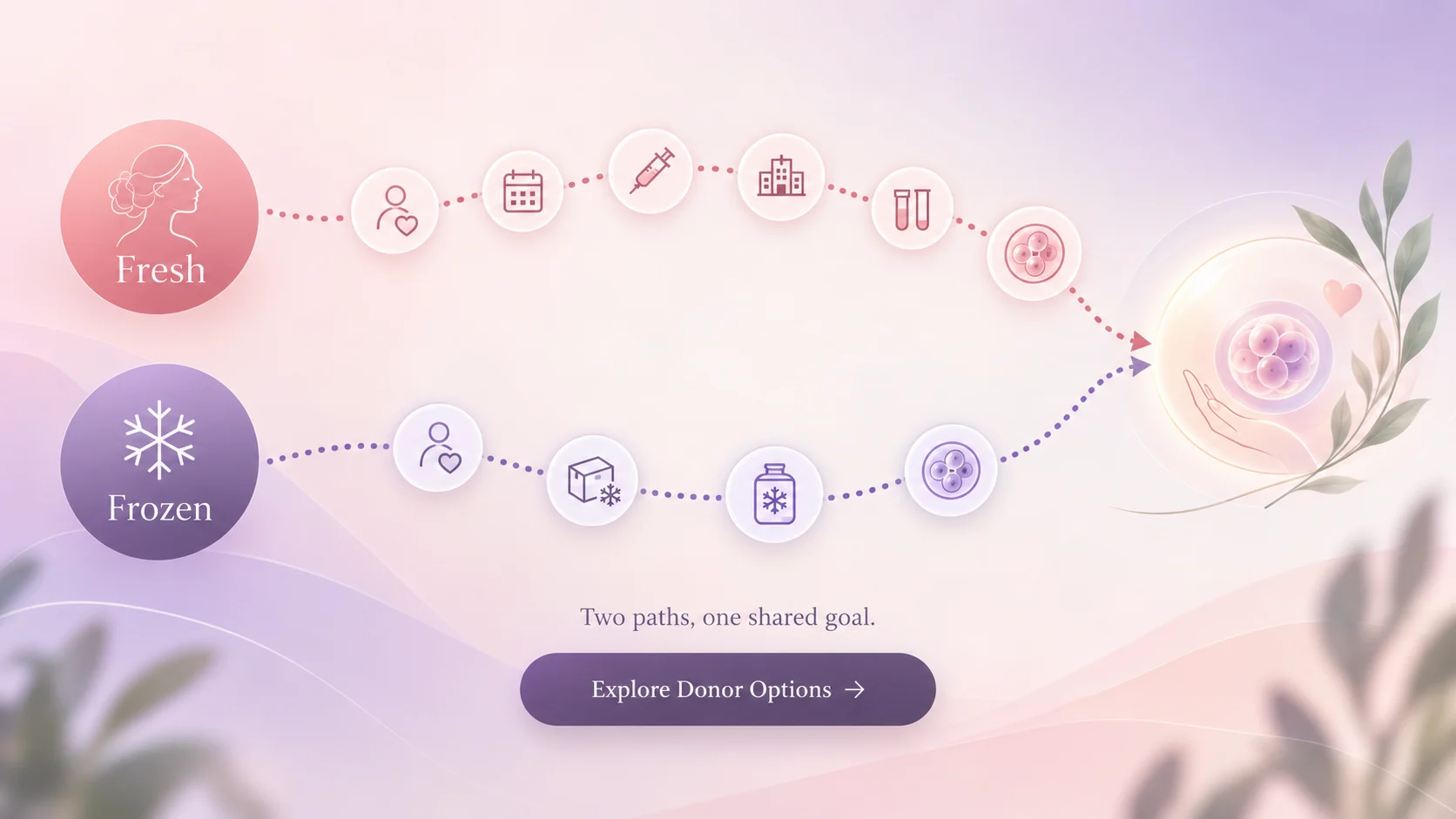
The egg donor matching process at a frozen egg bank runs differently than at a fresh donor agency. With frozen eggs, the donor has already completed her retrieval cycle — her eggs are vitrified, screened, and available in the bank’s inventory. Intended parents browse profiles and select from what’s available, rather than waiting for a donor to be recruited and cycled specifically for them.

That changes the timeline significantly. Instead of waiting months for a fresh cycle to be coordinated, you can browse, evaluate, and reserve frozen donor eggs within days. The matching process itself — both profile and genetic — still requires careful evaluation. But the waiting-for-availability problem largely disappears.
The process broadly follows these stages:
- Browse the donor gallery. Review profiles including photos, background, education, personality assessments, health history, and any available prior donation data.
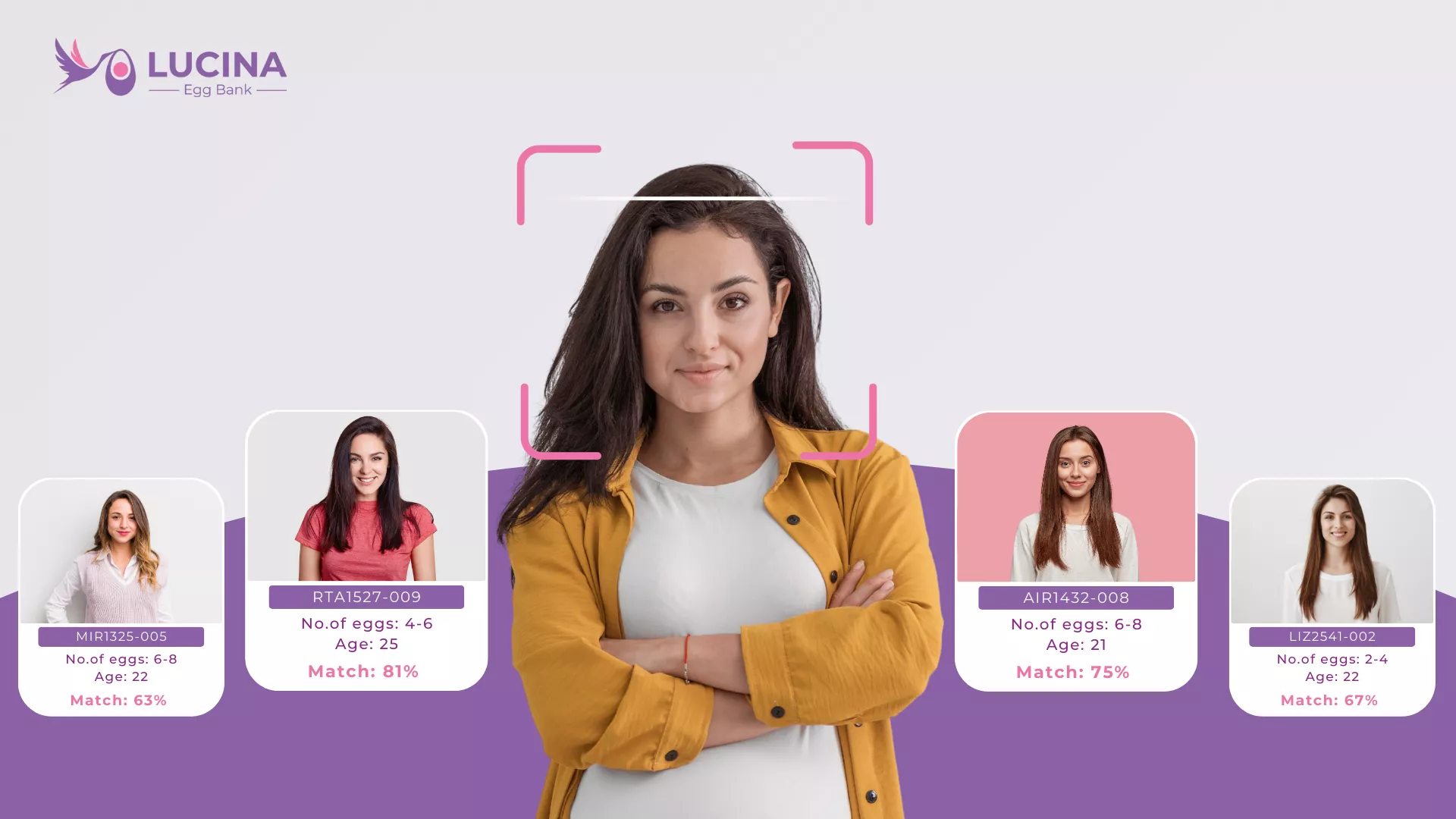
- Narrow by profile match. Use filters — or AI matching tools — to identify donors who fit your criteria for physical resemblance, background, and other traits.
- Review genetic screening results. Compare your own carrier screening results against the donor’s to identify any overlapping conditions that would require further clinical evaluation.
- Select a donor and reserve a cohort. Once you’ve identified your match, your clinic coordinates the embryo transfer process using the frozen eggs shipped from the bank.
How AI Has Changed Donor Matching
The hardest part of the profile matching process for most intended parents is resemblance — specifically, finding a donor who looks enough like them that the child might share physical traits with the non-genetic parent.
Traditional donor search filters — hair color, eye color, height, ethnicity — are blunt instruments. Two people with “brown hair, hazel eyes, 5’6″” can look completely different. Scrolling through hundreds of profiles comparing photos manually can take weeks and still produce uncertain results.
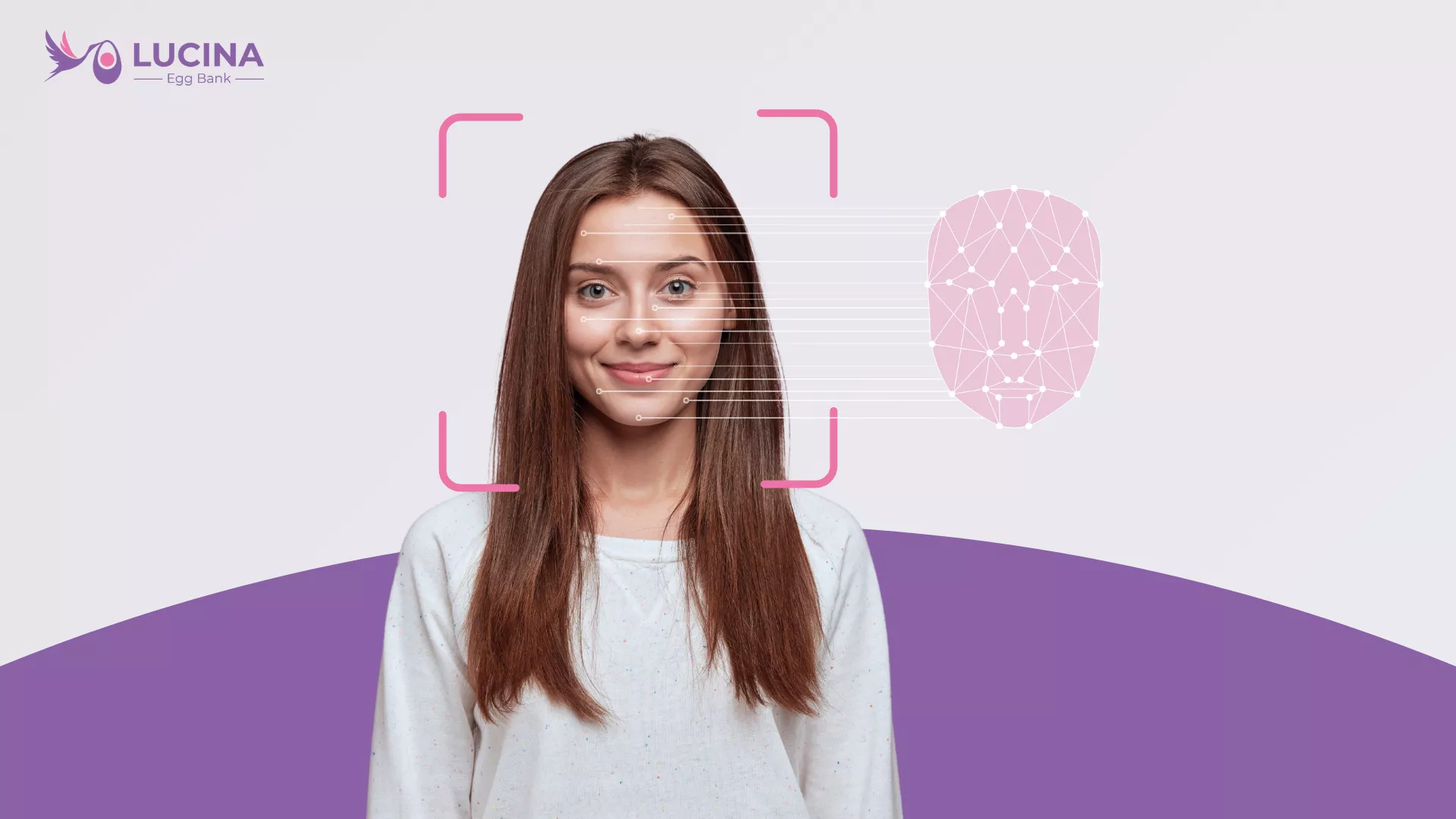
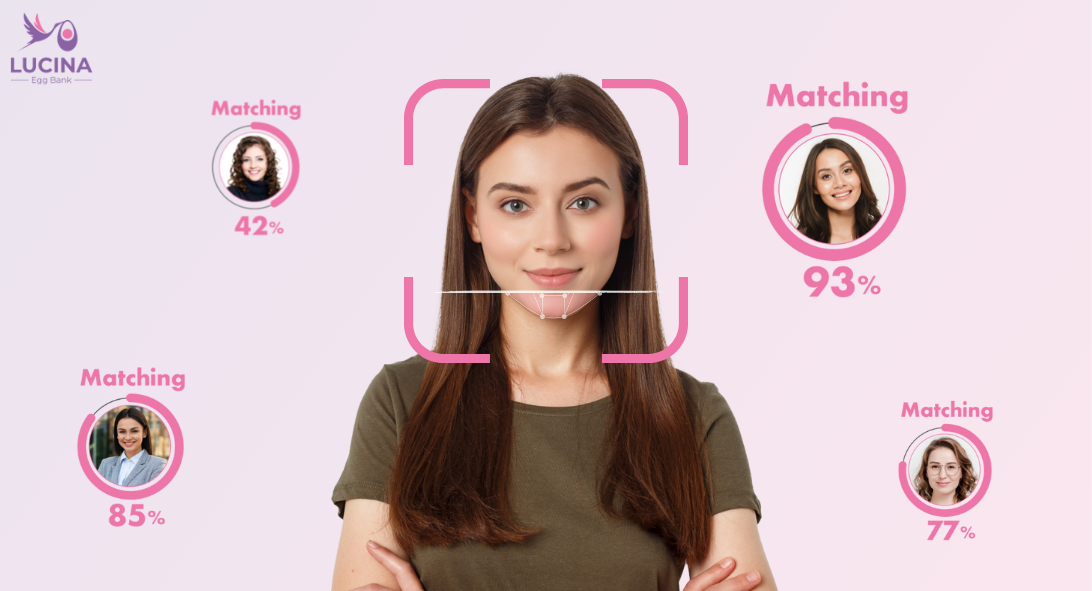
Lucina’s ReflEggction® AI addresses this directly. It analyzes hundreds of facial features from a photo of the intended parent and surfaces donors with the closest phenotypic match — reducing the average search from weeks to under an hour. ReflEggction® is the first AI-powered facial recognition donor matching tool in the U.S., and no other egg bank currently offers a comparable capability.
For intended parents who’ve spent months manually searching databases, the difference is significant. You can read more about how AI is transforming egg donor matching and what the technology actually does under the hood.
What Genetic Compatibility Means in Egg Donation
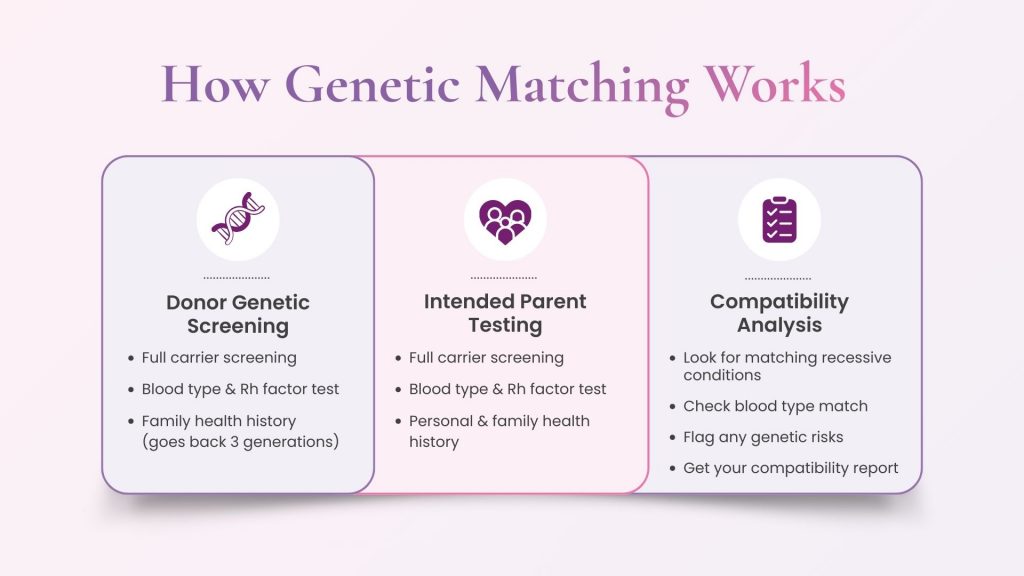
Genetic compatibility in donor egg IVF is specifically about carrier screening — comparing whether the egg donor and the sperm source carry any of the same recessive genetic conditions.
Here’s why this matters: most people carry at least one recessive gene variant for a genetic condition without ever knowing it or being affected by it. Carriers are healthy. The risk only becomes clinical when both genetic contributors — in this case, the donor and the sperm source — carry variants for the same condition. When that happens, there’s a 25% chance the embryo inherits two copies and develops the disorder.
Genetic matching compares the donor’s carrier screening results against the intended parent’s (or sperm donor’s) results to flag any overlapping conditions before the cycle begins. It doesn’t eliminate all genetic risk — no test does — but it removes a category of preventable risk that would otherwise go undetected. Your fertility specialist can walk you through how donor egg IVF incorporates this testing into your specific protocol.
How Genetic Screening Works Step by Step
Step 1: Donor Genetic Screening
Every Lucina donor undergoes comprehensive genetic screening before joining the active pool. This includes expanded carrier screening, blood type and Rh factor testing, and a detailed review of personal and family medical history going back at least three generations.
The family history interview is as important as the lab tests — it can surface inherited conditions or health patterns that a standard panel might not capture. All donor screening follows ASRM guidelines for gamete donation and FDA requirements for donor tissue. You can review the full scope of what egg donor screening covers and what each test is looking for.
Step 2: Intended Parent Testing
Intended parents go through expanded carrier screening as well. This establishes your own genetic baseline — which recessive conditions you carry, your blood type and Rh factor, and any family history of inherited disease.
If you have a known genetic condition or a family history of an inherited disorder, this step is especially important. Your fertility clinic coordinates this testing; Lucina provides the donor’s results so your clinic can run the comparison analysis. Consult your fertility specialist about which carrier screening panel is appropriate for your background.
Step 3: Compatibility Analysis
Once both sets of results are available, they’re compared side by side. The analysis identifies any conditions where both the donor and the sperm source carry matching variants — the scenarios that create meaningful genetic risk for the embryo.
Blood types are also compared to flag potential Rh incompatibility, which can cause complications during pregnancy if left unmanaged. Your clinic will receive a compatibility report that summarizes the findings and informs the next steps in your treatment plan.
What Conditions Are Screened For
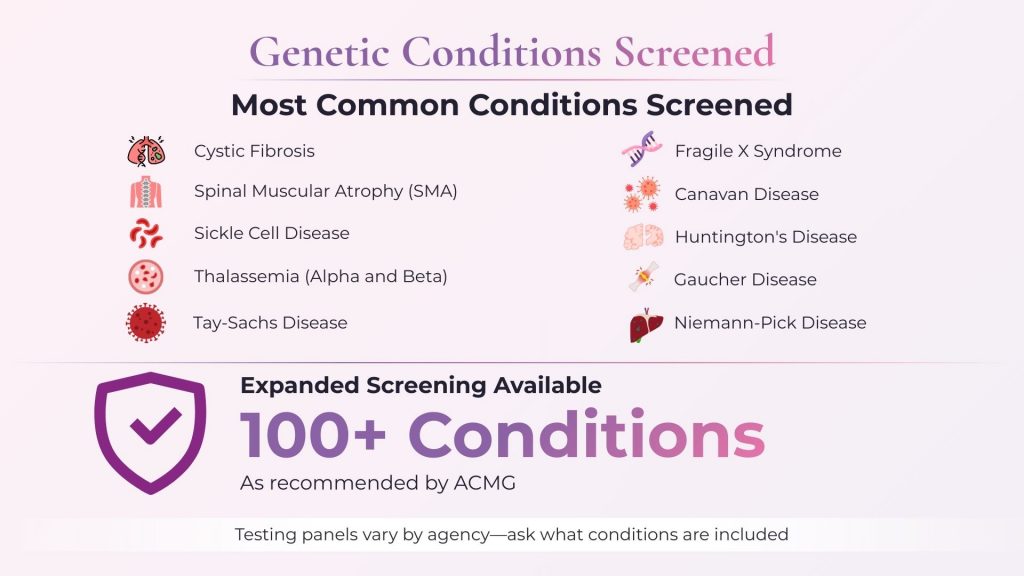
The American College of Medical Genetics and Genomics (ACMG) recommends expanded carrier screening panels covering a broad range of autosomal recessive and X-linked conditions. The most commonly screened conditions in egg donation include:
- Cystic Fibrosis
- Spinal Muscular Atrophy (SMA)
- Sickle Cell Disease
- Thalassemia (Alpha and Beta)
- Tay-Sachs Disease
- Fragile X Syndrome
- Canavan Disease
- Gaucher Disease
- Huntington’s Disease
- Niemann-Pick Disease
Broader panels test for 200–500+ conditions. Not all egg banks screen to the same depth, so asking about the specific panel used is a reasonable due-diligence question before selecting a program. A wider panel reduces the chance of an overlap going undetected.
Why Genetic Matching Matters for IVF Outcomes
Genetic matching isn’t a formality — it’s a layer of protection that works alongside the medical screening process to reduce preventable risk before a cycle begins. Here’s what it actually changes:
- Reduces inherited condition risk. Identifying carrier overlaps before the cycle lets intended parents and their clinic make informed decisions — including whether to proceed with that donor, pursue additional preimplantation genetic testing, or consider a different match.
- Informs embryo selection. When overlapping carrier status is identified, preimplantation genetic testing for monogenic disorders (PGT-M) can be used to screen embryos before transfer. This adds a step but significantly reduces risk of that specific condition passing to the child.
- Supports better decision-making. Knowing a donor’s full genetic profile before you commit means you’re choosing based on complete information, not partial data. You can compare genetic results across multiple donors before making a final selection.
- Reduces long-term cost exposure. A cycle that avoids a preventable genetic complication is one that doesn’t require additional intervention, repeat transfers, or downstream medical management for an inherited condition.
Ask your fertility clinic specifically about their carrier screening panel depth and whether they offer PGT-M for cases where a donor and sperm source share carrier status. The scope of testing varies by clinic, and knowing this upfront prevents surprises mid-cycle.
How Lucina Handles Genetic Screening and Matching
Every donor in Lucina’s pool is screened to FDA requirements and ASRM standards before joining the active gallery. Genetic testing, medical evaluation, psychological assessment, and a detailed family health history review are all completed before a donor’s profile becomes available to intended parents.
Donor screening results are included in the profile information accessible to intended parents through the gallery — so you can review genetic data alongside photos, background, and personality information in one place, rather than requesting it separately after you’ve already shortlisted a donor.
On the profile matching side, ReflEggction® AI narrows the field by facial resemblance in minutes rather than weeks. The two tools together — genetic data transparency and AI-assisted profile matching — address the two biggest friction points in the egg donor matching process. You can see both in action by trying ReflEggction® AI directly in the gallery.
The Emotional Side of Finding Your Match
The genetic compatibility report tells you about inherited condition risk. It doesn’t tell you whether a donor feels right — and that matters too.
Many intended parents describe the moment they find a donor who looks like them, shares their values, or has a background that resonates as unexpectedly emotional. The process of browsing profiles can shift from analytical to deeply personal quickly, and that’s not a sign you’re overcomplicating it. It means the decision is as significant as it actually is.
Genetic compatibility gives you a factual foundation. Profile matching gives you the rest. Both should inform the choice, and neither should be rushed. If you want to understand more about how genetics and appearance factor into selection, our guide on prioritizing genetics, looks, and health in donor selection covers the tradeoffs in detail.
Start Your Donor Search with ReflEggction® AI
Upload a photo and ReflEggction® surfaces donors who match your facial features in minutes. Browse 3,500+ screened profiles with genetic data included — $0 to start.
3,500+ screened donor profiles · 92.2% frozen egg survival rate (2022) · Up to 70% faster donor search
$0 to browse the gallery. Triple Guarantee programs available. ReflEggction® AI matches donors by facial recognition.
FAQs

Julianna Nikolic
Chief Strategy Officer Julianna Nikolic leads strategic initiatives, focusing on growth, innovation, and patient-centered solutions in the reproductive sciences sector. With 26+ years of management experience and a strong entrepreneurial background, she brings deep expertise to advancing reproductive healthcare.

Table of Contents
- How Does the Egg Donor Matching Process Work?
- How AI Has Changed Donor Matching
- What Genetic Compatibility Means in Egg Donation
- How Genetic Screening Works Step by Step
- What Conditions Are Screened For
- Why Genetic Matching Matters for IVF Outcomes
- How Lucina Handles Genetic Screening and Matching
- The Emotional Side of Finding Your Match
- FAQs