
The first time you open an egg donor database, it can be hard to know where to begin. A photo or a familiar detail may draw you to a profile. Then come the questions that take longer to answer: What else can you learn about this donor? Which information should you discuss with your clinic? Are eggs from this donor available when you need them?
An egg donor database brings profiles together so you can search, compare, and return to the people who interest you. Start with a few priorities, then read beyond the first card. The details worth discussing with your clinic or the egg bank often become clearer as you build a shortlist.

Already have a Lucina gallery account?
Log in →Key Takeaways
- Start with two or three priorities, then add filters one at a time.
- Read beyond the card: the full profile gives you more background and health information to consider.
- Lucina’s gallery brings together 3,500+ donor profiles to explore and compare.
- A card’s cohort size and status do not confirm current inventory. Ask a coordinator before making plans around a donor.
How to Search the Donor Gallery in Four Steps
You may also hear this collection of profiles called an egg donor catalog. Whatever name a site uses, the search is easier when you start with a few questions rather than every filter at once.
- Choose a few starting priorities. Think about which health-history questions you want to discuss with your clinic and which personal qualities matter most to you. You can consider education, interests, heritage or physical traits without turning every preference into a requirement.
- Search broadly, then narrow. Use filters such as age, education, height, hair and eye color, blood type and heritage. Add one filter at a time. Starting with education and then reading several profiles, for example, may reveal options that a five-filter search would hide.
- Read the full profiles. Keep track of donor IDs you want to revisit. Compare what you learn from the profiles, and write down anything you want to ask your clinic or Lucina’s team.
- Confirm the details. Share your shortlist with a Lucina coordinator to check current cohort availability, clarify donor information, such as her donation history, and understand the next steps.
What the Donor Card and Full Profile Show
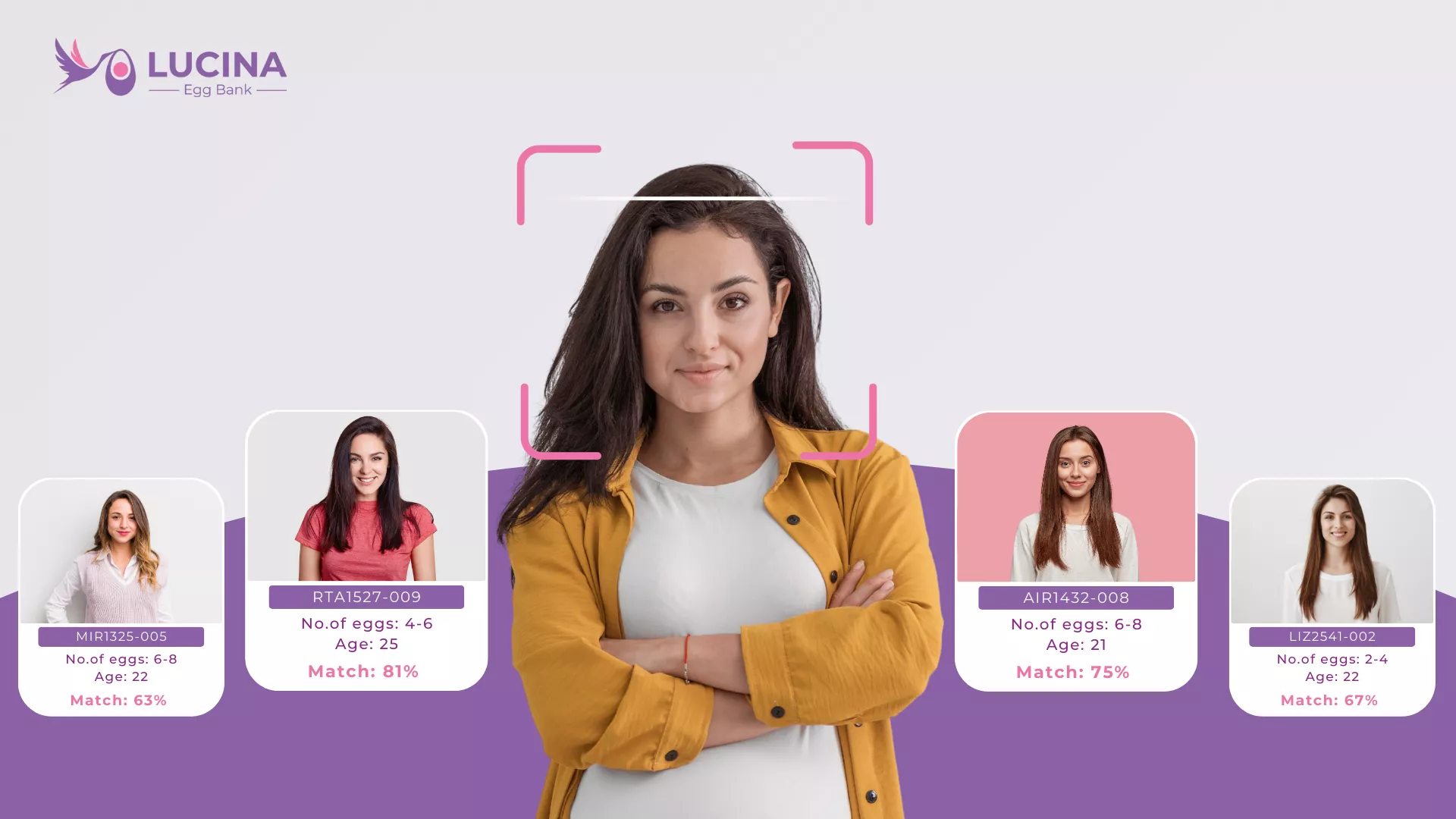
The donor card presents the essentials at a glance: a photo and donor ID, age, height, blood type, heritage, the number of past donation cycles, cohort size, and cohort status. These details help you decide whose full profile to read. Cohort size describes the group of eggs, not the number of cohorts currently left from that donor.
After you enter the gallery, the detailed profile offers more to explore:
- Childhood photos and adult photos, with adult photos available after you accept the confidentiality agreement
- Audio interviews and personal essays, including why she chose to donate
- Personal and family medical history
- Medical screening and genetic carrier screening reports
- Educational and family background, and personal interests
Read the profile as a whole. An interview or essay may give you a better sense of the person behind the card. Every Lucina donor is physician-screened. Screening shows you what was tested; your fertility physician or a genetic counselor can explain what a result does and does not tell you for your family. If the sperm provider has also had carrier screening, they can compare the two results. As you review the details in an egg donor profile, bring any questions about a result or family history to your care team. The American Society for Reproductive Medicine’s donor guidance provides clinical context for screening.
How to Narrow Your Shortlist
The priorities you set for your egg donor search are a starting point, not a rigid checklist. A shortlist is most useful when it helps you ask better questions:
- Keep your must-haves few. Pick two or three priorities. Treat other preferences as possibilities to explore.
- Read past the first impression. Listen to an interview and read the essay alongside health and background information.
- Compare what needs an answer. Note a medical question for your clinic, a profile detail for the coordinator, or a cohort question you cannot settle from the card.
Another Way to Explore: Lucina ReflEggction™
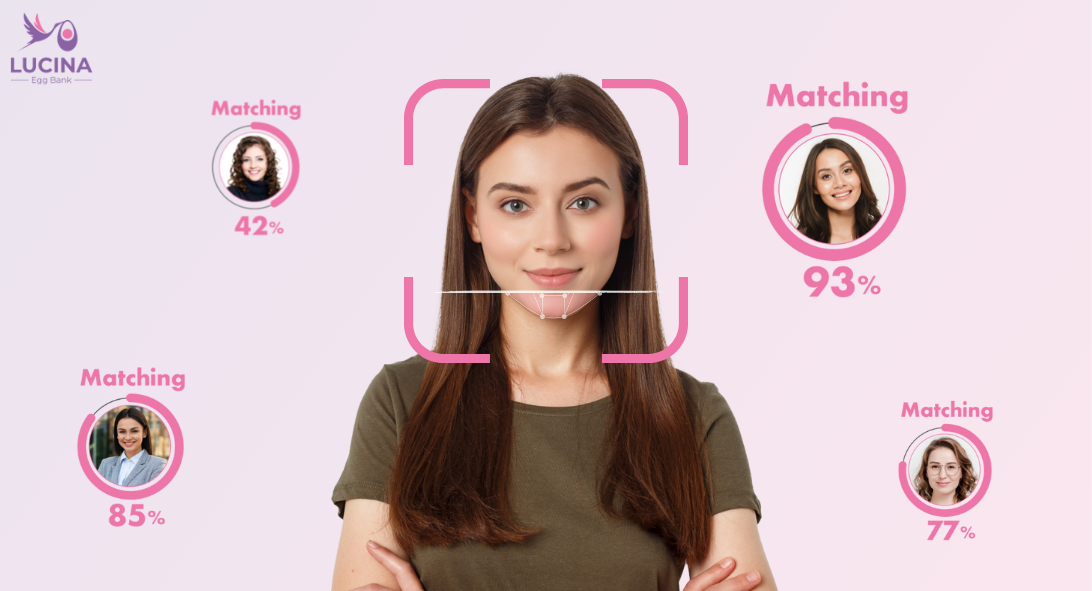
Filters work well for traits you can name. Resemblance is harder to describe in a search box. Rather than asking you to describe a face, Lucina ReflEggction™ starts with one. With free gallery access, you can upload a photo of yourself, your partner, or another face you have in mind, and this AI face-matching tool will suggest donors whose facial features are similar.
Treat a suggestion as a starting point for reading the profile. How much a child resembles you depends on more than facial features; how resemblance works with donor eggs explains why.
Check Availability Before You Choose
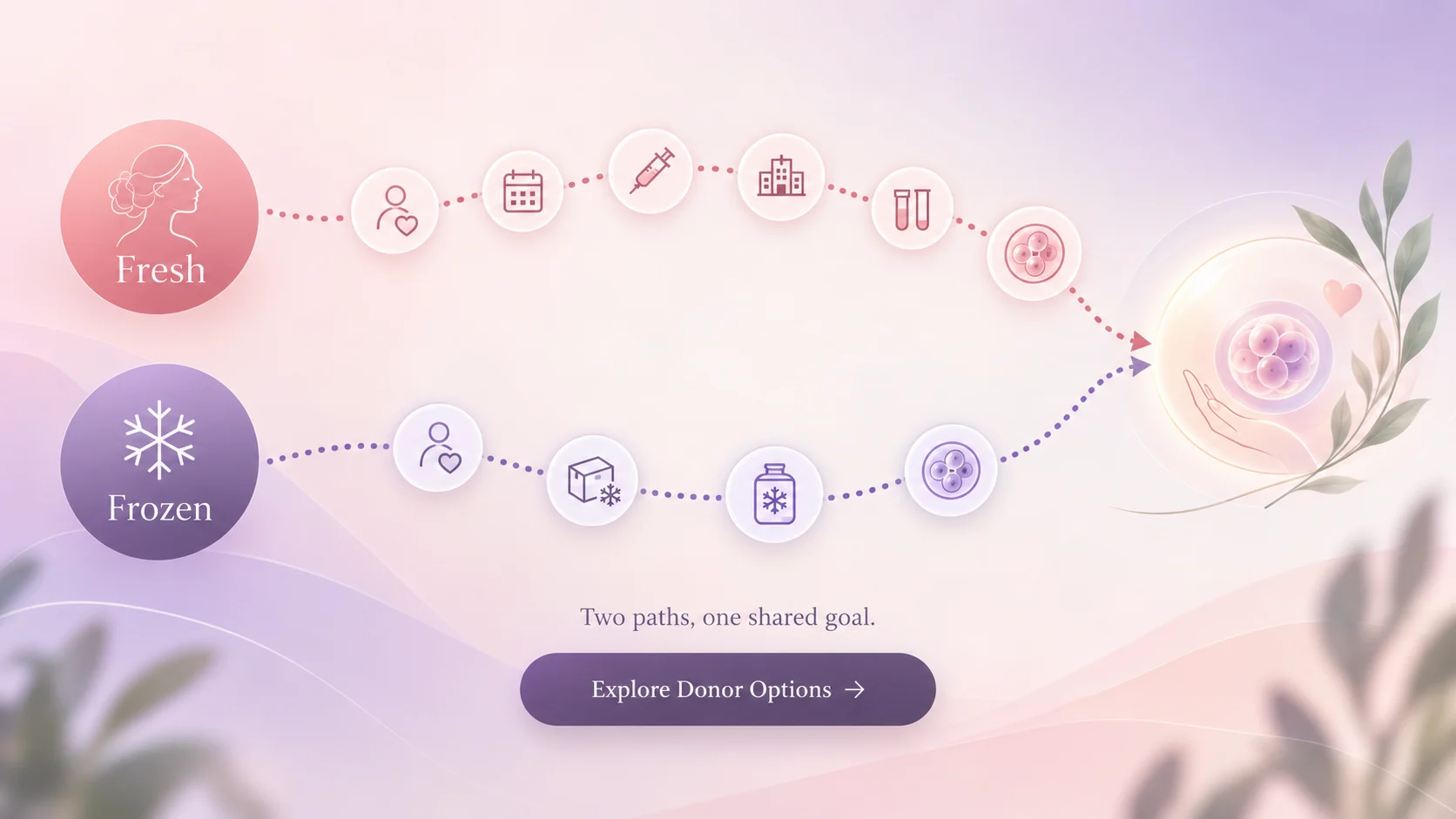
A cohort is a group of eggs from one donor. Frozen cohorts have already been retrieved and stored; incoming cohorts depend on a future retrieval. The card shows the cohort size and status. A Lucina coordinator confirms how many are currently available and what can be reserved.
If you hope to use the same donor for a future sibling, raise that while you are comparing options. Additional cohorts or incoming inventory may affect your decision. Ask what is possible for the donor you are considering rather than assuming another cohort will be there later.
What Happens After You Select a Donor?
Your Lucina consultant confirms the selected cohort and reviews pricing, guarantee options, the purchase agreement, and payment with you. You can then decide whether embryos will be created through Lucina’s in-house IVF option or at your own clinic. If the eggs need to be shipped, Lucina coordinates the arrangements with that clinic. Your consultant can explain the timing for your situation.
Questions Intended Parents Often Ask
Is the egg donor gallery free to browse?
Can I see donor photos?
Can I search for a donor by ID?
Explore the Donor Gallery
You can take your time comparing profiles and come back to them as your questions change. If you are ready to explore, Lucina’s full gallery is free to access after sign-up.
Already registered?
Log in to the donor gallery →
Julianna Nikolic
Chief Strategy Officer Julianna Nikolic leads strategic initiatives, focusing on growth, innovation, and patient-centered solutions in the reproductive sciences sector. With 26+ years of management experience and a strong entrepreneurial background, she brings deep expertise to advancing reproductive healthcare.