The number that stops most people mid-research: success rates. Intended parents searching for donor egg options quickly discover that every provider quotes a different figure, measured differently, from a different year, with different fine print. It’s confusing by design, or at least by accident.
Donor egg success rates depend on several things you can control and several you can’t. What you can do is choose an egg bank with transparent published outcomes, screened donors with verified fertility markers, and a financial protection program that catches you if a cycle doesn’t work.
This article explains exactly what each of those means, and what Lucina Egg Bank’s guarantee programs actually cover.

What Donor Egg Success Rates Actually Measure
Three distinct metrics appear in any honest discussion of donor egg IVF outcomes, and they measure three different points in the process. Conflating them is a common mistake, and it leads to unrealistic expectations in both directions.
Frozen egg survival rate measures how many eggs survive the thaw after vitrification. Industry average sits around 63.5%, per ASRM published data. Lucina’s 2022 data shows 92.2%.
The gap reflects differences in vitrification protocols and which eggs a bank accepts into its pool. Not all banks apply AMH and AFC ovarian reserve testing before accepting donors.
ICSI fertilization rate measures how many surviving eggs are successfully fertilized using intracytoplasmic sperm injection. Lucina’s 2022 rate was 89.1%. This figure is partly within the bank’s control (egg quality) and partly determined by the recipient’s clinic and sperm quality.
Clinical pregnancy rate per transfer measures confirmed pregnancies as a percentage of embryo transfers performed. Lucina’s 2022 rate was 61.5%, compared to an industry average of 47.6%.
This is the figure most intended parents care about, but it’s also the most dependent on factors outside the egg bank’s control: the recipient’s uterine health, the transfer protocol used by the IVF clinic, and if the embryo was PGT-A tested before transfer.
Survival Rate
Fertilization Rate
Rate per Transfer
How Screening Depth Affects Your Odds
The eggs in Lucina’s bank come only from donors who pass a strict multi-stage review. Most programs meet the FDA floor. Lucina’s donor screening process goes further, and the difference shows up in post-thaw survival numbers.
Every Lucina donor completes AMH and AFC ovarian reserve testing before being accepted. These two markers measure the quantity of a donor’s remaining egg supply and predict stimulation response.
A donor who looks healthy on paper but has low ovarian reserve will produce fewer eggs and lower-quality eggs during retrieval. Filtering for this before acceptance, rather than after, is what the 92.2% survival rate reflects.
Genetic carrier screening, a three-generation family health history review, and full psychological evaluation are also part of the standard intake process.
Lucina selects from the top 10% of applicants across appearance, health, academic record, and demonstrated talent within each category. Only mature MII oocytes, the eggs at the correct developmental stage for fertilization, are vitrified and stored.
When reviewing any egg bank, ask two questions: “Do you test AMH and AFC before accepting donors?” and “What percentage of applicants do you accept?” The answers reveal far more than a headline pregnancy rate.
What Is a Blastocyst and Why It Matters
A blastocyst is an embryo that has developed to day 5 or 6 after fertilization. At this stage, it has differentiated into distinct cell groups and is ready for uterine transfer or genetic testing. Reaching the blastocyst stage is meaningful because most chromosomally abnormal embryos arrest before day 5 and never make it this far.
That selective pressure is exactly why blastocyst-stage transfer produces better pregnancy rates than day-3 transfer. It’s also why Lucina’s Blastocyst Guarantee is the first tier of its financial protection program. An egg cohort that doesn’t yield at least one blastocyst has effectively ended a cycle before transfer has even happened.
For intended parents doing PGT-A testing on embryos, the blastocyst stage is also required before biopsy. Genetic testing happens at day 5 or 6 because the embryo has enough cells at that point for an accurate sample without damaging the cells that will form the fetus.
The Three Guarantee Tiers Explained
Lucina’s Triple Guarantee program covers three distinct milestones in the donor egg IVF process. Each tier provides replacement egg cohorts if a specific clinical benchmark isn’t reached. They’re financial protections, not pregnancy promises, and the distinction matters for setting realistic expectations.
If your initial cohort doesn’t produce at least one blastocyst, Lucina provides up to two replacement cohorts at no charge. If neither replacement cohort produces a blastocyst, a full refund is issued (excluding transport fees). Sperm quality must meet normal semen analysis standards to qualify.
Preimplantation Genetic Testing for Aneuploidy (PGT-A) screens embryos for chromosomal abnormalities. If no euploid (chromosomally normal) embryo results from the initial cohort, Lucina provides up to two replacement cohorts. A full refund applies if neither delivers a PGT-A passing embryo.
Available at a price of $49,800. Start with three cohorts totaling 18 donor eggs. If the initial eggs and resulting embryos do not lead to pregnancy, Lucina provides another 18 eggs across three complimentary cohorts.
What the Guarantees Do Not Cover
Flash-sale donors, which Lucina occasionally offers as time-limited promotions at special pricing, are explicitly final-sale. They are not enrolled in any of the three guarantee tiers. This is disclosed at the point of purchase, but it’s worth understanding before selecting a cohort.
The guarantees also require that the partnering IVF clinic meets defined conditions throughout the cycle. Sperm quality, lab protocols, and transfer timing all factor in. Your Lucina coordinator can walk through the full enrollment criteria before you commit.
Guarantee programs provide financial protection through replacement cohorts or refunds when specific clinical milestones aren’t met. They are not a promise of pregnancy or a clinical prediction of outcome. No egg bank can guarantee a pregnancy. Anyone who claims otherwise is misrepresenting the science.
How to Choose Between Guarantee Tiers
The right tier depends on where you are in the process, what your IVF clinic recommends, and your risk tolerance for additional cycles.
Intended parents who are earlier in the process, or who have had failed fresh cycles, often find the Pregnancy Guarantee most relevant. The $49,800 price point starts with three cohorts totaling 18 donor eggs. If the initial eggs and resulting embryos do not lead to pregnancy, Lucina provides another 18 eggs across three complimentary cohorts.
The Blastocyst Guarantee is the entry-level tier and protects the most common early failure point. For first-time intended parents who want a baseline safety net without committing to the full Pregnancy Guarantee program, it’s a reasonable starting point.
Choosing the Right Donor to Maximize Success
Egg quality is the foundation of every outcome metric above. The donor selection process is where you have the most influence over your odds before a cycle begins.
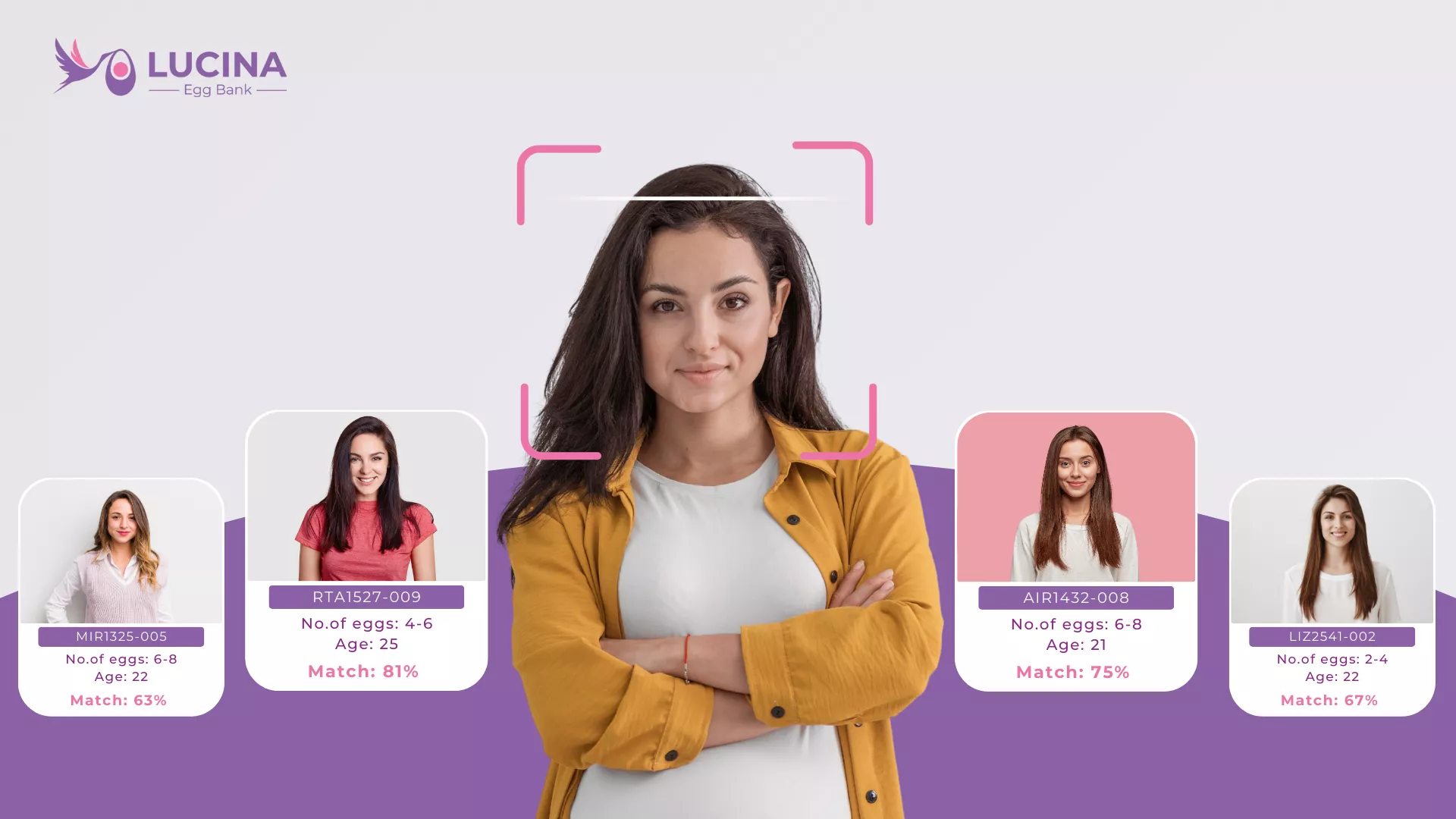
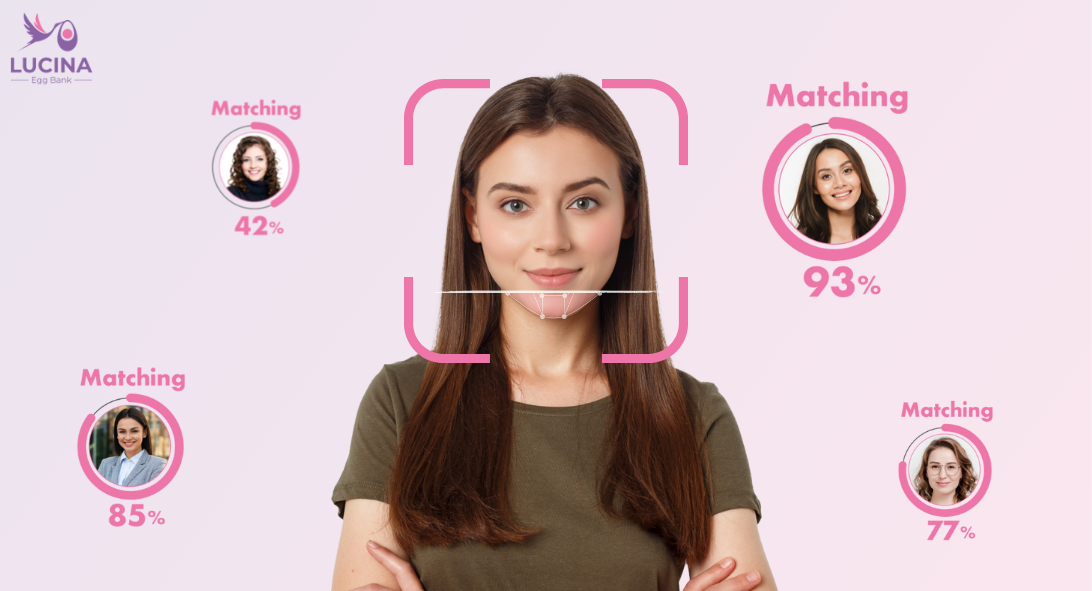
Lucina’s ReflEggction® AI matches intended parents with donors by facial recognition, analyzing bone structure and phenotypic features at a depth that trait-filter searches can’t replicate.
For parents who care about physical resemblance, this changes what the search process looks like. Most intended parents complete the matching process in a fraction of the time it takes with traditional filtering.
Beyond physical resemblance, donor profiles include genetic carrier panel results, psychological evaluation summaries, three-generation family health history, academic and professional background, and AMH/AFC ovarian reserve data. All of this is accessible at no cost before committing to a cohort.
Some intended parents also consider epigenetic factors in egg donation, specifically the research on how the recipient’s uterine environment can influence gene expression in a donor-conceived child. It’s a growing area of study that adds nuance to the genetics-only framing of donor selection.
What the Process Looks Like After You Choose
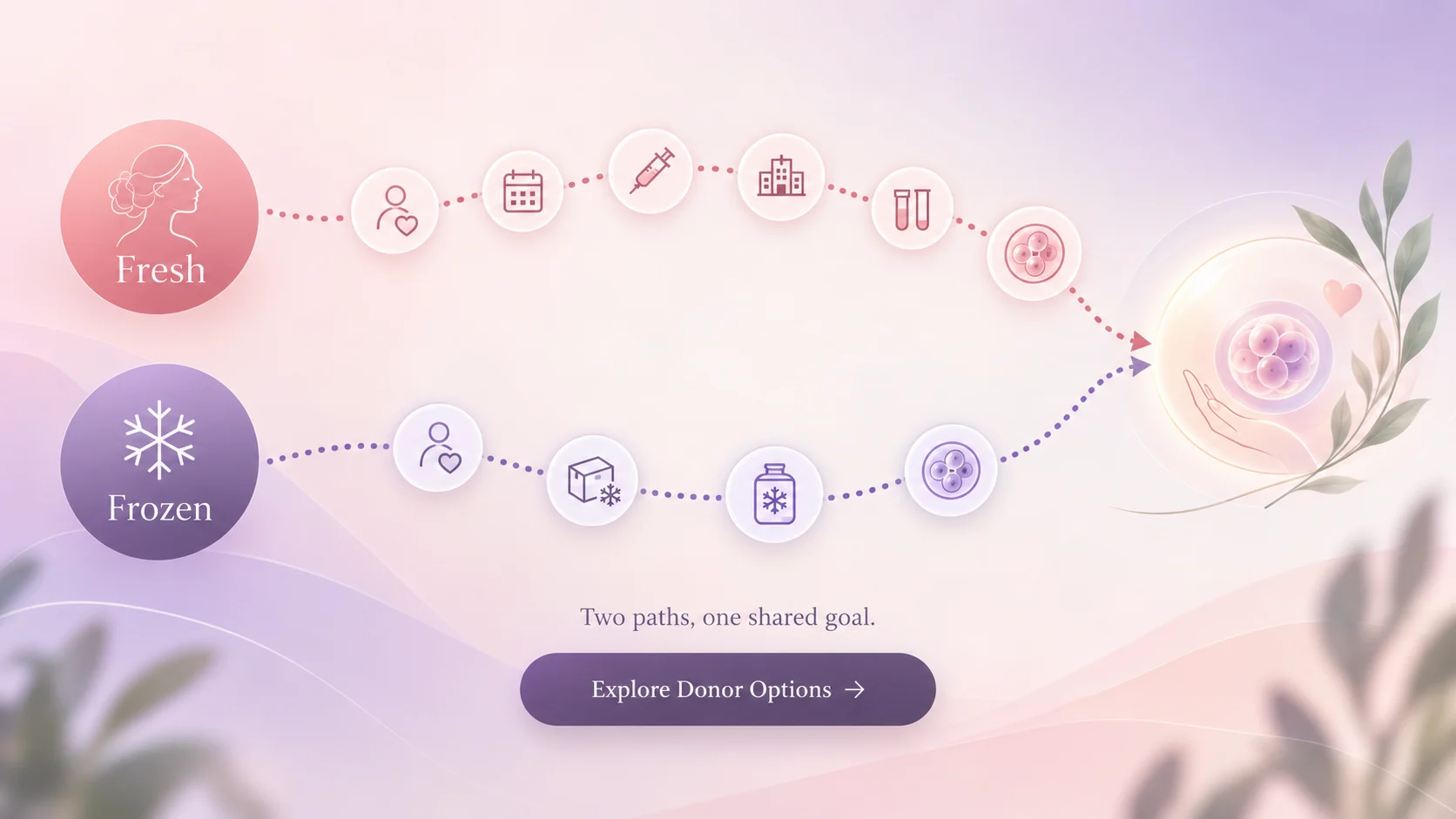
Once you’ve selected a donor and a cohort, Lucina prepares and ships the frozen eggs to your IVF clinic via secure cryogenic transport. Eggs can typically be ready to ship within a week of cohort selection. No cycle synchronization with the donor is needed, because the eggs are already vitrified.
Your clinic’s embryologist thaws the eggs, performs ICSI fertilization using your partner’s or a donor’s sperm, and cultures the resulting embryos to the blastocyst stage. If you’re doing PGT-A testing, the biopsy happens at day 5 or 6, and results typically return within 7 to 14 days. The transfer cycle follows your clinic’s standard frozen embryo transfer protocol.
Lucina’s timeline compares well to fresh cycles specifically because none of these steps require coordinating with a live donor. Fresh agency cycles add 2 to 4 months of lead time before the stimulation cycle even begins, plus the risk that a donor withdraws mid-process.
Your Next Step: Browsing Donors at Zero Cost
The clearest way to evaluate an egg bank is to look at the donor profiles directly. Lucina’s full gallery is accessible with no upfront cost and no commitment required. You can review donor health histories, genetic screening results, photos, and AMH/AFC data before committing to a cohort.
If you have questions about which guarantee tier fits your situation, or want help understanding what the program conditions require, Lucina’s team coordinates directly with your IVF clinic. Browsing the donor gallery is the natural first step for most intended parents, and it costs nothing to start.
Browse 3,500+ Donor Profiles at Lucina
Review full donor health histories, genetic screening results, and AMH/AFC data before committing. Triple Guarantee programs are available at enrollment.
3,500+ screened donor profiles · 92.2% frozen egg survival rate (2022) · Triple Guarantee programs available
$0 to browse the gallery. ReflEggction® AI matches donors by facial recognition. Eggs ship globally within days of selection.
Frequently Asked Questions

Julianna Nikolic
Chief Strategy Officer Julianna Nikolic leads strategic initiatives, focusing on growth, innovation, and patient-centered solutions in the reproductive sciences sector. With 26+ years of management experience and a strong entrepreneurial background, she brings deep expertise to advancing reproductive healthcare.

Table of Contents
- What Donor Egg Success Rates Actually Measure
- How Screening Depth Affects Your Odds
- What Is a Blastocyst and Why It Matters
- The Three Guarantee Tiers Explained
- How to Choose Between Guarantee Tiers
- Choosing the Right Donor to Maximize Success
- What the Process Looks Like After You Choose
- Your Next Step: Browsing Donors at Zero Cost
- Frequently Asked Questions