
Irregular periods are one of the most common reasons women wonder whether they can donate eggs. The answer isn’t a simple yes or no. It depends on what’s causing the irregularity and what your ovarian reserve looks like.
At Lucina Egg Bank, we evaluate each application on its full medical picture. An irregular cycle alone doesn’t automatically disqualify you, but it does prompt a more detailed review because cycle regularity is tied to the hormonal environment that governs egg production and ovarian response to stimulation.
This article explains what egg banks look for when a donor reports irregular periods, which underlying causes are more or less compatible with egg donation, and what screening involves for applicants with cycle irregularity.

Why Cycle Regularity Matters in Egg Donation
Donors with mildly irregular cycles, normal ovarian reserve, and a known or benign cause for the irregularity can often qualify. Donors with severely irregular or absent periods, low ovarian reserve, or an underlying condition that independently affects eligibility face a higher bar.
The key evaluation points are: cause of irregularity, Anti-Müllerian Hormone (AMH) levels, antral follicle count (AFC), and cycle history.
Egg donation requires ovarian stimulation, a process in which daily hormone injections prompt your ovaries to mature multiple eggs at once. This process depends on a functional hormonal axis connecting the brain, pituitary gland, and ovaries.
When periods are irregular, it often signals something is disrupting that axis. The disruption might be minor and temporary (intense exercise, recent weight changes, or stress), or it may reflect an underlying condition that directly affects how your ovaries respond to stimulation medications.
Screeners ask about cycle regularity because the answer tells them whether additional investigation is warranted before proceeding. It’s a diagnostic signal, not a verdict.
Causes of Irregular Periods and How Each Is Evaluated
The cause of your irregular periods shapes the eligibility assessment more than the cycle pattern itself. Here’s how the most common causes are typically viewed:
Functional hypothalamic amenorrhea is one of the most common causes of irregular cycles in young women. If the irregularity is recent, tied to a specific stressor, and your hormones and ovarian reserve are otherwise normal, this is generally viewed as a resolvable issue rather than a structural barrier.
The most common hormonal cause of irregular periods. PCOS doesn’t automatically disqualify you, and many women with PCOS have a higher-than-average antral follicle count. The main concern is OHSS risk, which is managed through modified stimulation protocols in eligible donors.
Both hypothyroidism and hyperthyroidism can disrupt cycles. Well-controlled thyroid conditions with normalized levels are generally compatible with donation. Uncontrolled dysfunction is more problematic due to interactions with the stimulation protocol.
When endometriosis is the underlying cause of irregular periods, the evaluation focuses primarily on ovarian reserve and disease stage. Shallow lesions with adequate reserve are treated differently from advanced disease with structural involvement.
Formerly called premature ovarian failure, POI involves the ovaries stopping normal function before age 40. Irregular or absent periods are often an early sign. Because POI reflects low or diminishing ovarian reserve, donors with a confirmed diagnosis are typically not eligible.
High prolactin levels (from a prolactinoma or other causes) suppress ovulation and cause irregular periods. Well-managed hyperprolactinemia with normalized levels may be compatible with donation. Active, uncontrolled prolactin increase is not.
Before applying, try to characterize your cycle history as clearly as you can. How many periods do you have per year? How long has the irregularity been going on? Has a doctor ever investigated the cause? If you’ve had hormone testing or an ultrasound, bring those results. The more specific your history, the faster the medical review can move.
The Role of Ovarian Reserve in the Assessment
For donors with irregular periods, ovarian reserve testing is the most informative part of the medical evaluation. Two measurements matter most:
- AMH (Anti-Müllerian Hormone). A blood test that reflects the size of your remaining egg supply. AMH doesn’t fluctuate much with cycle timing, making it useful even when cycles are unpredictable.
- AFC (Antral Follicle Count). A count of small resting follicles visible on a transvaginal ultrasound. AFC gives a real-time picture of how many eggs your ovaries have available to respond to stimulation.
A donor with irregular periods but a strong AMH and high AFC is in a fundamentally better position than a donor with irregular periods and low AMH. The cycle pattern tells screeners to look; the reserve numbers tell them what they find.
One important note: very irregular cycles can make scheduling the ovarian reserve ultrasound more complex, since AFC is ideally measured at the start of a cycle. Your medical coordinator will work with you to time this appropriately.
When Irregular Periods Are More Likely to Affect Eligibility
Not all irregular cycles are equal. Screeners look at the degree of irregularity alongside the cause. Here’s a rough spectrum from lower to higher concern:
- Lower concern. Cycles that vary by a few days each month, mild irregularity with a known benign cause, recent onset tied to a specific stressor that has since resolved.
- Moderate concern. Cycles that vary widely (ranging from 25 to 50 days with no clear pattern), PCOS-related irregularity without confirmed ovarian reserve data, cycles that have been irregular for years without investigation.
- Higher concern. Fewer than 6 periods per year (oligomenorrhea), absent periods for 3 or more months not explained by pregnancy or recent hormonal contraceptive use (amenorrhea), confirmed low ovarian reserve alongside the irregularity.
Oligomenorrhea and amenorrhea don’t automatically disqualify you, but they require a clear clinical explanation before the screening team can assess your eligibility with confidence.
The menstrual cycle is a reflection of the hypothalamic-pituitary-ovarian (HPO) axis. When this axis functions normally, the brain signals the pituitary to release hormones that stimulate the ovaries. Irregular cycles often indicate disruption at one or more points along this chain.
For egg donation, the goal of hormonal stimulation is to temporarily override part of this axis using injectable gonadotropins. How well that override works depends on the baseline state of the axis.
Knowing the cause of irregular cycles matters as much as the cycle pattern itself. The NIH menstrual irregularities overview explains the physiology in more detail.
What the Screening Process Looks Like for Donors With Irregular Cycles
The overall process follows the same structure as for all donors, with additional evaluation at the medical screening stage. Here’s what to expect:
Describe your cycle history honestly: typical cycle length, how much it varies, how long it’s been irregular, and any known cause. Include any prior diagnosis or testing.
Our team reviews your application. Irregular cycle disclosures often prompt a follow-up conversation before advancing to medical screening to clarify history and any prior diagnosis.
Bloodwork includes AMH, FSH, LH, estradiol, and thyroid function. These results map the hormonal picture driving your cycle pattern.
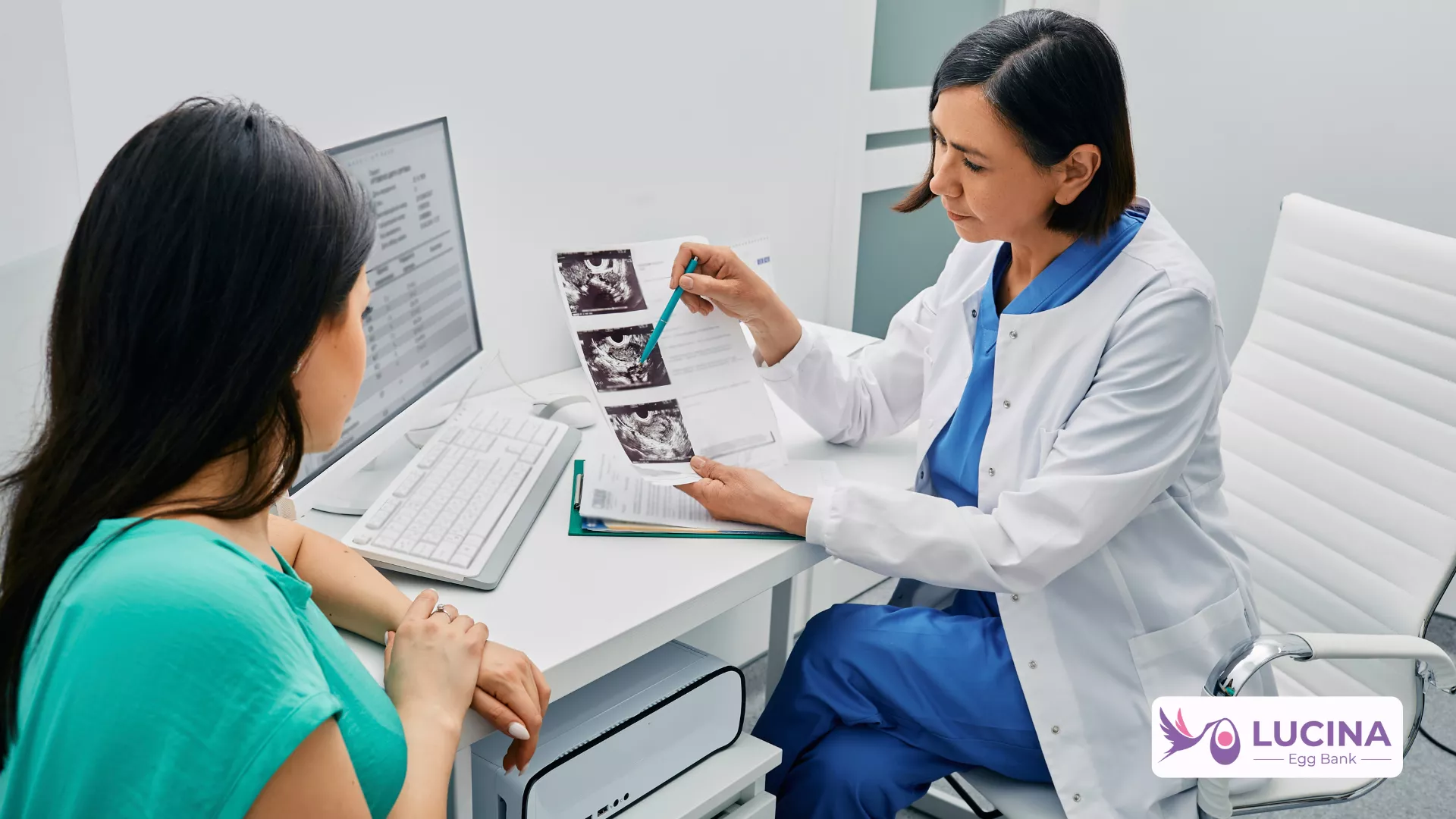
A transvaginal ultrasound measures your antral follicle count and checks for structural findings such as PCOS-pattern ovaries, endometriomas, or cysts that might explain the irregularity.
A reproductive endocrinologist reviews your full profile including cycle history, hormone results, and ultrasound findings before making an eligibility determination.
Based on the complete picture, you’re cleared to proceed, deferred for additional workup, or informed of ineligibility. Many donors with irregular cycles who have adequate reserve reach clearance at this stage.
The full egg retrieval process follows a set timeline from first injection through retrieval, typically spanning six to ten weeks.
The most direct way to find out is to apply. Irregular periods prompt a closer look, not an automatic rejection. Let the medical team review your full picture.
Start Your ApplicationThe Honest Answer About Irregular Periods and Egg Donation
If you have irregular periods and want to donate eggs, the most important thing you can do before applying is understand why. A donor who can say “my cycles are irregular because I was diagnosed with PCOS three years ago and my AMH is 4.2” is in a much better position than someone who has had irregular periods for years with no investigation.
Irregular periods don’t close the door on egg donation. They open a set of clinical questions that the screening process is designed to answer. If those questions resolve in your favor, adequate ovarian reserve, manageable underlying cause, no disqualifying co-occurring conditions, you can move forward.
Our 3,500+ screened donor profiles include women with a wide range of hormonal histories. We evaluate each applicant’s full hormonal picture, not just their cycle history. What disqualifies egg donors covers additional factors for donors working through a complex screening picture, and donation is coordinated through our clinical partner network with fertility clinics across the U.S.
Apply to Donate Eggs With Lucina
Irregular periods aren’t an automatic disqualifier. We evaluate each applicant individually, with a medical team that looks at your full hormonal picture. Our 3,500+ screened donor profiles reflect a wide range of health and cycle histories.
$8,000–$15,000+ per cycle (Standard) · Up to $50,000 per cycle (Iconic) · 3,500+ screened donors
All medical and travel costs covered. Compensation paid after retrieval. Up to 6 donation cycles allowed per ASRM lifetime guidelines.
Frequently Asked Questions

Julianna Nikolic
Chief Strategy Officer Julianna Nikolic leads strategic initiatives, focusing on growth, innovation, and patient-centered solutions in the reproductive sciences sector. With 26+ years of management experience and a strong entrepreneurial background, she brings deep expertise to advancing reproductive healthcare.

Table of Contents
- Why Cycle Regularity Matters in Egg Donation
- Causes of Irregular Periods and How Each Is Evaluated
- The Role of Ovarian Reserve in the Assessment
- When Irregular Periods Are More Likely to Affect Eligibility
- What the Screening Process Looks Like for Donors With Irregular Cycles
- The Honest Answer About Irregular Periods and Egg Donation
- Frequently Asked Questions