Can You Donate Eggs If You Have Braces?
Braces are one of the more unexpected things people wonder about when they’re researching egg donation. If you’re currently in orthodontic treatment and thinking about applying, the good news is simple: having braces does not disqualify you from donating eggs.
Egg donation is a process that involves your ovaries and reproductive hormones. Orthodontic treatment works on your teeth and jaw. The two don’t overlap in any meaningful way, and braces won’t show up as a red flag in your screening.
That said, there are a few practical things worth knowing, around medication disclosure, timing, and the coordination required during a donation cycle. Lucina Egg Bank walks every donor through the process step by step, and this article covers what to expect if you’re currently wearing braces.

Why Braces Don’t Affect Egg Donation Eligibility
Egg donor screening focuses on one main area: your reproductive health. The clinical team evaluates your ovarian reserve, hormone levels, menstrual cycle regularity, and overall physical health.
Yes, you can donate eggs if you have braces. Orthodontic treatment has no effect on the factors that matter in egg donor screening: ovarian reserve, hormone levels, and cycle health. Braces are not listed in any standard donor disqualification criteria, and they are not something you need to worry about before applying.
None of those screening criteria have anything to do with your teeth or jaw. Orthodontic treatment uses brackets, wires, or aligners to apply gentle pressure to your teeth over time. According to the FDA, orthodontic devices are classified as dental devices and have no systemic effects on the body’s reproductive hormones or ovarian function.
The part of your body involved in orthodontics and the part involved in egg donation are entirely separate systems.
The One Thing to Disclose: Any Medications
Braces themselves are not a disclosure concern. Any medications you take related to your orthodontic treatment are.
During your application and medical screening, you’ll be asked to list all current medications and supplements. This is standard for all donors, per ASRM guidelines for third-party reproduction. Common orthodontic-related items to disclose include:
- Over-the-counter pain relievers (ibuprofen, acetaminophen) taken for soreness after adjustments. These are widely used and typically not disqualifying, but should be disclosed.
- Prescription pain medication taken for dental or jaw procedures. Disclose these and note how long you’ve been taking them.
- Antibiotics prescribed for dental work. Timing matters here: the clinical team may ask you to wait until a course of antibiotics is complete before beginning stimulation.
- Anti-inflammatory medications taken regularly. Per NIH research on NSAIDs, some anti-inflammatories taken at high frequency may interact with follicular development, so the medical team will want to know.
The rule is simple: disclose everything, let the clinical team decide what matters. The vast majority of orthodontic-related medications are non-issues.
If you take ibuprofen regularly after orthodontic adjustments, mention it on your application, even if it feels too minor to note. The clinical team reviews all medications in context and will tell you if anything needs adjusting before your cycle begins. Over-disclosing is always better than under-disclosing.
How the Donation Process Works with Braces
The six steps below show what happens at each stage of donation, with notes on where orthodontic treatment comes into play and where it doesn’t:
You complete the initial application, including a medical history form. Note any current medications, including anything taken for orthodontic discomfort. Braces themselves are not a medical condition to flag. Any related medications are.
Lucina’s team reviews your application. Active orthodontic treatment will not raise a concern at this stage. The review focuses on core eligibility: age, health, lifestyle, and reproductive history.
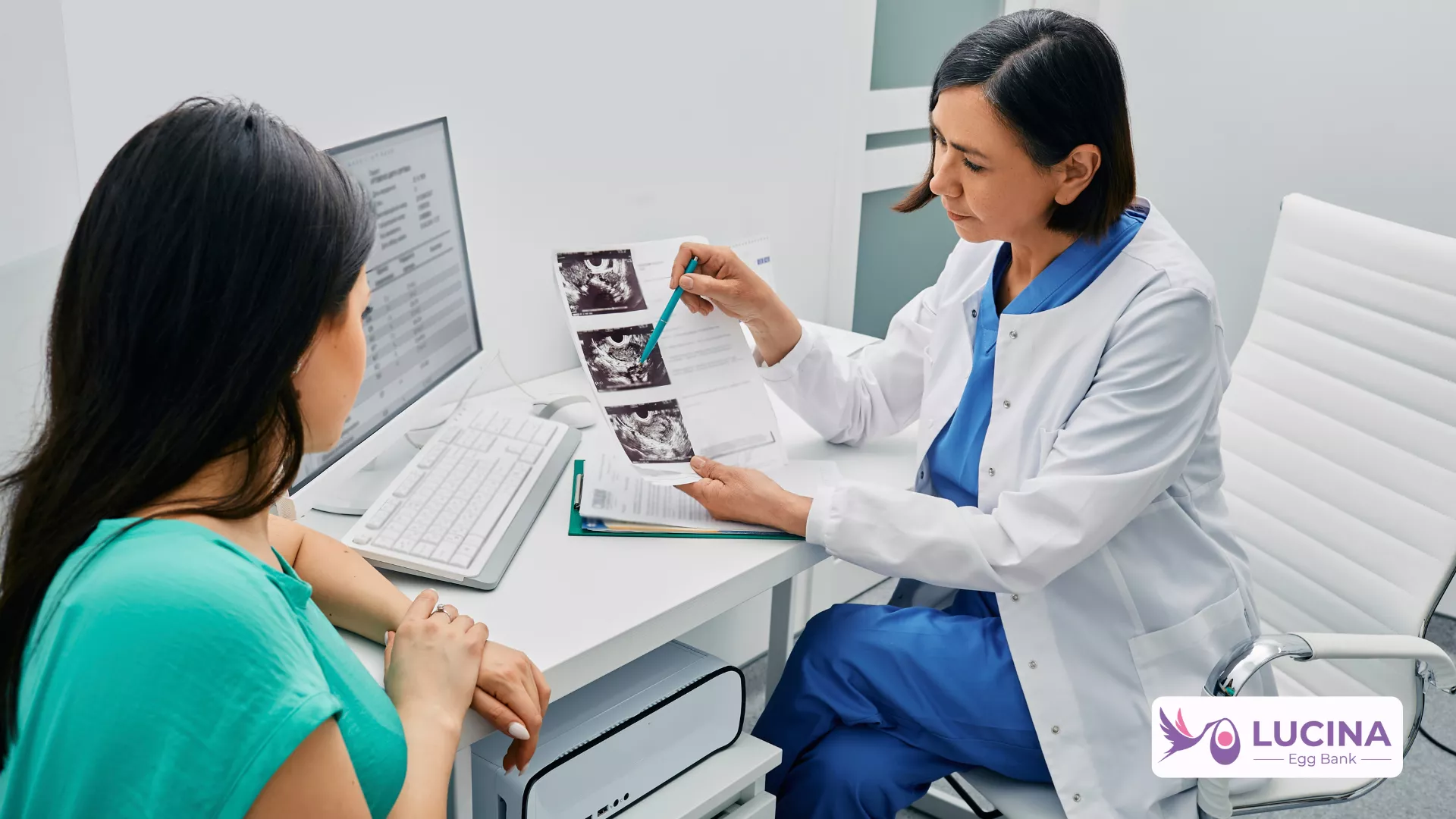
Blood work and a pelvic ultrasound assess your ovarian reserve, hormone levels, and reproductive health. None of these tests are affected by orthodontic treatment. Disclosed medications are reviewed by the physician at this stage.
You self-administer hormone injections for 10–14 days to stimulate egg development. This has nothing to do with your mouth or jaw. If your orthodontist schedules an adjustment during this period, it is fine to attend. Let both care teams know you are in a stimulation cycle.
Eggs are retrieved in a short outpatient procedure under light sedation. Braces have no bearing on the procedure or recovery. The retrieval takes approximately 20–30 minutes, and most donors return to normal activity within a day or two.
Recovery is typically quick. Compensation is paid after retrieval. Standard donors earn $8,000–$15,000+ per cycle, and Iconic donors (from top-ranked universities) earn up to $50,000 per cycle. Orthodontic treatment continues as normal throughout.
What About Cosmetic Procedures and Screening?
Braces sit in the same category as other cosmetic or elective treatments when it comes to egg donor screening: they are noted in your medical history if relevant, but they are not a barrier.
Similar questions come up around tattoos and piercings, which are also not disqualifying on their own (with some timing considerations). The principle is consistent: what the screening team is evaluating is your reproductive health, not your appearance or the elective procedures you’ve chosen.
If you’ve had any jaw surgery, temporomandibular joint (TMJ) treatment, or oral surgery in connection with your orthodontic care, disclose those procedures and any medications used. Surgical procedures under general anesthesia are generally noted in your history. The clinical team may ask for details, but this is unlikely to affect your eligibility.
Lucina is the Largest Egg Bank in the USA, with 3,500+ screened donors. Standard donors earn $8,000–$15,000+ per cycle. Iconic donors from top-ranked universities earn up to $50,000 per cycle.
Start Your ApplicationOrthodontic History vs. Current Treatment
There’s no meaningful difference, from a screening perspective, between having braces now and having had them in the past. Past orthodontic treatment is simply part of your dental history.
If you had braces as a teenager and now wear a retainer, that also requires no disclosure beyond basic dental history. Retainers, clear aligners, and nightguards are not medications and are not relevant to ovarian function.
The one scenario to flag is if you’re currently taking any prescription medication specifically for a dental or orthodontic condition. Active prescriptions are always disclosed, regardless of what they’re for.
The egg donor screening process is designed to assess reproductive health, not overall medical perfection. Donors are routinely approved with a wide range of ongoing health situations, from contact lenses to physical therapy to orthodontic treatment. Per ACOG clinical guidance, donor evaluation criteria focus on ovarian reserve, hormone levels, general health markers, and the absence of conditions that could affect the donation cycle. Braces don’t touch any of those criteria.
Other Conditions That Follow a Similar Pattern
Braces tend to come up alongside other questions about physical conditions that seem like they might matter but generally don’t.
Donors with scoliosis face the same framework: the condition itself isn’t a barrier, but related medications and procedures are reviewed. Severity and active treatment determine the outcome, not the diagnosis alone.
What disqualifies egg donors extends well beyond dental and orthodontic history into reproductive health markers, lifestyle factors, and medical history. Each stage of the egg donor screening process builds on the last, from application intake through physician clearance. Donations are coordinated through our clinical partner network across the U.S.
Your Next Step
If braces were the thing holding you back from applying, you can set that concern aside. They are not a factor in egg donor eligibility, and the screening team won’t give them a second thought.
Lucina’s 3,500+ donor pool includes women with all kinds of ongoing health situations. What matters is your ovarian health, your commitment to the process, and your honesty in disclosing your full medical history, including any current medications. We evaluate each applicant’s full clinical picture, not just the conditions on the intake form.
The full egg retrieval process follows a set timeline from stimulation through retrieval, with most donors back to normal activity within a few days of the procedure.
Braces Don’t Change a Thing
Lucina evaluates donors on what actually matters: ovarian health, hormone levels, and readiness to give. As the Largest Egg Bank in the USA, with 3,500+ screened donors, apply today and find out if you qualify.
$8,000–$15,000+ per cycle (Standard) · Up to $50,000 per cycle (Iconic) · 3,500+ screened donors
All medical and travel costs covered. Compensation paid after retrieval. Up to 6 donation cycles allowed per ASRM lifetime guidelines.
Frequently Asked Questions
Julianna Nikolic
Chief Strategy Officer Julianna Nikolic leads strategic initiatives, focusing on growth, innovation, and patient-centered solutions in the reproductive sciences sector. With 26+ years of management experience and a strong entrepreneurial background, she brings deep expertise to advancing reproductive healthcare.

Table of Contents
- Why Braces Don't Affect Egg Donation Eligibility
- The One Thing to Disclose: Any Medications
- How the Donation Process Works with Braces
- What About Cosmetic Procedures and Screening?
- Orthodontic History vs. Current Treatment
- Other Conditions That Follow a Similar Pattern
- Your Next Step
- Frequently Asked Questions