
The egg donation process involves more steps than most people expect. That’s not a reason to hesitate. It’s a reason to understand what you’re agreeing to before you apply. Most donors say the experience was far less intense than they imagined. Going in informed makes it easier, not harder.
This guide walks through the full egg donation process: what happens before, during, and after retrieval. You’ll also find honest information about compensation, side effects, and what recovery actually looks like. At Lucina Egg Bank, we keep all of this transparent from the start.
The Egg Donation Process, Step by Step
The full donation cycle typically takes six to ten weeks. Timeline depends on your screening results, medication response, and scheduling.

Fill out the online donor application. It takes about 15 minutes and covers your health history, lifestyle, and personal background. You’ll hear back within 24 hours.
This is the most thorough phase. You’ll complete blood work, infectious disease testing, a pelvic ultrasound, genetic testing, and a psychological evaluation. All appointments are coordinated and covered.
You’ll sign a donor agreement before the cycle begins. We strongly recommend working with an independent attorney to review the contract. Legal fees for your attorney are typically covered.
For 10–12 days, you’ll self-administer injectable hormones to stimulate your ovaries to produce multiple mature eggs. You’ll have monitoring ultrasounds throughout so the team can track your response.
About 36 hours after a trigger injection, your eggs are retrieved via transvaginal aspiration under sedation. The procedure takes 20–30 minutes. You’re not under general anesthesia, and you won’t stay overnight.
Most donors return to normal activities within one to two days. Compensation is released in milestones as you complete each phase. Travel, lodging, and medical costs are fully covered.
What Happens During Egg Donor Screening
Screening is where most of the time goes, and it’s worth understanding what’s involved. The goal isn’t to find reasons to exclude you. It’s to confirm that donation is safe for you and that your eggs have a good chance of contributing to a healthy cycle.
Egg donor screening typically takes two to four weeks. It includes a medical exam, blood panel, infectious disease tests, pelvic ultrasound, genetic testing, and a psychological evaluation. At Lucina, all donor screening appointments are scheduled and paid for by us.
During the medical exam, you’ll be asked about your personal and family health history. Honesty matters here. Drug use, certain genetic conditions, and prior reproductive issues can all affect eligibility. So can withholding information about any of these.
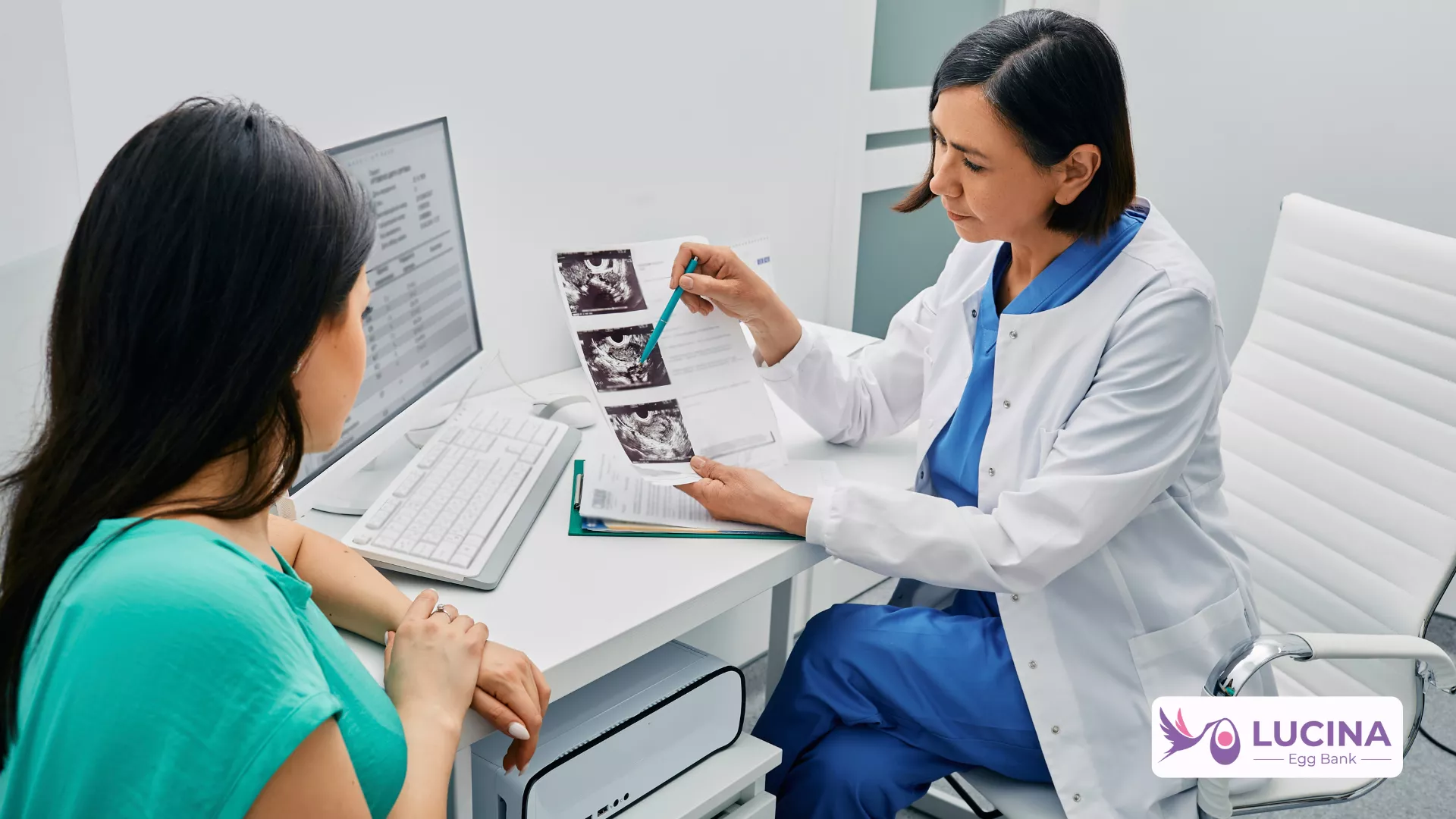
Blood work covers your hormone levels, ovarian reserve, and infectious diseases including herpes, HIV, hepatitis B, and hepatitis C. A pelvic ultrasound evaluates your ovaries and confirms your baseline reproductive health. Genetic testing checks for heritable conditions that could affect future families.
The psychological screening is often the step donors overlook. A trained psychologist walks through the emotional aspects of donation with you. It’s about making sure you understand what it means to donate your genetic material and that you’re genuinely comfortable with the decision.
All egg donor eligibility criteria are laid out in full, including genetic and reproductive health conditions that may affect approval. Common egg donation disqualifiers include recent drug use, certain STIs, and low ovarian reserve. The American Society for Reproductive Medicine (ASRM) also publishes third-party reproduction guidelines for donors who want an independent clinical reference.
Egg Retrieval: What the Procedure Involves
About 36 hours before retrieval, you’ll receive a trigger injection that signals your ovaries to release the mature eggs. Timing is precise. The retrieval happens at a specific window after this injection, coordinated closely by your medical team in accordance with ASRM clinical guidelines.
The retrieval itself is a transvaginal ovarian aspiration. A physician uses a thin needle guided by ultrasound to collect the eggs from each follicle. You’re under mild sedation, so you won’t feel the procedure. There are no incisions. You’ll spend a few hours in recovery before being cleared to leave.
Plan to have someone drive you home after retrieval. Sedation takes a few hours to fully wear off. Most donors feel well enough to eat and rest comfortably that same evening.
Most donors are back to their normal routine within one to two days. Light activity is fine. Strenuous exercise and heavy lifting should wait until your body fully recovers, which typically takes about a week. The egg retrieval process covers the stimulation phase, the procedure itself, and the recovery period after. Most donors plan recovery time around a weekend or two days off work.
Risks and Side Effects of Egg Donation
Egg donation is considered medically safe for most women. That said, it involves real medication and a minor procedure, so it’s worth being clear about what the risks actually are.
The most common egg donation side effects during the stimulation phase are bloating, breast tenderness, and mood shifts from the hormones. These typically resolve once the cycle ends and your menstrual cycle returns.
Ovarian hyperstimulation syndrome (OHSS) is the most notable risk. Mild OHSS, presenting as bloating and pelvic pressure, is fairly common and resolves on its own. Severe OHSS is rare but can require medical attention. Contact your care team right away if you experience any of the following after retrieval:
- Difficulty breathing
- Severe pelvic pain
- Persistent nausea or vomiting
- Rapid weight gain over 24–48 hours
- Noticeably reduced urination
- Pain or swelling in the leg
Infections after retrieval are possible but uncommon. A short course of antibiotics is standard protocol. Peer-reviewed OHSS donor research and a full breakdown of egg donation risks are available for donors who want the clinical detail. Most donors experience none of these complications.
Egg Donor Compensation: What You’ll Earn
Compensation for the egg donation process reflects your time, the physical commitment involved, and the medical procedures you go through. At Lucina, standard donors earn $8,000 to $15,000+ per cycle. Donors who qualify for the Iconic donor program, which targets graduates of top-ranked U.S. universities, can earn up to $50,000 per cycle, or up to $300,000 over six cycles.
Per cycle. Up to $90,000 cumulative over six cycles. All travel, lodging, and medical costs are covered separately.
Per cycle, for graduates of top-ranked U.S. universities. Up to $300,000 cumulative over six cycles.
Standard referrals earn up to $1,000. Iconic program referrals earn up to $3,000 or $10,000 depending on the referred donor’s university tier.
Compensation is held in escrow and released in milestones as you complete each stage. Taxes apply to donor compensation, so plan to set aside a portion for your annual return. A per-cycle breakdown of how much egg donors make covers the full earnings picture. ASRM’s 6-cycle lifetime limit applies across all programs combined.
Legal Basics: What You Need to Know
In the United States, egg donation is legal and well-established. Before your cycle begins, you’ll sign a legal agreement that clarifies your rights and responsibilities. Once the donation is complete, you have no legal claim to any children born from your eggs, and the recipient family has no claim on you.
The birth certificate will list the recipient as the legal mother. Your identity as the donor remains confidential. Working with your own attorney before signing gives you an independent review of the contract, and that legal fee is typically covered.
Egg donation regulations vary by country. If you’re a U.S.-based donor donating through Lucina, the U.S. Food and Drug Administration (FDA) and ASRM guidelines apply. Your coordinator can answer country-specific questions for international scenarios.
Start the Egg Donation Process With Lucina
The egg donation process is a real commitment. It takes real time and real effort, and a willingness to go through a medical process for someone else’s benefit. That’s worth acknowledging honestly.
At Lucina Egg Bank, we accept donors between 19 and 31 years old who meet FDA and ASRM eligibility criteria. Our team coordinates every appointment, covers every cost, and keeps you informed at each step. The application takes about 15 minutes. From there, your coordinator handles the rest.
Our egg donor eligibility page has the full requirements list. For most donors, the whole process takes six to ten weeks. Yours starts with a 15-minute application.
Apply to Donate Eggs With Lucina
The application takes about 15 minutes. Once your profile is complete, our team coordinates every screening appointment, scheduling step, and travel arrangement from there.
$8,000–$15,000+ per cycle (Standard) · Up to $50,000 per cycle (Iconic) · 6–10 week process
All medical and travel costs covered. Compensation paid after retrieval. Up to 6 donation cycles allowed per ASRM lifetime guidelines.
Egg Donation Process FAQ

Julianna Nikolic
Chief Strategy Officer Julianna Nikolic leads strategic initiatives, focusing on growth, innovation, and patient-centered solutions in the reproductive sciences sector. With 26+ years of management experience and a strong entrepreneurial background, she brings deep expertise to advancing reproductive healthcare.