This is the question most egg donors ask before anything else. It sits underneath the logistics, the compensation questions, and the medical process. And it deserves a clear, honest answer.
The short version: genetically, yes. Legally, no. Biologically, it’s more complicated than either of those alone. This guide breaks down what the science and the law actually say, what the birth mother’s role means for the child’s biology, and how most donors feel about it looking back.
Genetically: Yes, you provide 50% of the child’s DNA. Legally: No, you have no parental rights or responsibilities. Biologically: Shared, since the gestational carrier influences how your genes are expressed through epigenetics. The child belongs, in every legal and social sense, to the intended parents.

The Genetic Connection: What Your DNA Does and Doesn’t Determine
When you donate an egg, you provide half of the genetic material that forms a new human being. The other half comes from the sperm provider. This is the same genetic contribution any biological parent makes.
What the child may inherit from you:
- Physical traits. Eye color, hair color and texture, height, facial structure, and skin tone are all genetically influenced.
- Genetic predispositions. Tendencies toward certain health conditions, some personality traits, and cognitive aptitudes have genetic components.
- Ancestry. The child’s genetic ancestry includes yours, something increasingly relevant in the age of consumer DNA testing.
In the strictest scientific sense, you are the genetic mother of any child born from your eggs. The American Society for Reproductive Medicine (ASRM) defines egg donation, in its gamete donation guidance, as a form of third-party reproduction in which a donor provides oocytes to a recipient. The genetic link is real and documented.
Your Legal Rights: What the Donor Agreement Establishes
Despite the genetic connection, egg donation is legally structured so that you have no parental rights or responsibilities to any child born from your eggs. This is established before your cycle begins through a formal legal agreement reviewed with an independent attorney.
The woman who carries and gives birth to the child is the legal gestational mother. Where surrogacy is involved, a separate legal process establishes the intended parents’ rights. In every case, the egg donor’s role ends with the donation itself, and these protections are in place before you become an egg donor.
Three Types of Motherhood in Egg Donation
Assisted reproduction separates what used to be inseparable. Understanding the three distinct roles clarifies what being a donor actually means.
Your role as the egg donor. You provide the DNA that forms 50% of the child’s genetic blueprint. The child may share your physical traits, aptitudes, and hereditary predispositions.
The role of the person who carries the pregnancy, labors, and gives birth. Through epigenetics, the gestational carrier also shapes how the donor’s genes are expressed throughout fetal development.
The role of the intended parent who raises, nurtures, and loves the child. In every social, emotional, and legal sense, this is the child’s mother, the one who shows up every day.
Biology does not equal parenting. The intended parent is the child’s parent. That’s what the law says, what the research on donor-conceived families supports, and what most donors come to understand before they ever begin the process.
Epigenetics: How the Gestational Carrier Shapes the Child
This is the part of the science that surprises most people. Your DNA doesn’t change in the womb. But how it’s expressed does.
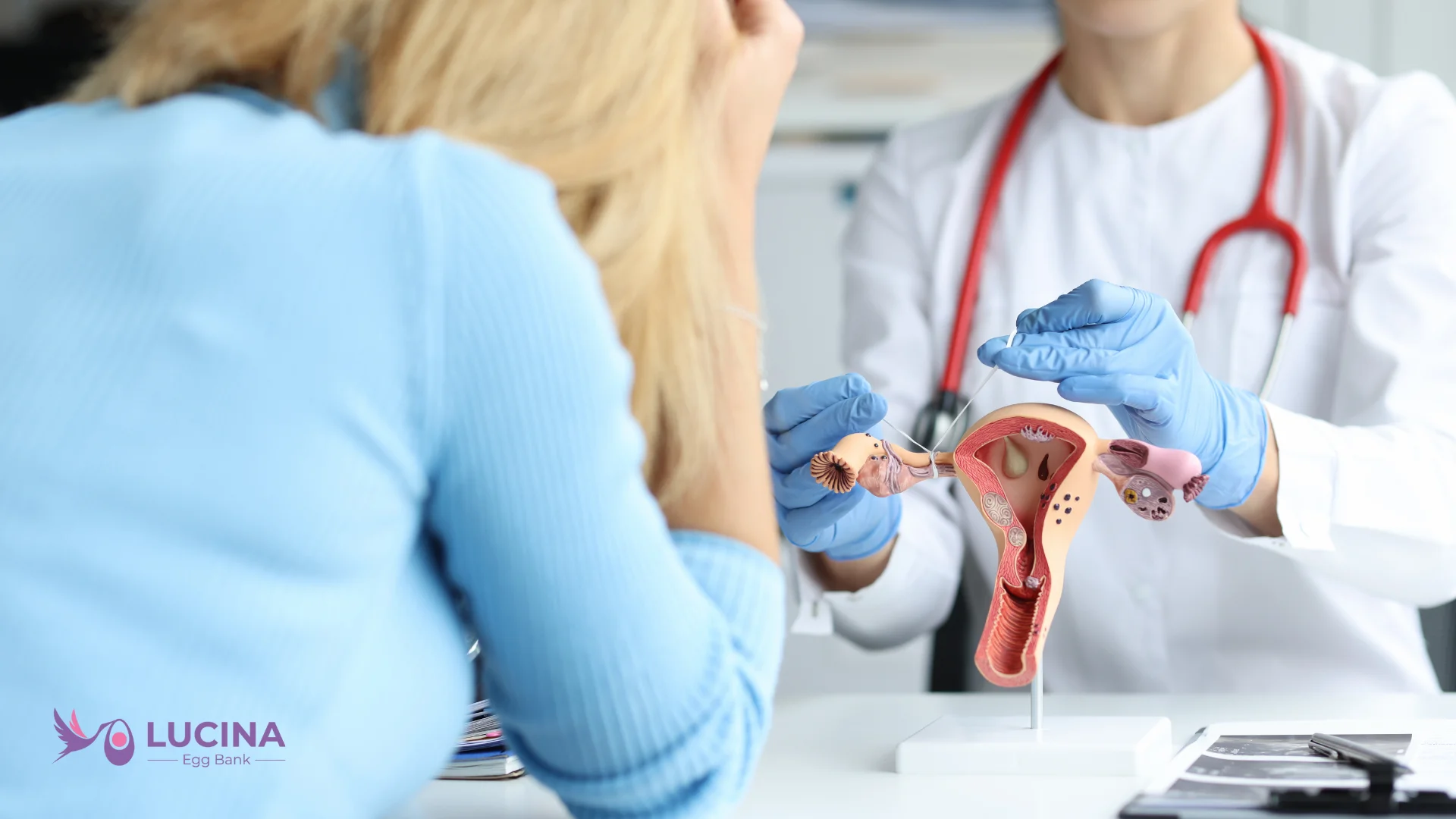
Epigenetics is the study of how behaviors and environment can cause changes that affect the way genes work. While the DNA sequence remains fixed, the gestational environment can turn specific genes on or off during development, a process called gene expression.
Research published in the National Library of Medicine describes this as maternal-fetal crosstalk: an active, ongoing biological dialogue between the gestational carrier’s body and the developing embryo.
- Nutrition. The gestational carrier’s diet influences fetal growth, metabolic programming, and long-term health outcomes.
- Hormonal environment. Maternal stress hormones and endocrine signals can alter which genes are expressed during development.
- Uterine health. The overall environment of the uterus, including blood flow, immune factors, and pH, shapes implantation and early development.
- Microbiome. Emerging research suggests the carrier’s microbial environment may influence the infant’s immune development.
What this means in practice: the child that results from your donated egg is shaped by both your genetic blueprint and the biological environment the gestational carrier provides. Two distinct biological contributions. One unique individual.
For a deeper look at how epigenetics applies to donor egg pregnancies specifically, the epigenetics and donor eggs guide covers the research in detail.
The Emotional Dimension: How Donors Actually Feel
The question of genetic connection isn’t purely intellectual. It carries real emotional weight, and it’s worth addressing that directly.
Research published in Fertility and Sterility examining long-term donor outcomes found that the majority of donors report no regret. Donors who had thorough pre-donation counseling, including honest discussion of the genetic connection, reported the most positive long-term outcomes.
The quality of the informed consent process, not the type of donation chosen, was the strongest predictor of how donors felt afterward.
Common emotional dimensions donors work through:
- The existence question. Knowing there is a child somewhere who carries your DNA can feel abstract before donation and more concrete afterward. Most donors describe this as a quiet awareness rather than an active emotional presence. It’s there, but it doesn’t intrude.
- Future contact. Anonymous donation protects your identity legally, but consumer DNA testing has changed what anonymity means in practice. Donor-conceived people have the right to seek genetic information, and some do. Thinking through how you’d feel about that before you donate is worth your time.
- Sense of purpose. The most consistent finding across donor research is that donors who felt clear about their reasons for donating reported the most positive experiences. Both altruistic and financial motivations are valid. Most donors report feeling both.
If you’re processing the emotional weight of this question, the emotional preparation guide covers what donors commonly experience throughout the process and afterward.
Will Donating Affect Your Own Fertility?
This question often follows the biological one. The answer is no. Egg donation does not deplete your ovarian reserve or affect your future ability to conceive.
Each cycle, your ovaries recruit a cohort of follicles. One matures and ovulates. The rest are naturally discarded. Stimulation medications intercept that die-off, giving more of the already-recruited follicles the signal they need to mature. The eggs retrieved are ones your body was already going to lose. Your future cycles are untouched.
The ASRM notes that available data show no long-term risk to ovarian reserve across donation cycles within the 6-cycle lifetime limit. Your menstrual cycle may be slightly irregular for one cycle following retrieval, then returns to normal. If you have questions about your individual situation, your reproductive endocrinologist is the right person to ask.
For more on eligibility before you start, our guide to egg donation disqualifiers walks through what programs screen for.
Putting It Together: What This Means for You as a Donor
The genetics are yours. The parenthood is theirs. That’s the honest summary.
The child may look like you, and they carry your DNA. They will never know you as a parent, and you carry no legal or financial responsibility for them. Through epigenetics, the gestational carrier also shapes who they become, making them a genuinely unique individual, not simply a copy of your genetic blueprint.
Most donors find that sitting with this reality before they donate produces the clearest sense of resolution. If the genetic connection feels too weighty to set aside, that’s worth examining before proceeding. If it sits comfortably alongside your reasons for donating, that’s a good sign.
At Lucina, your coordinator walks through all of this with you before any agreements are signed. There’s no pressure to decide at the inquiry stage. Standard donors earn $8,000 to $15,000+ per cycle, and Iconic donors from top-ranked universities can earn up to $50,000 per cycle, with all travel and medical costs covered. You can read more about why donors choose Lucina.
Apply to Donate Eggs With Lucina
Your coordinator walks through the genetic, legal, and emotional questions with you before anything is signed. The application takes about 15 minutes, with no pressure to decide at the inquiry stage.
$8,000–$15,000+ per cycle (Standard) · Up to $50,000 per cycle (Iconic) · Up to 6 donation cycles
All medical and travel costs covered. Compensation paid after retrieval. Up to 6 donation cycles allowed per ASRM lifetime guidelines.
Frequently Asked Questions

Julianna Nikolic
Chief Strategy Officer Julianna Nikolic leads strategic initiatives, focusing on growth, innovation, and patient-centered solutions in the reproductive sciences sector. With 26+ years of management experience and a strong entrepreneurial background, she brings deep expertise to advancing reproductive healthcare.

Table of Contents
- The Genetic Connection: What Your DNA Does and Doesn't Determine
- Your Legal Rights: What the Donor Agreement Establishes
- Three Types of Motherhood in Egg Donation
- Epigenetics: How the Gestational Carrier Shapes the Child
- The Emotional Dimension: How Donors Actually Feel
- Will Donating Affect Your Own Fertility?
- Putting It Together: What This Means for You as a Donor
- Frequently Asked Questions