

GLP-1 medications like Ozempic, Wegovy, Mounjaro, and Zepbound are now used by millions of women in the donor age range. That makes one question increasingly common: can you donate eggs on a GLP-1? The answer, in many cases, is yes. But timing, dose stability, and a short protocol before retrieval day all matter.
At Lucina Egg Bank, we see applicants on GLP-1s regularly. This guide covers what screening looks at, why most programs require a brief medication pause before retrieval, and how to manage the overlap between stimulation and GLP-1 side effects. Whether you’re on tirzepatide, semaglutide, or a compounded version, the core considerations are the same.
The Short Answer: Yes, With the Right Timing
You can apply to become an egg donor while taking a GLP-1 medication. Most programs ask you to pause weekly injections for one week before retrieval day, per the American Society of Anesthesiologists’ updated guidance. Your eligibility depends on dose stability, BMI, side effects, and your reason for use. Diabetes management is assessed differently from weight-loss-only use.

The main safety concern isn’t the GLP-1 itself. It’s what these medications do to digestion before a sedation procedure. Once you understand the mechanism, the pause protocol makes complete sense.
What Are GLP-1 Medications?
GLP-1 agonists (glucagon-like peptide-1 agonists) were first developed for type 2 diabetes and are now widely prescribed for weight management. They mimic a natural gut hormone that signals fullness to the brain, slows gastric emptying, and helps regulate blood sugar after meals.
Common brand names include Ozempic and Wegovy (both semaglutide), Mounjaro and Zepbound (both tirzepatide), and Saxenda (liraglutide). The slowed digestion effect is what makes them work for weight loss, and it’s also the reason fertility clinics track them carefully during the egg donation process.
Quick Glossary
- GLP-1 injection: The delivery method for most GLP-1 medications, taken weekly or daily depending on the drug.
- Dose escalation (titration): Gradually increasing your dose over several weeks to reduce side effects.
- Compounded GLP-1: A custom-prepared version from a compounding pharmacy, often used when brand-name supply is limited.
- Ovarian stimulation: The 10-14 day phase where you take fertility medications to mature multiple eggs at once.
- Egg retrieval: A short procedure, typically under light sedation, to collect the mature eggs.
Tirzepatide (Mounjaro and Zepbound): Does the Drug Type Matter?
Tirzepatide is a dual agonist. Where semaglutide targets only the GLP-1 receptor, tirzepatide also activates the GIP receptor (glucose-dependent insulinotropic polypeptide). This dual action is why Mounjaro and Zepbound often produce stronger weight loss results than semaglutide at comparable doses.
For egg donation screening purposes, the anesthesia concern is the same across all GLP-1 class drugs. The American Society of Anesthesiologists issued updated guidance covering all GLP-1 agonists. Whether you take a weekly tirzepatide injection or a daily semaglutide dose, your retrieval clinic will apply the same pre-procedure pause protocol.
If you’re specifically on tirzepatide and considering egg donation, flag it early in your application. Some clinicians note that tirzepatide can slow gastric emptying more substantially than some semaglutide formulations at equivalent doses, so additional confirmation that your stomach has cleared before sedation may be requested.
Practically, this changes nothing about your eligibility. It just means clear communication with both your prescribing provider and your donor coordinator is worth starting early.
What Egg Donation Programs Look At
Disclosing GLP-1 use during screening isn’t a red flag. It’s information that helps the medical team plan your cycle safely. Four things come up in every assessment.
- Dose stability: Side effects are most intense during dose escalation. Programs prefer donors at a stable dose for four to eight weeks or more. If you’re still titrating, waiting until your dose stabilizes before applying makes the process smoother.
- BMI: GLP-1s help with weight loss, but egg donation BMI requirements still apply for anesthesia safety, typically under 30 to 32. Your BMI at screening is what matters.
- Side effect pattern: Severe or ongoing nausea, dehydration, or constipation can complicate the stimulation phase. Not automatic disqualifiers, but they factor into how your cycle is planned.
- Reason for use: Weight management is assessed differently than type 2 diabetes. Diabetes care may involve other medications, additional lab monitoring, and clearance from your endocrinologist before you can proceed.
Compounded GLP-1s at Screening
Brand-name shortages pushed many people toward compounded GLP-1 versions from specialty pharmacies. Compounded formulations vary in concentration, potency, and additives. Some include B12 or other compounds. When you disclose a compounded version, the team will ask for documentation on the active ingredient, dose, and prescribing oversight.
Using a compounded version doesn’t automatically disqualify you. Bring your pharmacy records and prescriber’s information to your first appointment. Full transparency helps the team manage your anesthesia safely, which is the only goal of the question.
GLP-1 Supplements and Herbal Drops
Products sold as “GLP-1 gummies” or “GLP-1 drops” are generally herbal supplements marketed as natural GLP-1 boosters. They’re not the same as prescription agonists, but you should still disclose them. Even supplements that seem minor can interact with anesthesia or blood clotting during a procedure.
Applying with GLP-1 use: what works for you vs. what needs planning.
Why Programs Require a Medication Pause Before Retrieval
You don’t need to stop GLP-1 medications to apply or to pass your screening. The pause applies specifically to the retrieval procedure, and here’s why.
Aspiration risk is the concern. During sedation, if stomach contents remain, they can be inhaled into the lungs. Standard “nothing to eat after midnight” fasting covers most people, but GLP-1s slow gastric emptying enough that the stomach may not clear on a normal fasting timeline. The ASA recognized this and updated their pre-procedure guidance accordingly.
For weekly injections (Ozempic, Wegovy, Mounjaro, Zepbound), the recommendation is to skip the injection that falls within the week before your retrieval. For daily doses, hold the medication on the day of the procedure. Your retrieval clinic will give you the exact protocol based on their anesthesia approach.
What Not to Do
Two things consistently create problems when GLP-1 users go through egg retrieval:
- Don’t self-adjust the dose: Never stop, restart, or change your dose without telling both your prescribing doctor and your fertility nurse coordinator. Abrupt stops can cause blood sugar fluctuations. Restarting at a full dose without titrating back up can cause severe vomiting.
- Don’t leave it off your screening forms: This information directly affects how your anesthesia is managed. There is no judgment attached to the question. We ask because your safety during retrieval depends on us knowing exactly what’s in your system.
GLP-1 Side Effects During a Donation Cycle
Ovarian stimulation (10 to 14 days of daily hormone injections) already changes how you feel, appetite, bloating, and energy all shift. GLP-1 side effects can amplify those changes. Here’s how each one typically plays out.
Nausea During Stimulation
GLP-1 nausea is the most common complaint. Stimulation-driven estrogen rises can also cause mild nausea. When both are active at the same time, the discomfort is real. Mention it to your coordinator before your cycle begins, not after. Anti-nausea options compatible with fertility medications exist and should be planned proactively.
If you’re vomiting, you can’t take oral medications sometimes prescribed during a cycle. You also risk dehydration. Both are manageable with planning. Both are much harder to manage if the team finds out on day four of stimulation.
Constipation and GLP-1
Slowed digestion slows everything. During stimulation, the growing ovaries press on the bowel, which already increases constipation risk. If GLP-1 constipation is part of your regular experience, tell your coordinator early. Stool softeners during the stimulation phase are commonly recommended. Fiber-rich food and high fluid intake are the daily tools.
Fatigue and Sleep
Some GLP-1 users report significant fatigue and disrupted sleep, especially around dose changes. Stimulation monitoring requires early morning appointments on consecutive days. If fatigue is already an issue for you, make sure your support system is arranged before your cycle starts. This is practical, not a medical barrier.
Hair Shedding
Hair shedding associated with GLP-1 use is usually telogen effluvium, a temporary response to rapid weight loss or caloric restriction, not a direct drug effect. It has no impact on egg quality or eligibility. The physical stress of a stimulation cycle can temporarily add to shedding, which is worth knowing in advance even if it doesn’t affect your candidacy.
Rare but Serious Risks
Pancreatitis and vision changes are documented but rare side effects of GLP-1 medications. If you experience sudden, severe abdominal pain or significant changes in vision during your cycle, contact your medical team immediately. Do not wait for a scheduled monitoring appointment.
Before your screening, prepare a simple medication cheat sheet: the drug name, current dose, date of your last dose change, and your typical injection day. Bringing this to your first call saves time and signals that you take your health seriously. Coordinators notice.
Nutrition and Hydration During Stimulation
Stimulation requires consistent protein intake, high fluid volume, and electrolytes. GLP-1s reduce appetite and can make large volumes of liquid feel uncomfortable. This isn’t a barrier to donating, but it requires an intentional plan going in.
Set meal reminders. Eat small amounts of high-protein food throughout the day rather than waiting for hunger cues. If solids are difficult, protein shakes and liquid calories count. Your body needs fuel to support the stimulation process and to reduce the risk of OHSS (ovarian hyperstimulation syndrome).
On monitoring mornings, you won’t feel hungry. A small high-protein snack or shake before you go is better than arriving on an empty stomach. Your coordinator can give you specific guidance based on the timing of your appointments.
GLP-1 Food Noise and Forgetting to Eat
One underreported GLP-1 experience is the quieting of “food noise” (constant intrusive thoughts about eating). When that mental chatter stops, some people simply forget to eat. During stimulation, that’s a problem. Set phone alarms for meals. Treat eating like a scheduled appointment during your cycle, not something that happens when you feel like it.
The information in this guide is for educational purposes only. Always work with your prescribing physician and your fertility team regarding any medication changes during a donation cycle. Never adjust your GLP-1 dose without coordinating with both providers.
Questions to Ask at Your Screening
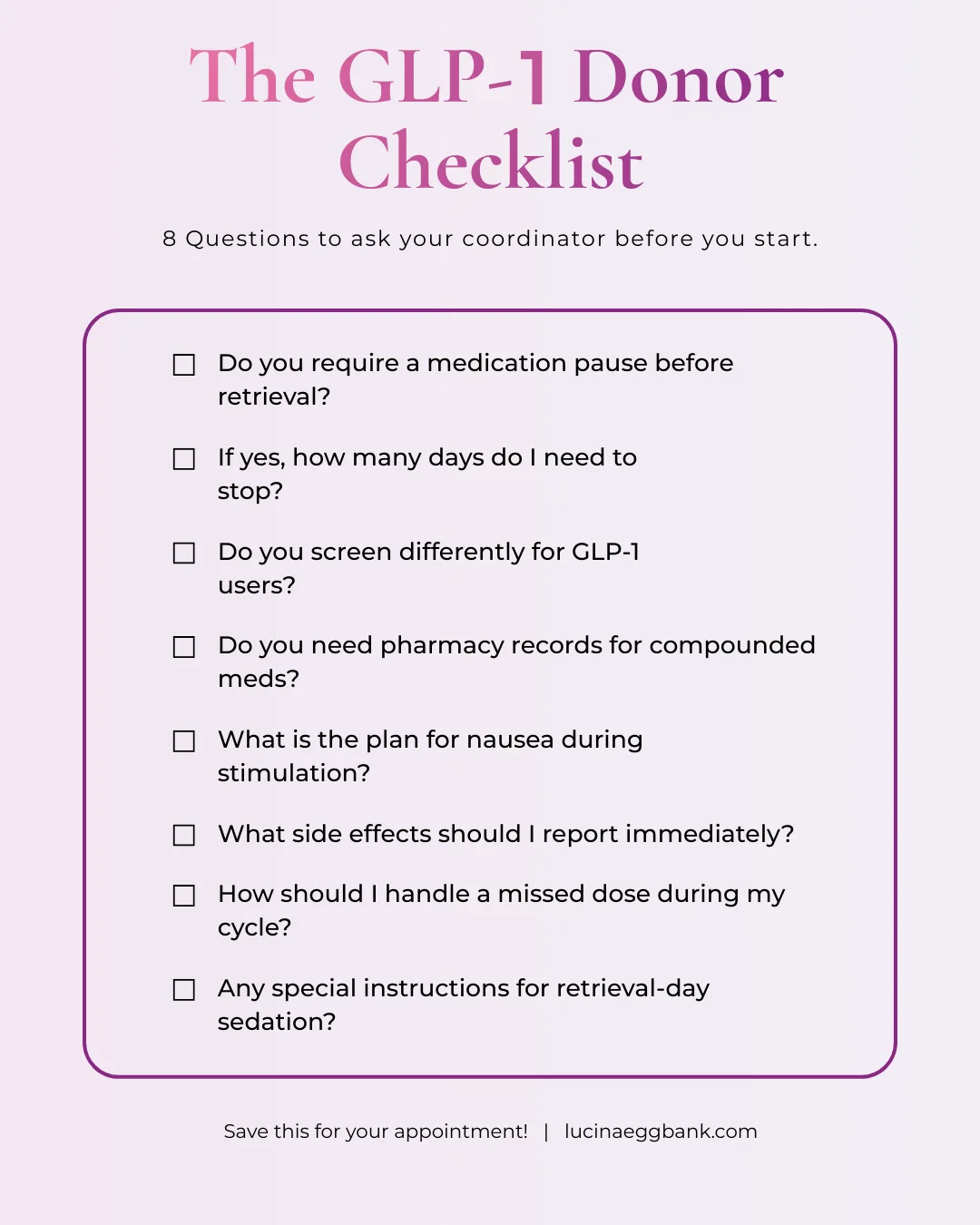
When you disclose GLP-1 use during your screening, these questions help clarify the protocol specific to your situation and the program’s requirements.
- “Do you require a pause before stimulation, before retrieval, or both?”
- “If I’m still titrating, should I wait until my dose is stable?”
- “What’s your protocol for nausea management during stimulation?”
- “What documentation do you need for a compounded GLP-1?”
- “Does my reason for taking a GLP-1 change anything, diabetes versus weight management?”
- “How do you want me to handle a missed dose if my injection schedule falls during my cycle?”
- “Are there any special instructions for retrieval-day sedation given my medication?”
Your prescribing provider manages dose changes. Your fertility coordinator manages the retrieval protocol. Both need to be informed, but coordinating that communication is your responsibility. Most providers handle it smoothly once they know it’s happening. If you want to confirm you meet the basic egg donor requirements before scheduling a screening call, that’s a good first step.
Applying at Lucina While on a GLP-1
Being on a GLP-1 doesn’t close the door to egg donation. Millions of healthy, eligible applicants take these medications. What makes the process work is clear communication, a stable dose going in, and a realistic plan for nutrition and hydration during stimulation.
If you’ve been holding off because of GLP-1 use, the most useful step is starting your egg donor application. Screening is where we ask the right questions. There’s no commitment past that point if the timing isn’t right, but you won’t know until you start the conversation.
Apply to Donate Eggs With Lucina
Taking a GLP-1 medication doesn’t disqualify you. Our medical team asks the right questions during screening and will walk through your medication history, dose stability, and side effect pattern to build a safe plan for your cycle.
$8,000–$15,000+ per cycle (Standard) · Up to $50,000 per cycle (Iconic) · 1–3 day typical recovery
All medical and travel costs covered. Compensation paid after retrieval. Up to 6 donation cycles allowed per ASRM lifetime guidelines.
Frequently Asked Questions

Julianna Nikolic
Chief Strategy Officer Julianna Nikolic leads strategic initiatives, focusing on growth, innovation, and patient-centered solutions in the reproductive sciences sector. With 26+ years of management experience and a strong entrepreneurial background, she brings deep expertise to advancing reproductive healthcare.

Table of Contents
- The Short Answer: Yes, With the Right Timing
- What Are GLP-1 Medications?
- Tirzepatide (Mounjaro and Zepbound): Does the Drug Type Matter?
- What Egg Donation Programs Look At
- Why Programs Require a Medication Pause Before Retrieval
- GLP-1 Side Effects During a Donation Cycle
- Nutrition and Hydration During Stimulation
- Questions to Ask at Your Screening
- Applying at Lucina While on a GLP-1
- Frequently Asked Questions