
If you’re a woman in New York thinking about becoming an egg donor, you probably have two questions up front: do I qualify, and how much does it pay? This guide answers both, then walks through exactly what the process looks like from application to retrieval.
Maybe you know someone who struggled with infertility, or you’re drawn to helping build a family while paying down student loans or rent. Whatever brought you here, becoming a New York egg donor is a meaningful decision, and you deserve a clear, honest picture before you start.
At Lucina Egg Bank, our frozen egg bank model means you don’t wait months to be matched with a family. Approved donors can start a cycle right away and are paid soon after retrieval. Here’s how it works.

New York Egg Donor Requirements
To become a New York egg donor with Lucina, you generally need to be a woman aged 19 to 31, in good physical and mental health, a non-smoker for at least three months, and free of known genetic disorders. Final eligibility is confirmed through a free medical and psychological screening.
The prescreening application takes about 10 to 15 minutes and checks the basics. Here’s what we look for:
- Age 19 to 31. This range balances egg quality with donor safety, and it’s the window most programs and ASRM guidance point to.
- Good overall health. Solid physical and mental health, with no history of inheritable genetic disorders.
- Non-smoker. You’ll need to have been smoke-free for at least three months, and you’ll avoid alcohol during the medication phase.
- Reliable for monitoring. You can make short, scheduled clinic visits during the cycle, which we arrange near your home in New York.
These are the headline criteria. A few other factors, like body mass index and current contraception, come up during screening. Our full donor requirements spell out what does and doesn’t disqualify you, and the disqualification checklist goes deeper on the common questions.
Why the Frozen Egg Bank Model Is Faster for New York Donors
The traditional fresh-cycle model used by many agencies has one big drawback: the wait. You apply, get accepted, and then sit in a queue hoping to be matched with intended parents before you can move forward. That can take months.
Lucina’s frozen egg bank model works differently:
- No waiting to be matched. You can begin your cycle once your medical screening is complete, rather than waiting to be chosen.
- A faster, more predictable timeline. The full process runs about 6 to 10 weeks, which is easier to plan around school or work.
- Your health sets the schedule. Your stimulation protocol is built around your body, not a recipient’s calendar, which helps reduce the risk of complications like ovarian hyperstimulation syndrome (OHSS).
- Compensation after retrieval. You’re paid soon after your retrieval is complete, with no wait for a match or a transfer.
For New York donors juggling classes, jobs, and city life, that means less disruption and a clearer end date.
The Step-by-Step Process to Become a New York Egg Donor
Here’s what happens once you decide to donate with Lucina, from first click to recovery.
A 10-to-15-minute prescreening form checks the basics: age, health history, and lifestyle. If you meet the criteria, you move to screening.
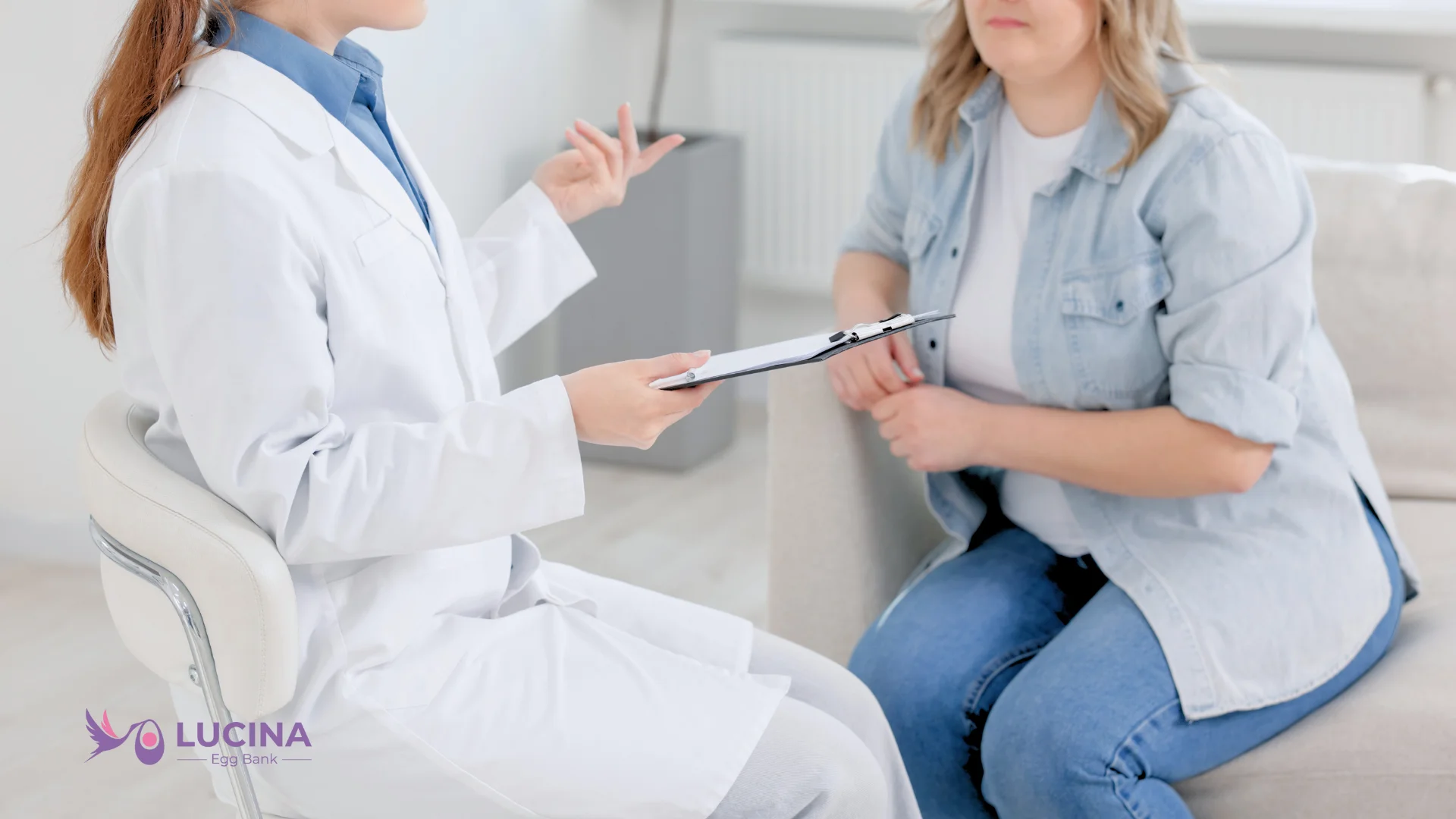
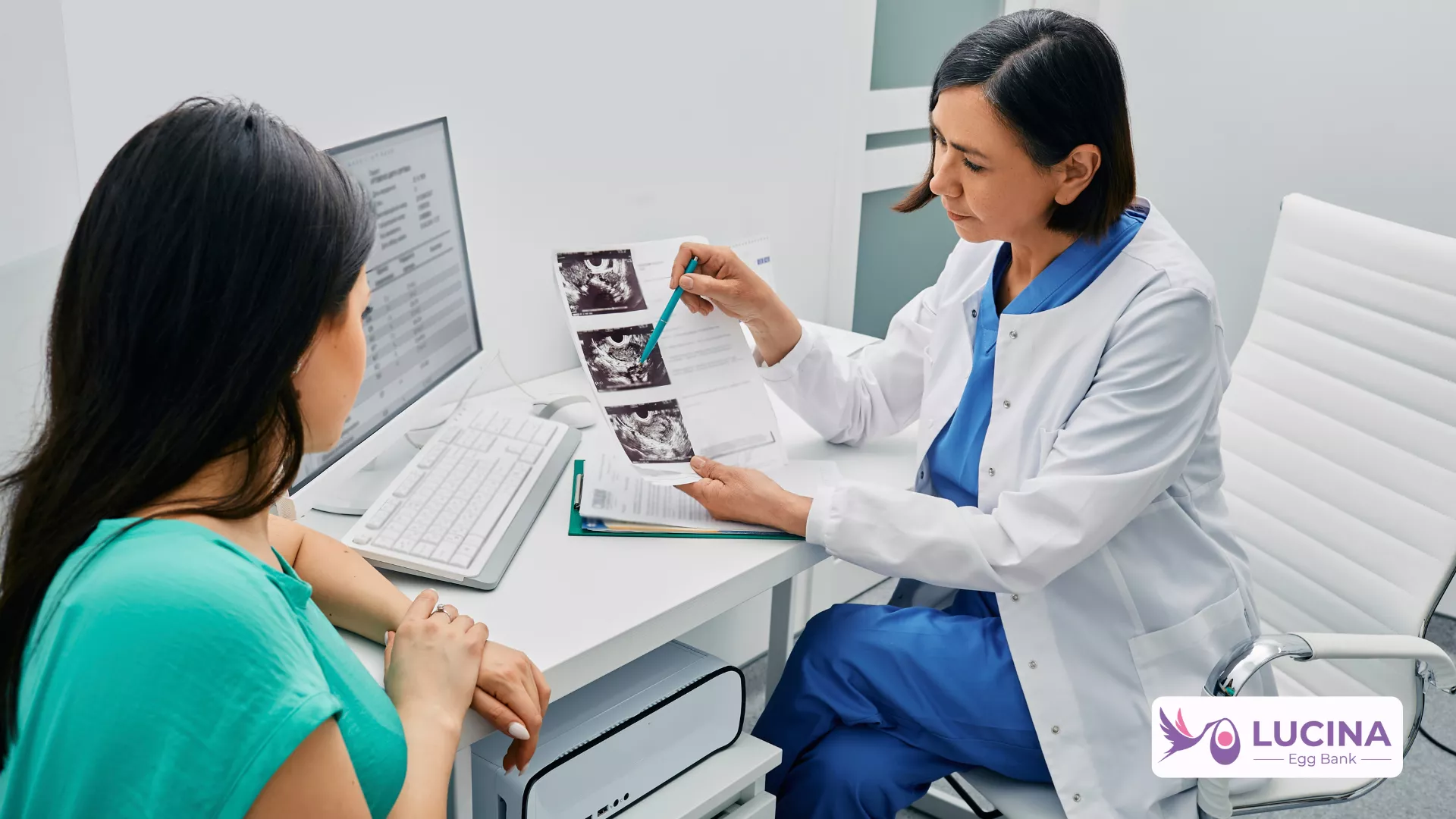
At no cost to you: a detailed medical and family history, psychological evaluation, genetic carrier screening, physical exam, blood work, and an ultrasound.
About two weeks of at-home hormone injections, with 7 to 10 short monitoring visits arranged near your New York home to track follicle growth.
A short procedure of about 15 minutes under sedation, so you’re comfortable throughout. Travel to San Diego is booked and paid for you.
What the Screening Covers
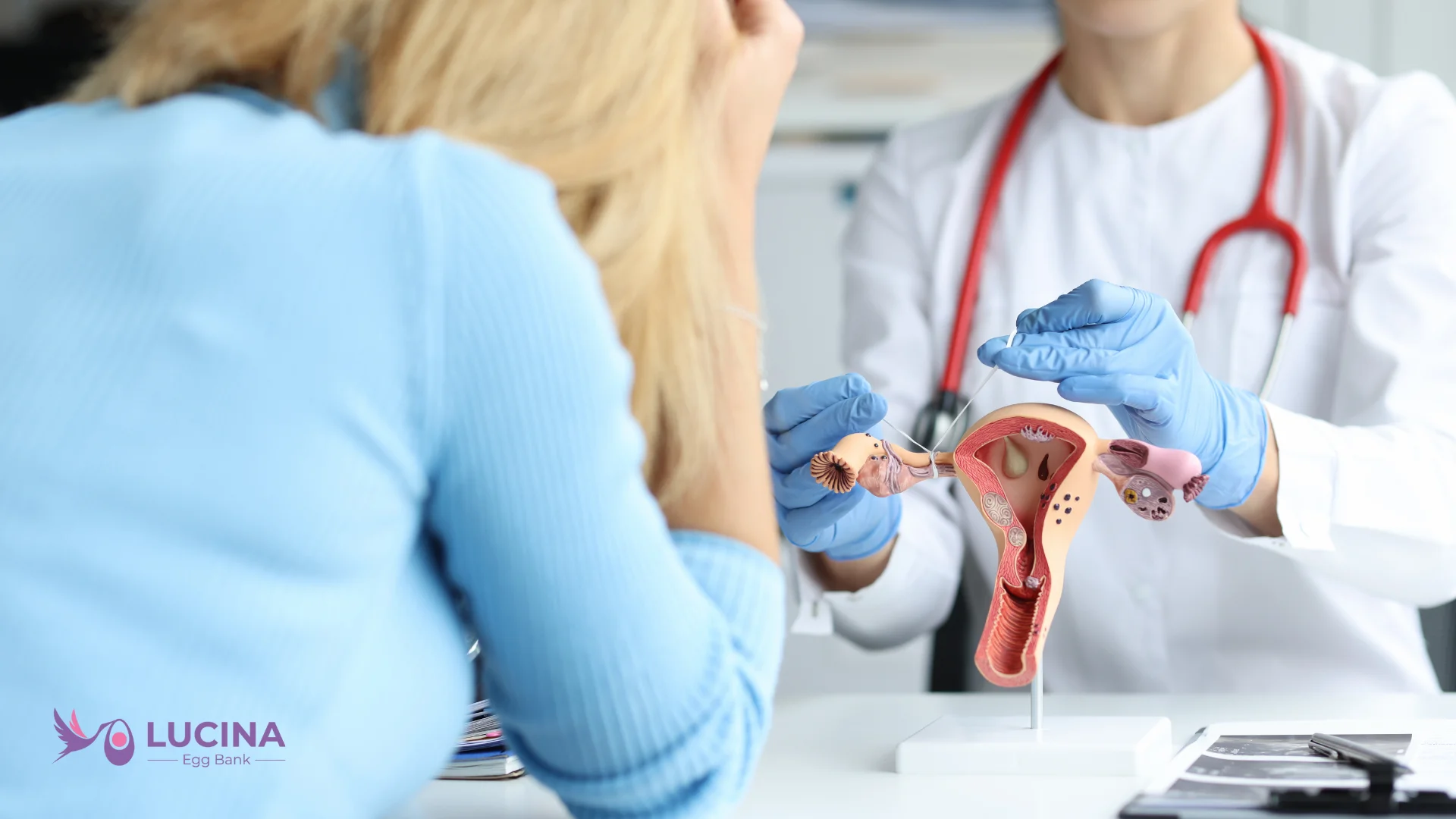
Screening is free and thorough. It includes a detailed questionnaire about your personal and family medical history (typically going back three generations), a psychological evaluation, genetic carrier screening for conditions like cystic fibrosis and spinal muscular atrophy, and a physical exam with blood tests and an ultrasound to check ovarian health.
The psychological evaluation is a supportive conversation with a mental health professional about the emotional side of donating, not an interrogation. If anything in your profile needs a closer look, the team addresses it before any medication starts.
The Medication Phase
Egg donation does involve hormone injections, and for most donors they’re manageable. You’ll self-administer them at home to help your ovaries mature several eggs in one cycle instead of the usual one. This doesn’t affect your future fertility, because those extra eggs come from the group your body would have discarded that month anyway.
The team teaches you exactly how to give the injections, and most donors settle into the routine quickly. Some bloating and PMS-like moodiness are common and temporary. You’ll skip high-impact exercise and alcohol during this stretch.
For the retrieval, plan to be in San Diego about 7 to 9 days for final monitoring and the procedure. Flights and hotel are booked and paid upfront. Arrange for someone to take you home afterward, and keep a day or two light for recovery.
New York Egg Donor Pay: How Much You Earn
Compensation recognizes your time, effort, and commitment, not the eggs themselves. New York egg donors with Lucina earn on two tiers:
- Standard donors: $8,000 to $15,000+ per cycle, up to about $90,000 cumulatively across up to six cycles.
- Iconic donors: donors who attend or graduated from top-ranked universities may qualify for up to $50,000 per cycle, up to roughly $300,000 across six cycles.
Your compensation is paid soon after the retrieval is complete, with no months-long wait. That speed matters in a city as expensive as New York. Keep in mind this income is taxable, so it’s smart to set some aside. If you want the wider view, see how egg donor pay works in more detail.
Your Safety and Future Fertility
Two questions come up for almost every donor: what are the risks, and will this affect my ability to have children later? Here’s the straight answer.
- Expert medical oversight. The process is supervised by reproductive endocrinologists who tailor your protocol to your body.
- OHSS prevention. Individualized medication protocols and close monitoring reduce the risk of ovarian hyperstimulation syndrome, a rare but serious complication.
- No impact on future fertility. Donation uses eggs your body would have discarded that cycle, so it doesn’t deplete your ovarian reserve.
- Legal clarity. You sign consent forms that release parental rights and responsibilities, which protects you down the line.
On privacy, Lucina protects your identifying information, though it’s worth knowing that no donation can promise lifelong anonymity in the era of direct-to-consumer DNA testing. For the full picture on risks, read our guide to egg donation risks.
Donating From Anywhere in New York
You don’t need to live in Manhattan to donate. Lucina works with donors across New York City and the surrounding region, including Brooklyn, Queens, the Bronx, Staten Island, and Long Island, plus the Hudson Valley and upstate.
Here’s how the geography actually works. Your monitoring during the medication phase, the 7 to 10 short ultrasound and blood-test visits, is arranged at a clinic near your home so you’re not crossing the city every other day. Only the final monitoring and the retrieval itself happen in San Diego, and that trip is booked and paid for you, usually 7 to 9 days near the end of the cycle.
Donors of every background are welcome, and demand is especially strong for donors from communities that are underrepresented in donor pools, including Asian, South Asian, and Jewish donors. If you’re a student or recent graduate of a top-ranked New York university, you may also qualify for the Iconic tier.
For donors balancing classes at NYU, Columbia, or a CUNY campus, or a job anywhere from Long Island to the Bronx, this is the practical advantage of the frozen egg bank model: most of the cycle fits around your real life, and only one short trip is required.
Refer a Friend and Earn
Know someone in New York who’d make a great donor? You can earn a milestone-based referral bonus when someone you refer completes a cycle, and the program is open to everyone, not just donors.
- Standard referral: up to $1,000 when your referral completes their cycle.
- Iconic, Top 20 university: up to $3,000.
- Iconic, Top 10 university: up to $10,000.
Bonuses are paid across milestones as your referral moves through application, screening, and a completed donation. You can learn more on the Iconic donor program page.
Start Your New York Egg Donor Application
Becoming a New York egg donor with Lucina means no long wait to be matched, a process you can fit around school or work, and compensation paid soon after retrieval, all with your health and travel covered.
If you want to see if you qualify, the confidential online application takes only a few minutes, and there’s no obligation.
Apply to Donate Eggs With Lucina
New York donors can start without waiting to be matched, with monitoring arranged near home and travel to San Diego fully covered. The application takes about 15 minutes.
$8,000–$15,000+ per cycle (Standard) · Up to $50,000 per cycle (Iconic) · 6–10 week process
All medical and travel costs covered. Compensation paid after retrieval. Up to 6 donation cycles allowed per ASRM lifetime guidelines.
Frequently Asked Questions
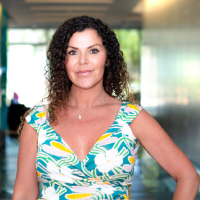
Julianna Nikolic
Chief Strategy Officer Julianna Nikolic leads strategic initiatives, focusing on growth, innovation, and patient-centered solutions in the reproductive sciences sector. With 26+ years of management experience and a strong entrepreneurial background, she brings deep expertise to advancing reproductive healthcare.

Table of Contents
- New York Egg Donor Requirements
- Why the Frozen Egg Bank Model Is Faster for New York Donors
- The Step-by-Step Process to Become a New York Egg Donor
- New York Egg Donor Pay: How Much You Earn
- Your Safety and Future Fertility
- Donating From Anywhere in New York
- Refer a Friend and Earn
- Start Your New York Egg Donor Application
- Frequently Asked Questions