
Searching “what happens to your body when you donate eggs” usually comes from one of two places: genuine curiosity before applying, or anxiety about the physical side of the process. Both are reasonable. The honest answer is that what your body actually goes through is more manageable than most donors expect.
The process involves four distinct phases: hormone stimulation, monitoring, retrieval, and recovery. Physical changes happen during each. Some are noticeable. Most are temporary. At Lucina Egg Bank, every donor is monitored throughout, with a dedicated coordinator and medical team managing the cycle from start to finish.
This guide covers what happens at each stage, what to expect physically, how to manage it, and what the research says about long-term effects.

Phase 1: Hormone Stimulation (10 to 14 Days)
In a natural menstrual cycle, your body matures one egg. The rest of the recruited follicles undergo atresia: they’re reabsorbed and lost. Stimulation medications intercept that process, giving more of the already-recruited follicles the hormonal signal they need to mature fully.
For 10 to 14 days, you’ll self-administer daily subcutaneous injections of follicle-stimulating hormone (FSH). These go just under the skin of the abdomen, similar to how insulin injections work. The needle is very fine. Most donors describe it as a brief pinch.
As your follicles grow and your ovaries become more active, you’ll notice physical changes. These are expected, not complications.
- Bloating and pelvic fullness. Your ovaries are enlarging as follicles develop. This is the most common side effect, typically noticeable from around day 8 onward.
- Mild cramping. Low-grade pelvic discomfort, similar to the start of a period. Usually not severe enough to require medication.
- Mood changes and fatigue. Elevated hormone levels affect energy and emotions. This is temporary and resolves once the cycle ends.
- Breast tenderness. A common hormonal response that fades quickly after retrieval.
Stay well hydrated and eat protein-rich meals throughout stimulation. Both help manage bloating and support your body through the hormone cycle. Wear loose, comfortable clothing from around day 8 onward. Your waistband will notice the change before you do.
Phase 2: Monitoring Appointments
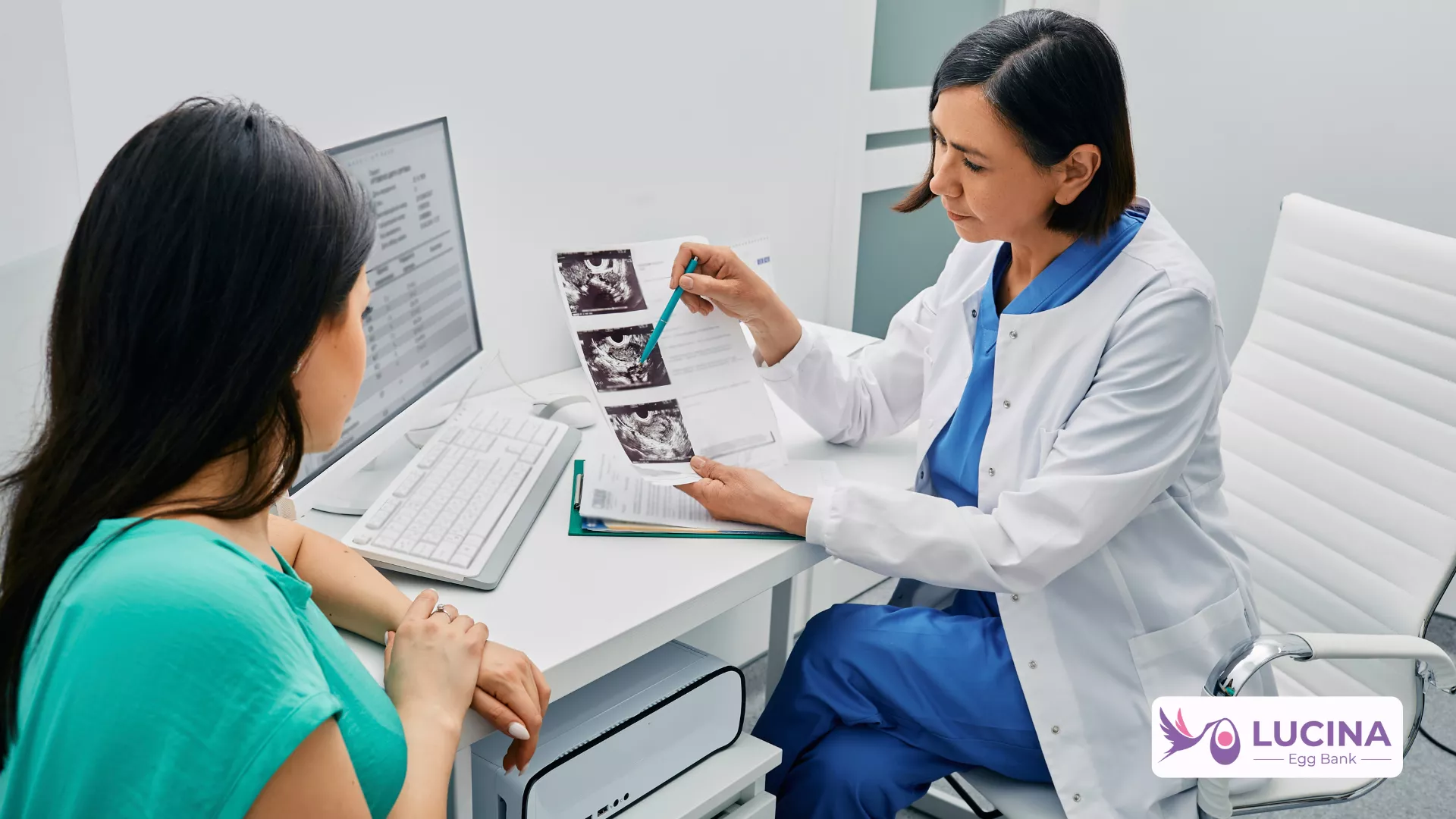
During the stimulation phase, you’ll attend 5 to 9 early-morning monitoring appointments. Each visit involves a blood draw and a transvaginal ultrasound to track follicle size and adjust your medication dosage in real time.
These appointments are quick, typically 20 to 30 minutes. The purpose is to catch any early signs of ovarian hyperstimulation syndrome (OHSS) and ensure the eggs are developing on schedule. Your egg donor screening established your baseline hormone levels; monitoring checks you’re responding as expected and adjusts if anything shifts.
Phase 3: The Trigger Shot (36 Hours Before Retrieval)
About 36 hours before your retrieval appointment, you’ll take a single trigger injection. This contains human chorionic gonadotropin (hCG) or a gonadotropin-releasing hormone (GnRH) agonist, which signals the eggs to complete their final maturation and prepares them for collection.
The injection itself is similar to the daily shots. Physically, you may notice the most intense bloating of the cycle in the hours that follow, as the ovaries reach peak size. Your coordinator gives you the exact time to administer it. Timing is precise because the retrieval is scheduled around this 36-hour window.
Phase 4: What Happens During Egg Retrieval

Retrieval is performed under IV sedation (twilight anesthesia). You’re asleep and feel nothing during the procedure. It takes 20 to 30 minutes, and you wake up in a recovery area with your team present. You go home the same day.
A reproductive endocrinologist uses an ultrasound-guided needle, inserted through the vaginal wall, to aspirate fluid from each mature follicle. The eggs are collected from that fluid in the lab. The fallopian tubes are not involved at any point in this process.
After the procedure, you rest in recovery for 30 to 60 minutes before discharge. You’ll need someone to drive you home. Mild cramping when you wake is normal and typically eases within a few hours. The full step-by-step is covered in the egg retrieval process breakdown.
How Invasive Is Egg Donation?
Egg donation is minimally invasive. There are no surgical incisions, no general anesthesia, and no hospital stay. The transvaginal needle approach means the procedure leaves no external marks and is performed entirely as an outpatient.
The clinical term for the approach is transvaginal oocyte retrieval. A thin needle passes through the vaginal wall, guided precisely by real-time ultrasound imaging. The procedure itself takes 20 to 30 minutes. You’re under twilight sedation the entire time.
Compare this to something like a laparoscopy (which requires abdominal incisions) and the difference in invasiveness is significant. Egg retrieval sits well below that threshold. The American Society for Reproductive Medicine (ASRM) classifies egg retrieval as a minor procedure. Most donors are home within a few hours of arrival.
Phase 5: Recovery and What Your Body Does Afterward
The first 24 hours after retrieval are the most physically noticeable. Cramping, bloating, mild spotting, and fatigue are all common. Over-the-counter acetaminophen or ibuprofen handles the cramping well for most donors. Your recovery after egg retrieval follows a predictable pattern: sharp peak, then steady improvement.
Cramping and bloating are expected. Rest, stay hydrated, and take OTC pain relief as needed. Have someone with you.
Most donors return to work or school. Mild bloating and tenderness ease quickly. No strenuous exercise or heavy lifting.
Symptoms largely resolve. Avoid intense twisting or bending while ovaries return to normal size. Light walking is fine.
Your period returns, confirming hormonal recovery. Follow-up blood tests verify your levels are back to your pre-donation baseline.
Long-Term Effects on Your Body and Fertility

Egg donation does not deplete your ovarian reserve. Each cycle, your ovaries recruit a cohort of follicles. One ovulates naturally. The rest undergo atresia. Stimulation medications redirect that process, maturing more of the already-recruited follicles rather than pulling from future cycles.
ASRM’s committee opinion on repeated oocyte donation confirms: available evidence shows no long-term risk to ovarian reserve across multiple donation cycles within the ASRM lifetime limit of six. Lucina rescreens donors fully before every cycle to verify continued health.
Studies tracked through Fertility and Sterility on donors across multiple donation cycles show no chronic pain outcomes and no documented fertility impact from properly managed cycles. The risks of egg donation are real but well-understood and largely preventable through close monitoring.
What the Full Process Looks Like Before You Apply
Knowing what happens to your body is the first step. The full timeline, including what happens before stimulation begins, is covered in the egg donation process guide.
Standard donors at Lucina earn $8,000 to $15,000+ per cycle. Donors attending or graduated from top-ranked universities may qualify for the Iconic program at up to $50,000 per cycle. All travel and medical costs are covered for every cycle. The application to donate eggs takes about 15 minutes.
Apply to Donate Eggs With Lucina
Now you know what your body actually goes through. The physical side is concentrated in a few weeks, and Lucina’s medical team manages every step: local screening, covered travel to San Diego, and close monitoring throughout your cycle.
$8,000–$15,000+ per cycle (Standard) · Up to $50,000 per cycle (Iconic) · 6–10 week process
All medical and travel costs covered. Compensation paid after retrieval. Up to 6 donation cycles allowed per ASRM lifetime guidelines.
Frequently Asked Questions

Julianna Nikolic
Chief Strategy Officer Julianna Nikolic leads strategic initiatives, focusing on growth, innovation, and patient-centered solutions in the reproductive sciences sector. With 26+ years of management experience and a strong entrepreneurial background, she brings deep expertise to advancing reproductive healthcare.

Table of Contents
- Phase 1: Hormone Stimulation (10 to 14 Days)
- Phase 2: Monitoring Appointments
- Phase 3: The Trigger Shot (36 Hours Before Retrieval)
- Phase 4: What Happens During Egg Retrieval
- How Invasive Is Egg Donation?
- Phase 5: Recovery and What Your Body Does Afterward
- Long-Term Effects on Your Body and Fertility
- What the Full Process Looks Like Before You Apply
- Frequently Asked Questions