
Every year, hopeful parents across California and around the world become a family because someone chose to donate. As an egg donor, you’re the reason that becomes possible.
Lucina Egg Bank is a frozen egg bank. That means your donation cycle can take place before and independently of an intended-parent match. After retrieval, your eggs are vitrified and stored until they are selected for use by a family.
If you’re exploring what it takes to become an egg donor in California, here are the guidelines, requirements, and compensation details to know before you apply.

To become an egg donor in California with Lucina, you need to be 19–31, in good health, a non-smoker, and have no disqualifying hereditary conditions. Screening and monitoring happen near you anywhere in California, and Lucina coordinates and covers all required travel. .
Already know this is for you? Apply Now
Egg Donor Guidelines and Requirements in California
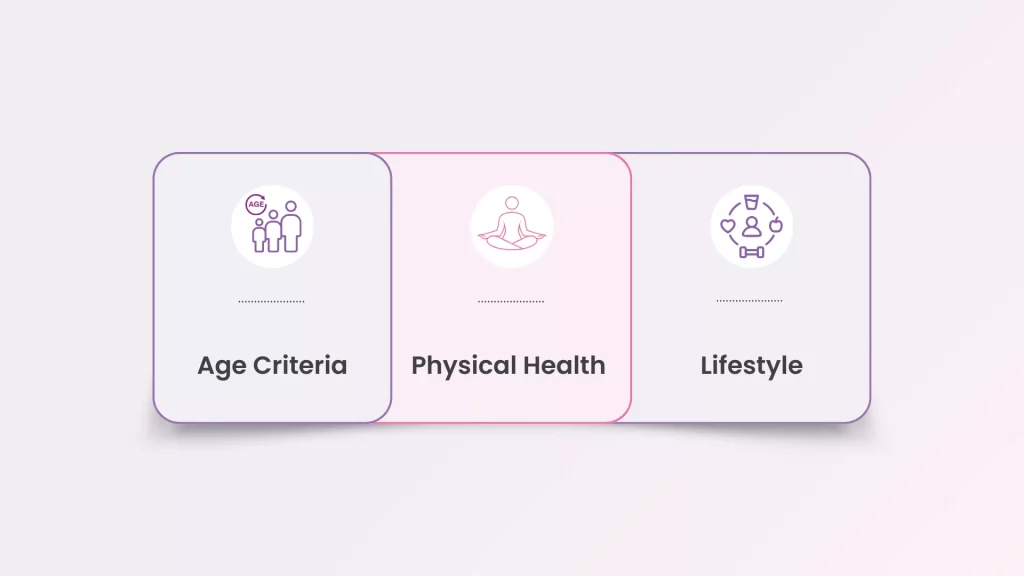
These are the baseline guidelines — also called donor requirements or screening criteria — every applicant needs to meet before moving forward with Lucina. Our full donor requirements guide covers each category in more depth:
- Ages 19–31
- Healthy BMI
- Non-smoker, and no nicotine products of any kind
- Regular menstrual cycles, off hormonal suppression
- Good general health, with no disqualifying hereditary conditions
- Able to commit 6–10 weeks per cycle, from application through recovery, including 5–10 clinic visits during the active cycle
California Egg Donor Requirements at a Glance
California’s Legal Protections for Egg Donors

California law protects egg donors in a few concrete ways:
- You’re generally not the legal parent. California law treats an egg donor as not being the child’s legal parent unless you and the intended parent or parents intended for you to have parental rights.
- You can receive compensation. California law regulates compensated egg donation, and your program will walk you through the payment terms before you proceed.
- You choose whether to allow identity disclosure. Before you donate, you’ll sign a declaration saying whether your identifying information may be released to a donor-conceived person who requests it after turning 18. If you initially decline, you can change that choice later; non-identifying medical information may still be provided either way.
Lucina provides legal counsel before you sign any agreement, arranged at no cost to you and separate from your medical screening.
What Egg Donors in California Earn
Compensation depends on the program — our full compensation guide breaks down per-cycle and cumulative figures in more detail:
(LIFETIME MAX 6 CYCLES)
All medical, travel, and legal costs are covered separately from your compensation — they’re never deducted from what you earn. This holds whether you’re based in San Diego, Los Angeles, Orange County, the Bay Area, or elsewhere in California.
Lucina will walk you through the exact payment schedule and timing when you apply. Donor compensation may have tax implications — consider speaking with a tax professional about your individual circumstances.
The Iconic program isn’t listed in the public donor gallery — if you attended or graduated from a top-ranked U.S. university, ask about eligibility directly when you apply.
How Screening and Your Donation Cycle Work
Six steps take you from application to an active profile — our donor screening guide and egg donation process guide cover each one in more depth:
- Online application (about 15 minutes)
- Initial review call
- Medical screening — blood tests, AMH testing, and an infectious disease panel
- Genetic testing and a psychological evaluation
- Legal review and approval
- Profile activation
You’ll hear back on your initial application status within 72 hours.
Once you’re approved and scheduled for an active cycle, the medical phase itself takes about 2–3 weeks. You’ll have roughly 10–14 days of daily at-home hormone injections — called stimulation — monitored through appointments near you. The cycle ends with the retrieval procedure itself, a 20–30 minute outpatient visit under light sedation. Recovery typically takes 1–3 days for most donors.
Lucina coordinates your retrieval location and covers all required travel. Depending on your location and cycle arrangements, that may include a trip to San Diego — everything before that, screening and monitoring included, happens near your home. Immediately after retrieval, your eggs are vitrified — a rapid-freezing process that minimizes ice-crystal formation — and stored for future use. FDA-required donor eligibility screening and ASRM’s clinical guidance apply throughout.
Egg Donation in San Diego: What Donors Should Know
Lucina Egg Bank is headquartered in San Diego. You don’t need to live in San Diego to apply. Screening and monitoring are coordinated near you anywhere in California. San Diego donors may be able to complete those appointments even closer to home.
Lucina coordinates your retrieval location and covers any required travel, which may include a trip to San Diego depending on your cycle arrangements.
Egg Bank vs. Egg Donor Agency: What That Means for You as a Donor
Egg banks and donor agencies use different models for making donated eggs available to intended parents.
With a traditional fresh egg donation program, the donor is typically matched with intended parents before the donation cycle begins. The medical cycle is then scheduled around that match.
At Lucina, a frozen egg bank, your donation cycle takes place before and independently of an intended-parent match. After retrieval, your eggs are vitrified and stored for future use. Intended parents can later select available frozen eggs without waiting for you to complete a new donation cycle.
Bottom line: with Lucina’s frozen-bank model, your donation cycle does not depend on a specific intended parent selecting you first.
Where Lucina Donors Are Located Across California
Screening and monitoring appointments are coordinated near you across California, including:
- San Diego
- Los Angeles
- Orange County
- Bay Area
- Inland Empire
- Sacramento
- Other California metro areas
Ready to see if you qualify? Apply Now
Where to Start If You Meet the Requirements
If you meet the guidelines above, the next step is a short application that takes about 15 minutes. If your application moves forward, a Lucina coordinator will review the next steps with you on an initial call.
Start your application — Apply Now
Apply to Donate Eggs With Lucina in San Diego
California donors work with a fertility clinic near them for monitoring. Travel for retrieval is covered. All medical and legal costs are handled by Lucina.
$8,000–$15,000+ per cycle (Standard) · Up to $50,000 per cycle (Iconic) · 6–10 week process
All medical and travel costs covered. Compensation paid after retrieval. Up to 6 donation cycles allowed per ASRM lifetime guidelines.
Frequently Asked Questions
What are the age requirements to donate eggs in California?
How much do egg donors get paid in California?
Do I have to live in San Diego to donate?
What legal protections do California egg donors have?
How long does the donation process take?
What disqualifies someone from donating eggs?
What is vitrification, and why does it matter for donors?
Does donating eggs affect my future fertility?

Julianna Nikolic
Chief Strategy Officer Julianna Nikolic leads strategic initiatives, focusing on growth, innovation, and patient-centered solutions in the reproductive sciences sector. With 26+ years of management experience and a strong entrepreneurial background, she brings deep expertise to advancing reproductive healthcare.

Table of Contents
- Egg Donor Guidelines and Requirements in California
- California Egg Donor Requirements at a Glance
- California's Legal Protections for Egg Donors
- What Egg Donors in California Earn
- How Screening and Your Donation Cycle Work
- Egg Donation in San Diego: What Donors Should Know
- Where Lucina Donors Are Located Across California
- Frequently Asked Questions