
Endometriosis is one of the most common reproductive conditions in women of childbearing age, and it’s one of the questions we hear most often from prospective donors. The honest answer is: it depends on your stage, your ovarian reserve, and how the condition has affected your reproductive anatomy.
At Lucina Egg Bank, we review every application individually. A diagnosis of endometriosis doesn’t automatically disqualify you, but it does trigger a more detailed medical review than most other conditions, because endometriosis directly involves the organs used in the donation process.
This article explains what egg banks look for when a donor has endometriosis, which stages are more likely to qualify, what the screening process involves, and what you can do to prepare for a stronger application.

Why Endometriosis Gets Extra Scrutiny in Donor Screening
Donors with mild endometriosis and a normal ovarian reserve can often qualify. Those with moderate to severe disease, endometriomas (ovarian cysts caused by endometriosis), or reduced ovarian reserve due to prior surgery are more likely to be deferred. Eligibility is determined through a full medical evaluation, not the diagnosis alone.
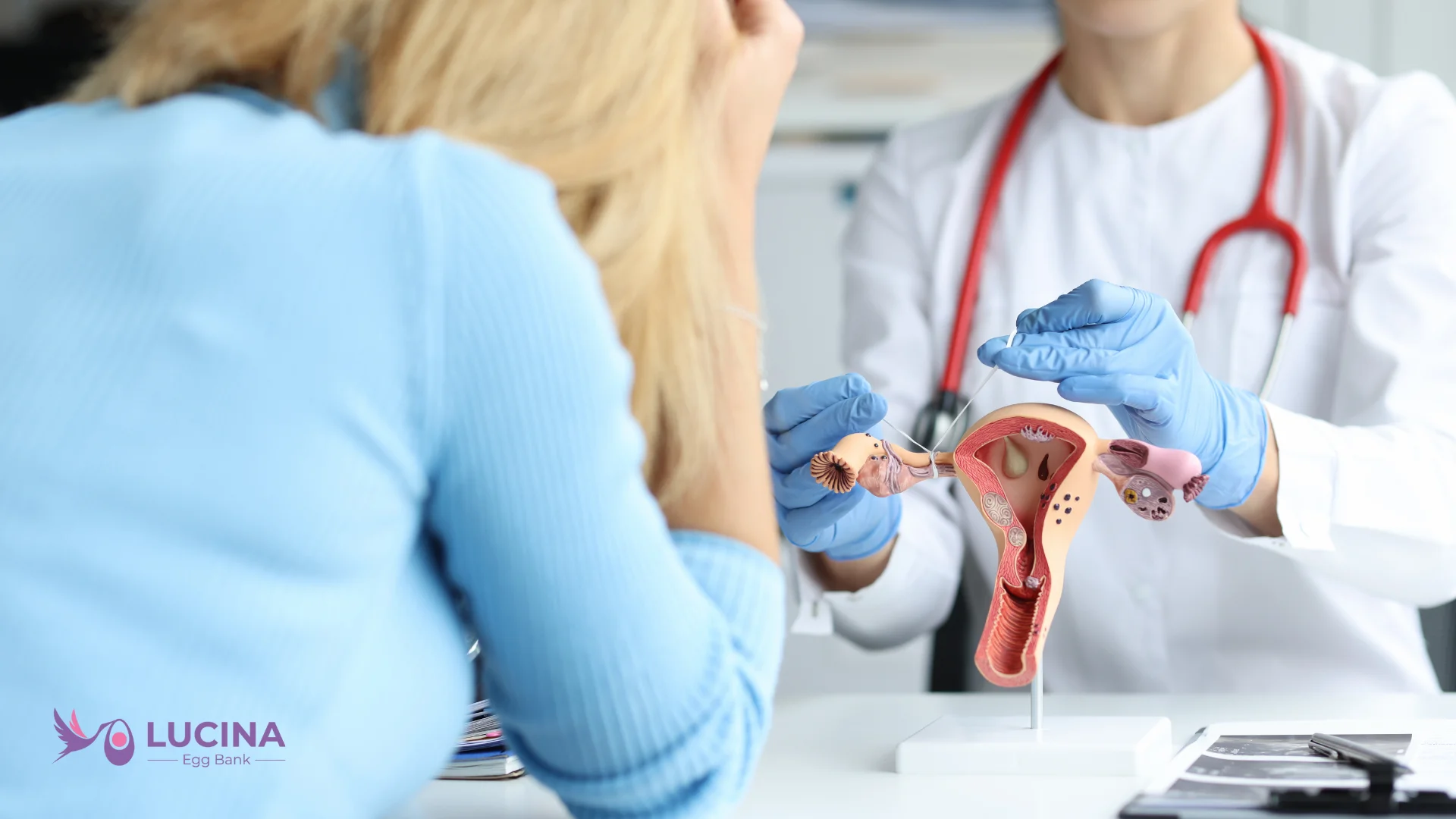
Most health conditions reviewed during donor screening involve general health or safety concerns. Endometriosis is different. It directly affects the ovaries and fallopian tubes, which are central to the egg retrieval process.
Egg donation requires ovarian stimulation, which works by prompting your ovaries to mature multiple eggs at once. If endometriosis has compromised ovarian function, reduced egg quality, or caused structural changes through adhesions or surgery, the expected response to stimulation may not be adequate to proceed safely or productively.
Screeners look at four primary factors when reviewing a donor with endometriosis:
- Stage of disease. Stages I and II (minimal and mild) involve superficial lesions with little or no structural involvement. Stages III and IV (moderate and severe) involve deeper infiltration, adhesions, and possible endometriomas.
- Ovarian reserve. Anti-Müllerian Hormone (AMH) levels and antral follicle count (AFC) from a baseline ultrasound. These measure your current egg supply and predict how your ovaries will respond to stimulation.
- Surgical history. Prior ovarian surgery to remove endometriomas can reduce ovarian reserve permanently. The number of surgeries and the amount of ovarian tissue removed both matter.
- Current management. Whether you’re using hormonal treatment (such as a hormonal intrauterine device or oral contraceptives) and how recently you stopped or plan to stop before donation.
Stage I and II Endometriosis: What to Expect
Donors with minimal or mild endometriosis have the strongest chance of qualifying, provided their ovarian reserve is within the normal range. At these stages, lesions are typically superficial and haven’t affected ovarian anatomy in ways that compromise egg production.
If your endometriosis was diagnosed through laparoscopy, you’ve had no ovarian surgery, and your AMH and AFC are in a healthy range, there’s a reasonable path forward through screening.
One important caveat: endometriosis is a progressive condition in some women. Screeners will want to understand how long you’ve had the diagnosis, whether it has been stable or worsening, and what your most recent imaging or hormone levels show. A diagnosis from several years ago with no recent follow-up creates more uncertainty than a recent evaluation with current data.
If you haven’t had an AMH test or pelvic ultrasound recently, it’s worth getting current results before applying. Having up-to-date ovarian reserve data in hand speeds up your screening review and gives the medical team what they need to make a clear decision.
Stage III and IV Endometriosis: The Bigger Barriers
Moderate and severe endometriosis introduces complications that often make donation difficult. Deeper infiltrating lesions and adhesions can distort pelvic anatomy, which creates practical challenges for the egg retrieval procedure itself.
Endometriomas (fluid-filled ovarian cysts caused by endometriosis) are a particular concern. They occupy space within the ovary, and the tissue surrounding them tends to be more fragile. Research consistently shows that endometriomas reduce ovarian reserve and that surgical removal of endometriomas, while sometimes necessary for pain management, often causes additional reserve loss.
For donors with Stage III or IV endometriosis, the most common barriers to qualifying are:
- Low AMH or low antral follicle count indicating reduced ovarian reserve
- Active endometriomas present on ultrasound at the time of screening
- Prior ovarian surgeries that removed substantial ovarian tissue
- Pelvic adhesions that would make safe egg retrieval more difficult
A deferral for severe endometriosis is not always permanent. Some donors whose endometriosis is well-managed and whose reserve remains adequate are considered on a case-by-case basis. The decision belongs to the medical review team after a full evaluation.
How Hormonal Management Affects Your Application
Many women manage endometriosis with hormonal treatments that suppress the condition: hormonal intrauterine devices (IUDs), combined oral contraceptives, or progestin-only pills. These are common and do not automatically disqualify you.
The relevant question is timing. Ovarian stimulation for egg donation requires your ovaries to be responsive to fertility medications. Hormonal suppression from an IUD or contraceptive pill can temporarily reduce that responsiveness, which is why most donation programs require a washout period after stopping hormonal management before beginning stimulation.
Donors using a hormonal IUD for endometriosis management face a specific washout-period timeline before stimulation can begin. The length varies by medication type and the program’s protocol.
GnRH agonists (such as leuprolide acetate, brand name Lupron) are sometimes used for endometriosis and require a longer washout period before stimulation can begin. If you’re currently on a GnRH agonist, disclose this clearly in your application.
Endometriosis involves tissue similar to the uterine lining growing outside the uterus. It is classified into four stages (I through IV) based on location, extent, and depth of implants, plus the presence of adhesions and endometriomas.
Stage does not always correlate directly with pain severity. Some women with Stage IV have minimal symptoms while others with Stage I experience debilitating pain. For screening purposes, the structural and hormonal impact on ovarian function matters more than pain level alone.
The Endometriosis Foundation of America provides a detailed overview of staging criteria, and the Office on Women’s Health covers symptom and treatment basics.
What the Screening Process Looks Like for Donors With Endometriosis
Screening follows the same structure as for all donors, with additional evaluation points specific to endometriosis. Here’s what the process looks like:
Disclose your endometriosis diagnosis, stage if known, any surgeries, and your current management approach. Include approximate dates for any procedures.
A coordinator reviews your application. For endometriosis disclosures, a follow-up call is common to gather additional detail before advancing to full medical screening.
Bloodwork includes AMH testing to assess ovarian reserve. For donors with endometriosis, this result carries more weight than for donors without the condition.
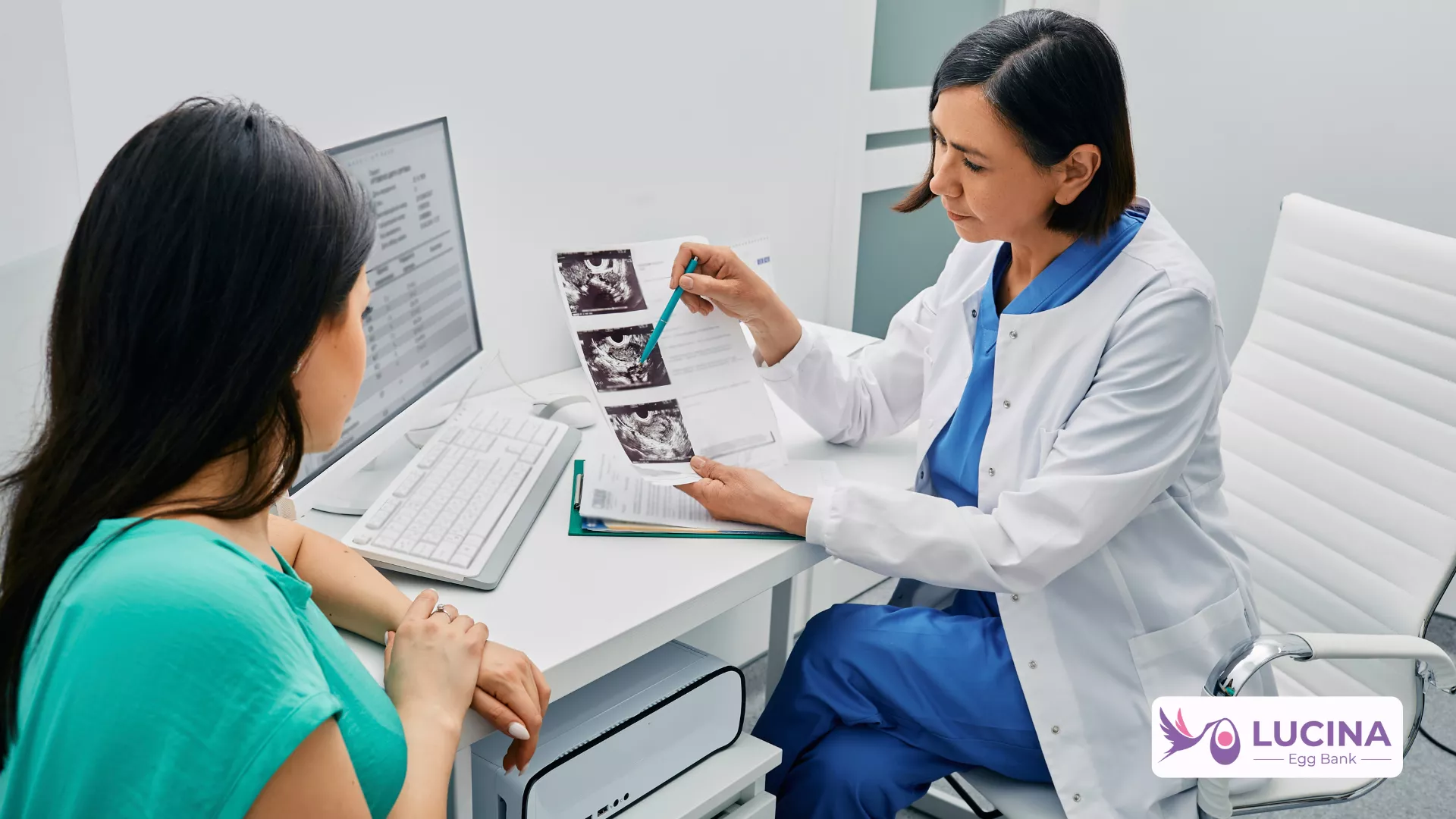
A transvaginal ultrasound assesses antral follicle count and checks for endometriomas. This is where the structural picture of your ovaries becomes visible to the medical team.
A reproductive endocrinologist reviews your complete medical history, hormone results, ultrasound findings, and surgical records before making an eligibility determination.
Based on the full picture, you’re cleared to proceed, deferred for additional evaluation, or informed of ineligibility. Donors with mild endometriosis and adequate reserve often reach clearance at this stage.
The full egg retrieval process follows a set timeline from stimulation through retrieval, typically spanning six to ten weeks.
The best way to know is to apply. We review endometriosis cases individually, and many donors with mild disease go on to complete successful donation cycles.
Start Your ApplicationRelated Conditions That Often Co-Occur With Endometriosis
Endometriosis rarely exists in isolation. Several related conditions frequently come up in donor screening alongside an endometriosis diagnosis, and each is evaluated on its own terms.
Irregular periods. Endometriosis can disrupt cycle regularity through its effects on hormonal balance and pelvic anatomy. Donors with irregular periods face additional timing considerations during stimulation and monitoring.
Ovarian cysts. Endometriomas are a specific type of ovarian cyst, but other functional cysts can also be present alongside endometriosis. Other types of ovarian cysts are evaluated separately during screening, with different criteria depending on size, type, and location.
Adenomyosis. Adenomyosis involves endometrial tissue growing into the uterine wall rather than outside the uterus. It sometimes co-occurs with endometriosis and is reviewed separately, as it affects the uterus rather than the ovaries, which matters differently in the context of egg donation versus IVF using your own eggs.
What disqualifies egg donors extends beyond reproductive anatomy into medical history, lifestyle, and general health criteria worth reviewing before you apply.
What You Can Do Before Applying
If you have endometriosis and are considering egg donation, a few practical steps can put you in a stronger position before submitting your application.
- Get current AMH and AFC results. If your last hormone test or ultrasound was more than a year ago, updated numbers will be requested during screening. Having them ready reduces delays.
- Gather your surgical records. If you’ve had any laparoscopy or ovarian surgery, the operative reports and pathology notes are useful. Screeners want to know what was found, what was removed, and how much ovarian tissue was affected.
- Know your current management plan. Be ready to describe what you’re currently taking or doing to manage endometriosis symptoms, and when you last changed your approach.
- Understand your stage. If you were diagnosed through imaging alone (rather than laparoscopy), your stage may not be formally confirmed. A presumed stage based on ultrasound is treated differently from a confirmed surgical stage, and that distinction is worth noting when you apply.
Each step of the egg donor screening process has defined criteria, which makes the endometriosis review more predictable going in.
The Honest Answer About Endometriosis and Egg Donation
Endometriosis makes the screening process more involved than it would be for a donor without the diagnosis. The right response is to apply with complete records and accurate information.
Many donors with Stage I or II endometriosis, normal ovarian reserve, and no prior ovarian surgery qualify and complete donation cycles without complication. The key is giving the medical team an accurate, complete picture of your history, not a summary shaped by what you think they want to hear.
Our 3,500+ screened donor profiles include women with a wide range of gynecological histories. We evaluate each applicant’s full reproductive picture, not just the diagnosis on record. Donation is coordinated through our clinical partner network with fertility clinics experienced in complex donor profiles including endometriosis.
Apply to Donate Eggs With Lucina
Mild endometriosis doesn’t close the door. We evaluate every applicant individually, with a medical team that looks at your full reproductive picture. Our 3,500+ screened donor profiles reflect a wide range of health backgrounds.
$8,000–$15,000+ per cycle (Standard) · Up to $50,000 per cycle (Iconic) · 3,500+ screened donors
All medical and travel costs covered. Compensation paid after retrieval. Up to 6 donation cycles allowed per ASRM lifetime guidelines.
Frequently Asked Questions

Julianna Nikolic
Chief Strategy Officer Julianna Nikolic leads strategic initiatives, focusing on growth, innovation, and patient-centered solutions in the reproductive sciences sector. With 26+ years of management experience and a strong entrepreneurial background, she brings deep expertise to advancing reproductive healthcare.

Table of Contents
- Why Endometriosis Gets Extra Scrutiny in Donor Screening
- Stage I and II Endometriosis: What to Expect
- Stage III and IV Endometriosis: The Bigger Barriers
- How Hormonal Management Affects Your Application
- What the Screening Process Looks Like for Donors With Endometriosis
- Related Conditions That Often Co-Occur With Endometriosis
- What You Can Do Before Applying
- The Honest Answer About Endometriosis and Egg Donation
- Frequently Asked Questions