If I Donate My Eggs, Can I Still Have Babies? The Facts About Fertility

The most common reason women hesitate to apply as egg donors isn’t the injections or the schedule. It’s the fertility question: does donating eggs affect fertility later? It’s a fair concern, and the answer is backed by research: donating your eggs does not reduce your fertility or lower your chances of having children.
The biology behind this is straightforward once you understand how egg development works. Every cycle, your body recruits dozens of eggs, matures a handful, and releases one. The rest are discarded, no matter what. Donation rescues those eggs that would otherwise be lost. It does not dip into your future supply.
At Lucina Egg Bank, every donor goes through thorough screening and monitoring throughout the process. Ovarian reserve and hormone levels are tracked before, during, and after stimulation. Here’s what the research says, and what you can actually expect if you donate your eggs and still want to have babies.

Does Donating Eggs Affect Fertility?
No. Donating eggs does not affect fertility or deplete your ovarian reserve. The retrieved eggs are ones your body would have discarded anyway. Multiple studies, including research published in Human Reproduction, confirm that donation cycles do not measurably lower a donor’s ovarian reserve. You can donate your eggs and still have babies.
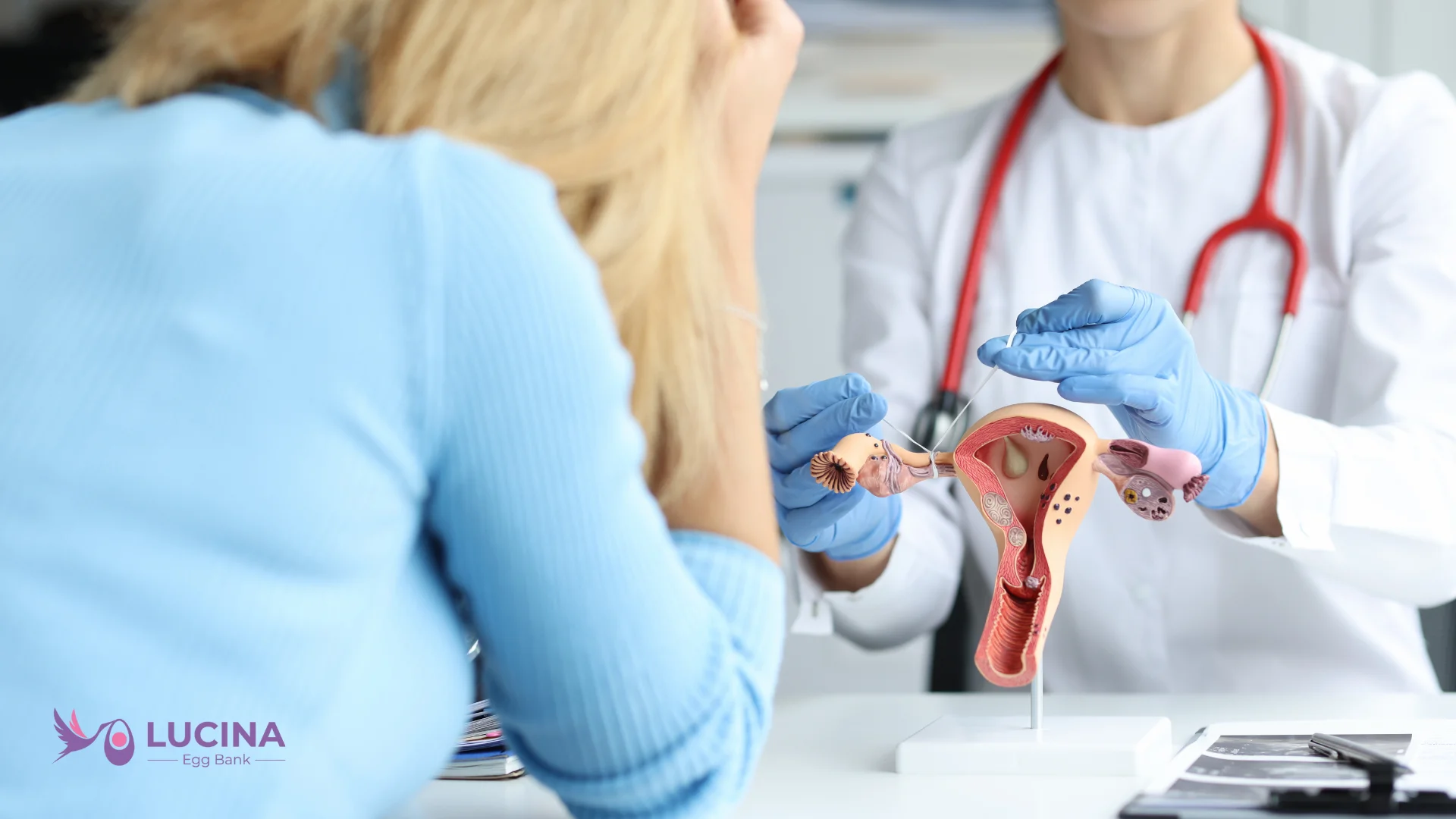
Here’s the biology. Each month, your ovaries recruit a cohort of follicles, known as the antral follicle pool. Only one egg fully matures and ovulates. The rest undergo a natural die-off called atresia. They’re gone.
Fertility medications used in the donation process, primarily follicle-stimulating hormone (FSH) injections, intercept that die-off. They give more of those naturally recruited follicles the hormonal signal they need to mature fully. You’re not pulling eggs from future cycles. You’re making use of eggs your body already committed to losing.
This is backed by the research. A 2011 study in Human Reproduction found no clinically meaningful change in ovarian reserve markers, including anti-Müllerian hormone (AMH) levels, in donors who completed multiple retrieval cycles. Your reproductive starting point remains intact.
Research examining whether donating eggs affects fertility uses three primary markers: AMH levels, antral follicle count, and basal FSH. All three return to pre-donation baseline between cycles. Donating eggs does not reduce fertility by any of these measures.
Can You Still Have Babies After Donating Eggs?
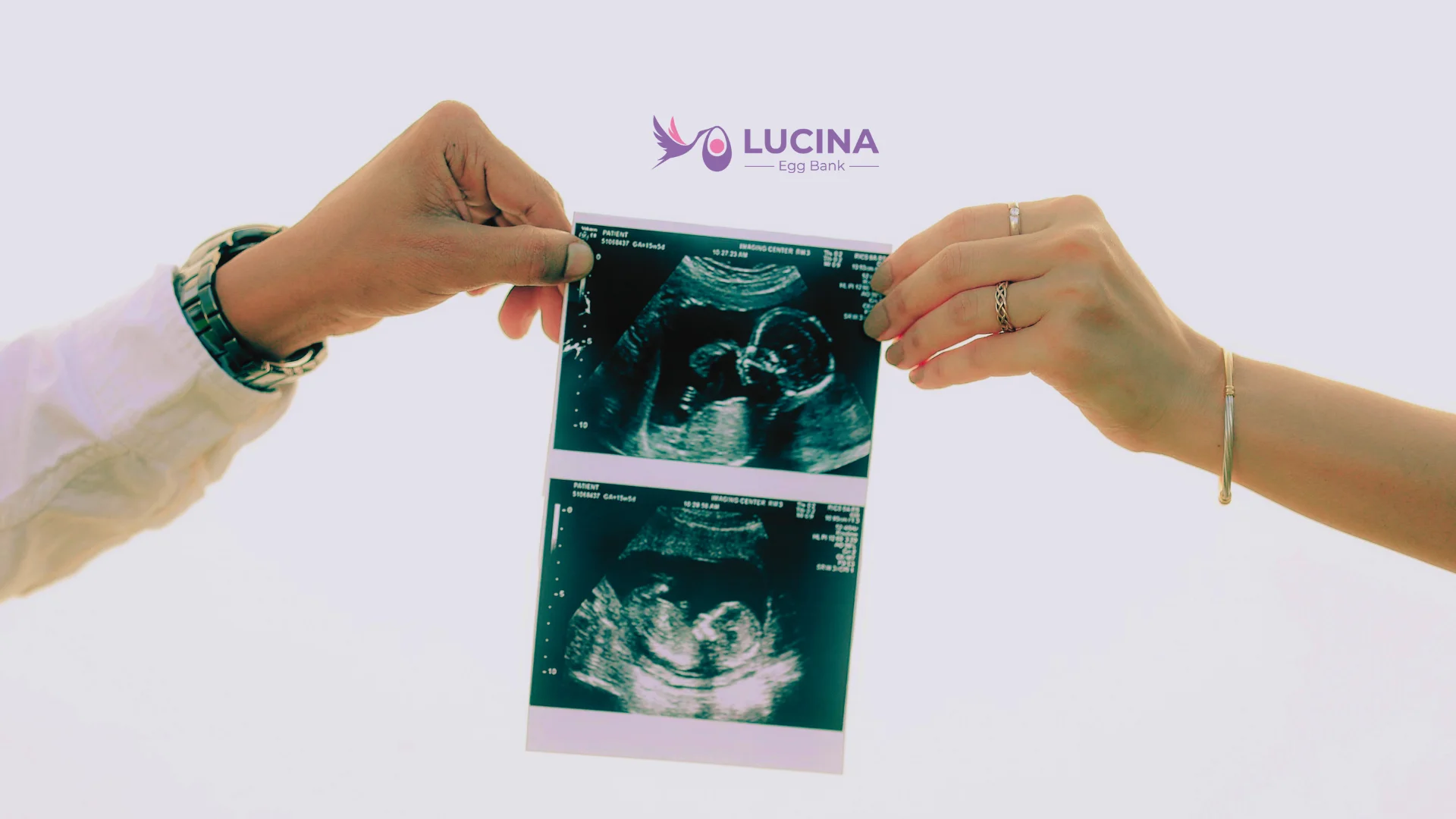
Yes. Many egg donors have gone on to have healthy pregnancies with no complications. Donating eggs will not affect your fertility or prevent you from having children. The retrieval procedure only removes eggs from one cycle’s recruited cohort. Your ovaries keep doing what they’ve always done in every cycle that follows.
There is one thing to know right after retrieval: fertility may be temporarily elevated. The hormonal stimulation that matures multiple follicles can carry over briefly. Clinics typically advise donors to avoid unprotected intercourse for several weeks post-retrieval to prevent unintended pregnancy.
After egg retrieval, avoid unprotected intercourse for at least 1 to 2 weeks. Hormonal stimulation can temporarily boost fertility, making unintended conception more likely than usual during this window.
Once your menstrual cycle returns, typically within 4 to 6 weeks, your body is back to its normal rhythm. Most donors report no lasting changes to their periods or reproductive health after donation.
How Many Eggs Are Retrieved, and What Does That Mean for You?

Most donors have between 10 and 20 eggs retrieved in a single cycle. The exact number depends on how your ovaries respond to stimulation medications, your age, and your individual antral follicle count, measured by ultrasound at the start of the process.
That range sounds like a lot. Put it in context: your ovaries typically recruit 10 to 30 follicles every cycle and discard all but one. Donation collects a portion of what’s already being lost.
Your ovarian reserve, measured by AMH and antral follicle count, reflects your resting pool of immature follicles. That pool is not affected by one retrieval cycle. This is why donating eggs does not reduce fertility.
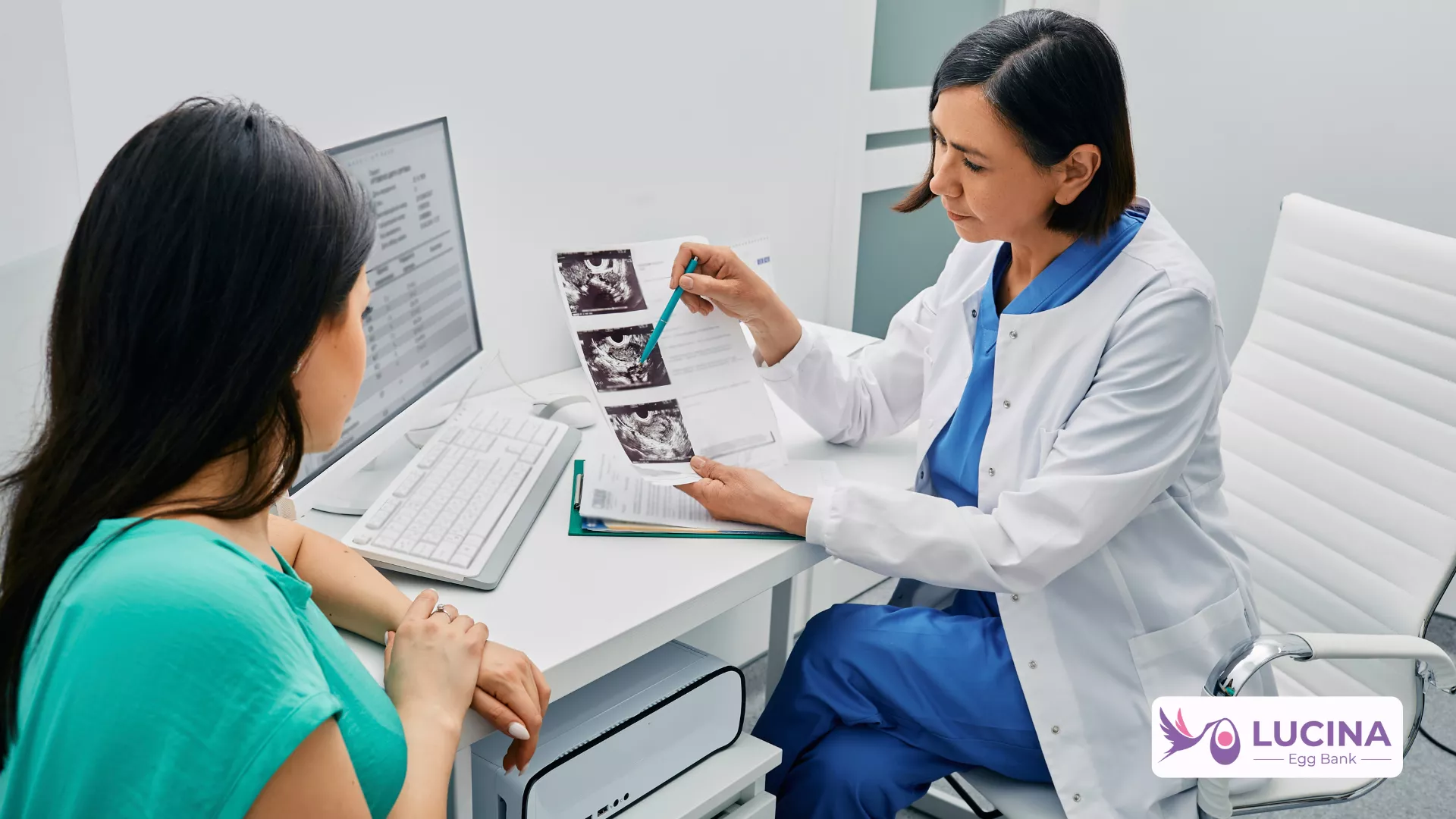
There’s also an unexpected benefit. The blood tests and ultrasounds throughout your cycle give you real data on your reproductive health: AMH levels, antral follicle count, how your ovaries respond to stimulation.
Many donors describe it as the most thorough fertility workup they’ve ever had.
What Happens to Your Body During and After Retrieval
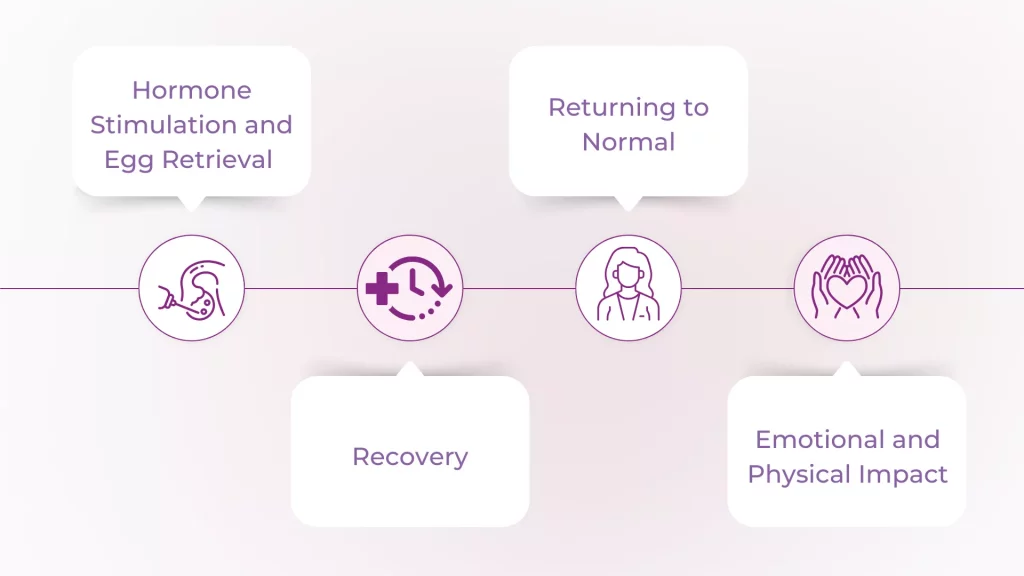
The donation process spans about 6 to 10 weeks from application to retrieval. The active medical phase is much shorter, roughly 2 to 3 weeks. Here’s what each stage involves and how your body responds.
Self-administered FSH injections stimulate your ovaries to mature multiple follicles. You’ll have blood draws and ultrasounds every few days so the medical team can adjust dosages and monitor your response.
About 36 hours before retrieval, you take a trigger injection to finalize egg maturation. Timing this correctly is what the monitoring appointments have been building toward.
The retrieval is an outpatient procedure done under mild sedation. A doctor guides a thin needle through the vaginal wall using ultrasound, aspirating the fluid from each follicle. You’re asleep for it. Most donors rest for a few hours, then go home.
Mild bloating, cramping, and fatigue are normal and typically pass within a few days. Strenuous exercise is off-limits for about a week. Your period returns within 4 to 6 weeks, signaling full recovery.
The main risk to be aware of is ovarian hyperstimulation syndrome (OHSS). Mild OHSS causes temporary bloating and discomfort. Severe OHSS is rare when donors are properly monitored. Frequent monitoring appointments during stimulation exist specifically to catch signs early and adjust medications before symptoms escalate.
OHSS symptoms include bloating, pelvic pain, nausea, and in severe cases, rapid weight gain and shortness of breath. Contact your medical team immediately if symptoms feel severe. Most donors experience only mild bloating that resolves on its own.
How Many Times Can You Donate Eggs Without Risking Fertility?
The ASRM recommends a maximum of 6 donation cycles per donor. This is the lifetime limit followed by Lucina and every reputable egg bank in the U.S.
Clinics require at least 2 to 3 months between each cycle. That recovery window allows hormone levels to normalize and gives the ovaries time to reset. Screening is repeated before every cycle, not just the first one, to confirm the body is ready.
The 6-cycle limit isn’t arbitrary. It’s a precautionary ceiling set by a medical body with 40+ years of fertility research behind it. Within that limit, and with proper inter-cycle recovery, the research supports donation as safe for the donor’s long-term reproductive health. The donation cycle limits page covers what the ASRM guidelines mean for each cycle in practice.
What the Research Says About Egg Donation and Fertility
Concerns about whether donating eggs affects fertility aren’t unfounded. They’re just not supported by the evidence. Multiple studies have examined whether repeated donation cycles affect markers like AMH, antral follicle count, and basal FSH levels. The consistent finding: no clinically meaningful reduction in ovarian reserve.
A review published in Fertility and Sterility, the flagship journal of ASRM, looked at donors across multiple cycles and found no lasting hormonal changes. Ovarian reserve markers returned to pre-donation baseline between cycles.
The World Health Organization (WHO) notes that infertility affects roughly 1 in 6 people globally. The donor egg system exists because of that gap. The research on donor safety has developed in parallel, and the consensus is clear: donating eggs does not reduce fertility when done within ASRM guidelines.
To answer the related questions directly: can donating eggs affect fertility? No. Will donating eggs affect future fertility? No. Does donating eggs make you less fertile? No. Each of these questions has been studied, and none of the research supports a lasting impact on the donor’s own reproductive capacity.
What Might Affect Your Eligibility to Donate
Fertility isn’t the only factor. Egg banks screen donors carefully before approving any cycle. Common disqualifying factors include certain genetic conditions, BMI outside the acceptable range, irregular ovarian reserve markers, recent use of specific medications, and some mental health history.
This screening protects you as much as it protects intended parents. If your ovarian reserve is low or your hormone levels suggest a suboptimal response, a responsible program won’t put you through stimulation. The egg donation process does not affect fertility going forward, but it does require that you start with a healthy baseline. It’s a two-way check.
The full breakdown of egg donation disqualifiers is there if you’re not sure whether you’d qualify. The egg retrieval process page walks through what the medical evaluation looks like in practice.
Donate Your Eggs and Still Build Your Family
If you donate your eggs, you can still have babies. That answer is backed by biology, reinforced by ASRM guidelines, and confirmed by years of donor outcome data.
The eggs retrieved are ones your body recruited and would have discarded. Your ovarian reserve stays intact. Your cycle returns. Donating eggs does not affect your fertility.
What the egg donation process does give you is real information about your reproductive health, compensation that starts at $8,000 per cycle, and the knowledge that your donation is helping a family that otherwise couldn’t have children.
Lucina covers all travel and medical costs. Standard donors earn $8,000 to $15,000+ per cycle, up to $90,000 cumulatively over 6 cycles. Donors from top-ranked universities may qualify for the Iconic tier, which pays up to $50,000 per cycle. The application takes about 15 minutes.
Apply to Donate Eggs With Lucina
The research is clear: donating eggs does not reduce your fertility. If this article answered your main concern, the application takes about 15 minutes.
$8,000–$15,000+ per cycle (Standard) · Up to $50,000 per cycle (Iconic) · 3,500+ screened donors
All medical and travel costs covered. Compensation paid after retrieval. Up to 6 donation cycles allowed per ASRM lifetime guidelines.
Frequently Asked Questions

Julianna Nikolic
Chief Strategy Officer Julianna Nikolic leads strategic initiatives, focusing on growth, innovation, and patient-centered solutions in the reproductive sciences sector. With 26+ years of management experience and a strong entrepreneurial background, she brings deep expertise to advancing reproductive healthcare.

Table of Contents
- Does Donating Eggs Affect Fertility?
- Can You Still Have Babies After Donating Eggs?
- How Many Eggs Are Retrieved, and What Does That Mean for You?
- What Happens to Your Body During and After Retrieval
- How Many Times Can You Donate Eggs Without Risking Fertility?
- What the Research Says About Egg Donation and Fertility
- What Might Affect Your Eligibility to Donate
- Donate Your Eggs and Still Build Your Family
- Frequently Asked Questions