
Can you donate eggs if you’ve had a hysterectomy? Actually, it depends entirely on one thing: whether your ovaries are still in place.
Egg donation and pregnancy are two separate biological processes. Lucina Egg Bank is a frozen egg bank, not a fertility clinic. We collect eggs from donors and ship them to fertility clinics worldwide. Your uterus plays no role in that process at all. What matters is whether your ovaries are functioning and whether you meet the full eligibility criteria.
What a Hysterectomy Actually Removes
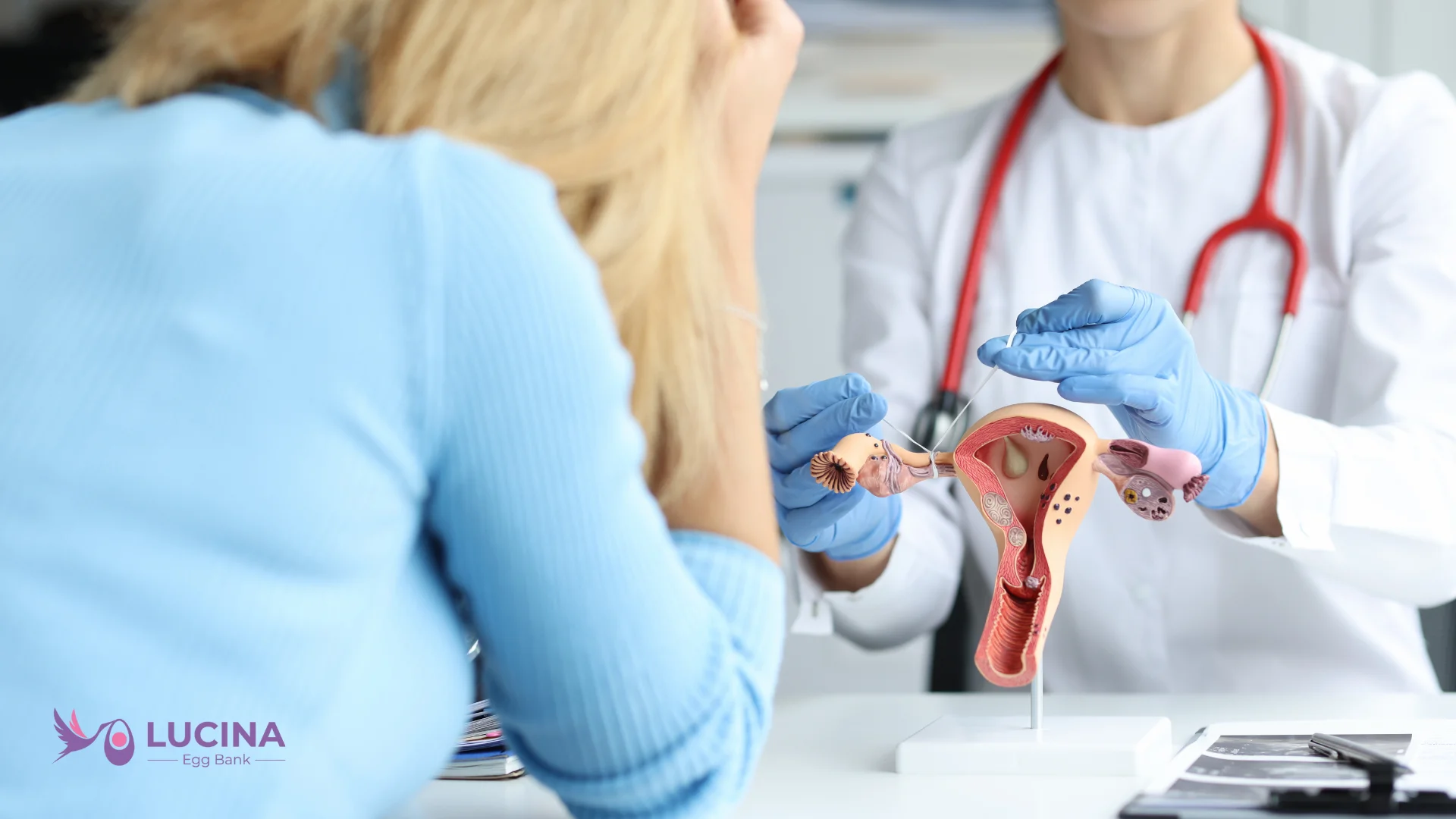
A hysterectomy is surgery to remove the uterus. Depending on the type, it may also include the cervix, fallopian tubes, or ovaries.

Can you donate eggs after a hysterectomy? Yes, in many cases. If your ovaries were not removed, your eggs remain available. Egg donation requires ovarian function, not a uterus. Your eligibility depends on ovarian reserve, age (19–31), and the rest of the screening criteria.
The three types differ in what they remove:
- Partial hysterectomy. Only the uterus (or part of it) is removed. The cervix, fallopian tubes, and ovaries remain. Egg donation may still be possible.
- Total hysterectomy. The uterus and cervix are removed. Ovaries and tubes may or may not be left in place. If ovaries remain, egg donation is often still possible.
- Radical hysterectomy with bilateral oophorectomy. The uterus, cervix, and both ovaries are removed. Egg donation is not possible because there are no eggs to retrieve.
The type of surgery matters far less than one specific detail: were your ovaries removed?
Why Your Ovaries Are the Only Thing That Matters
Egg donation does not involve the uterus at any point. The process is entirely ovarian.
Donors receive hormonal stimulation to encourage the ovaries to produce multiple mature eggs. Those eggs are retrieved through a minimally invasive procedure called egg retrieval, using a thin needle guided by ultrasound. The procedure requires no incision and leaves the uterus completely out of the process.
The retrieved eggs are then flash-frozen through a process called vitrification and shipped to our partner fertility clinics for use by intended parents. Pregnancy, if it occurs, happens in the recipient’s body, not yours.
If you’re unsure whether your ovaries were removed during your hysterectomy, your surgical records or a conversation with your gynecologist will confirm it. This single detail determines whether you can apply.
Can You Donate Eggs If You’ve Had a Hysterectomy? The Short Answer
If your ovaries are still in place and functioning, you may be eligible. Many women who have had a hysterectomy go on to donate eggs successfully.
The screening process will assess your ovarian reserve, meaning the quantity and quality of eggs your ovaries can still produce. A woman who had a hysterectomy at 28 with healthy, intact ovaries may have a completely normal ovarian reserve.
The ovaries and uterus are separate structures with separate functions. The uterus carries a pregnancy; the ovaries produce eggs and hormones. After a hysterectomy that leaves the ovaries intact, the ovaries continue to function normally until natural menopause.
What the Screening Process Checks
Hysterectomy or not, every applicant goes through the same full screening process. Here’s what that involves:
Basic eligibility check: age 19–31, non-smoker, BMI in range, no disqualifying medical history. Takes about 15 minutes online.
Full physical exam and reproductive health review. Includes documentation of any prior surgeries, including your hysterectomy.
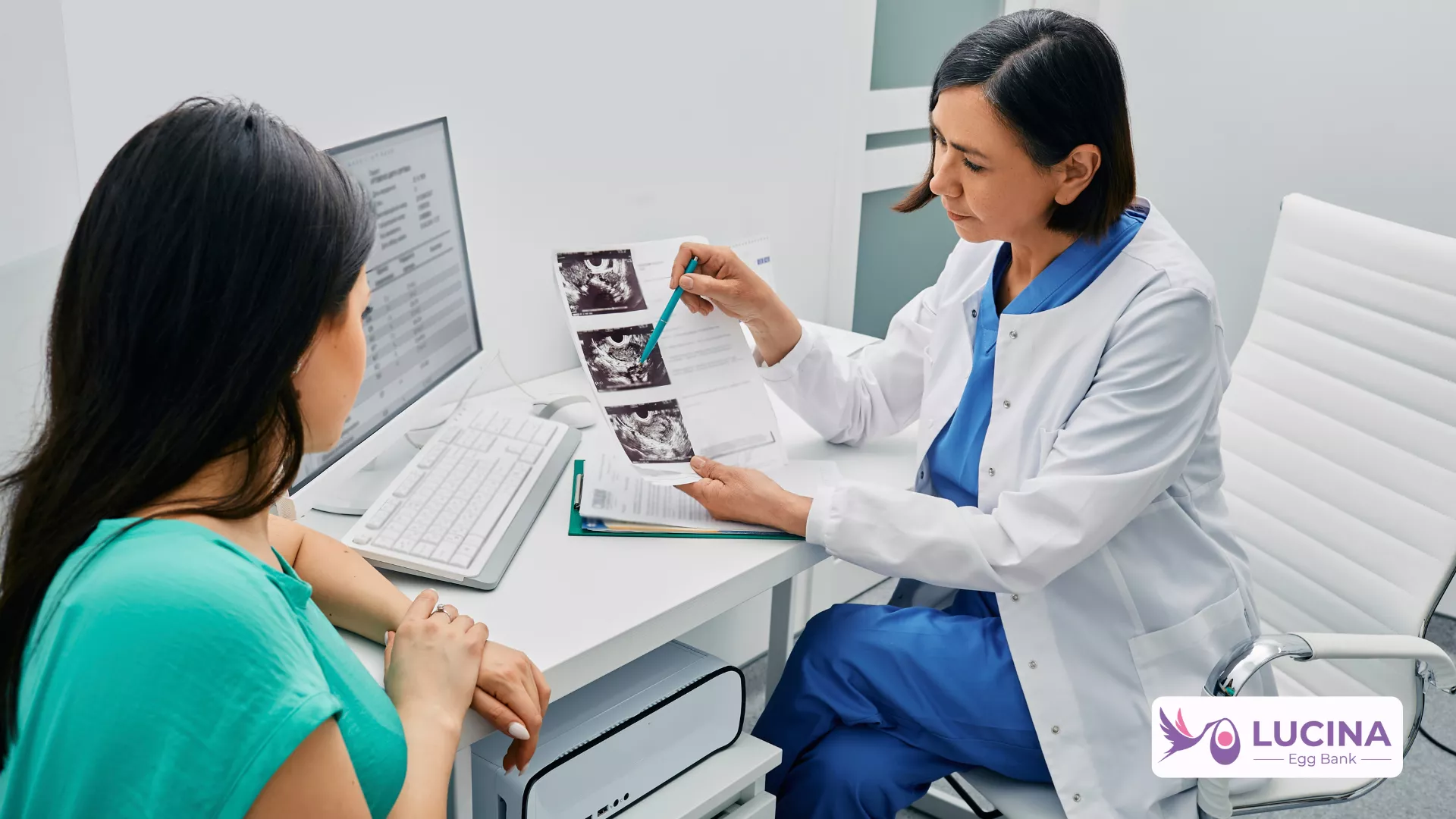
Antral follicle count via ultrasound and Anti-Müllerian Hormone (AMH) bloodwork to confirm your ovaries are producing eggs normally.
Screening for hereditary conditions and chromosomal abnormalities that could affect donated eggs. Standard for all applicants.
A licensed mental health professional confirms you understand the process and are making an informed, voluntary decision to donate.
If all screening passes, you’re added to our donor pool of 3,500+ screened profiles and matched with intended parents using ReflEggction® AI.
For applicants who’ve had a hysterectomy, step three, ovarian reserve testing, carries the most weight. If your AMH levels are healthy and your antral follicle count is within range, the absence of a uterus won’t disqualify you.
The full list of egg donation disqualifiers covers the complete picture.
How This Differs From a Tubal Ligation
It’s worth distinguishing between two common procedures that get confused.
A tubal ligation (having your tubes tied) closes or removes the fallopian tubes to prevent pregnancy. It does not affect the ovaries. Eggs are still produced normally; they just can’t travel to the uterus. For egg donation purposes, this makes no difference, because retrieved eggs never travel through the tubes.
A hysterectomy goes further by removing the uterus itself. But the same logic applies: if the ovaries remain, eggs are still produced. The surgical approach used to retrieve those eggs bypasses the fallopian tubes entirely.
Both procedures are compatible with egg donation when ovarian function is intact. The conditions are related but distinct, and our team can walk you through what applies to your situation.
Donating with an IUD follows the same principle, since the IUD plays no role in the egg retrieval process either.
Some research suggests that removing the uterus can occasionally affect blood supply to the ovaries, which may reduce ovarian reserve slightly over time. This is more likely with certain surgical techniques. A fertility specialist can assess whether this applies to you through standard ovarian reserve testing. Source: National Library of Medicine, 2017.
What About Hormone Levels After a Hysterectomy?
If your ovaries are intact after a hysterectomy, they continue producing estrogen and progesterone normally. You won’t experience surgical menopause unless the ovaries were also removed.
This matters for egg donation because the stimulation protocol uses injectable hormones to encourage the ovaries to produce multiple eggs in one cycle. Women with retained, functioning ovaries respond to this protocol the same way any other donor does.
If your ovaries were removed, you’re likely in surgical menopause and on hormone replacement therapy. In that case, egg donation is not possible, because there are no eggs to retrieve.
A reproductive endocrinologist can confirm your hormonal status and ovarian function through a simple blood panel. Your fertility specialist, not Lucina, manages these medical assessments, since in vitro fertilization (IVF) and retrieval are performed by the recipient’s clinic.
Compensation and What to Expect as a Donor
Egg donation is a meaningful financial commitment on both ends. You’ll invest roughly 6–10 weeks of your time. The compensation reflects that.
Standard donors earn $8,000–$15,000+ per cycle. If you attend or graduated from a top-ranked university, you may qualify for the Iconic donor tier, which pays up to $50,000 per cycle. All travel costs, medical appointments, and procedures are fully covered regardless of tier.
You can donate up to 6 times over your lifetime under guidelines from the American Society for Reproductive Medicine (ASRM). Standard donors can earn up to $90,000 cumulative. Iconic donors can earn up to $300,000.
Having a prior hysterectomy does not reduce your compensation. Pay is based on your donor tier, not your reproductive history. The pros and cons of donating are worth reviewing before you apply.
Find Out If You Qualify
Ovarian function is what matters, not surgical history. The application takes about 15 minutes and gives you a clear answer.
Start Your ApplicationOvarian Health After Surgery: What Screening Looks For
Ovarian reserve is the technical term for your remaining egg supply. It’s measured in two ways during screening.
- Anti-Müllerian Hormone (AMH). A blood test that reflects how many follicles are still developing in your ovaries. Higher AMH generally indicates a larger remaining egg supply. The NIH covers ovarian reserve in its infertility resources.
- Antral follicle count (AFC). An ultrasound that counts small, resting follicles visible in the ovaries. This gives a direct picture of how many eggs are available in a given cycle. ACOG’s infertility evaluation guidance outlines when these tests are used.
These two measures matter far more than whether you’ve had a hysterectomy. A woman in her mid-20s with healthy ovaries and intact reserve scores will pass this part of screening regardless of prior uterine surgery.
Women with concerns about ovarian reserve after surgery, including those with a history of ovarian cysts, should discuss their situation with a reproductive endocrinologist before applying.
Standard egg donor screening applies the same AMH and AFC criteria to every applicant, regardless of reproductive history.
Other Conditions That Don’t Automatically Disqualify You
A hysterectomy is one of many conditions that donors ask about. Most don’t result in automatic disqualification. Eligibility depends on the specifics.
Women with tubal ligation can still qualify, since the tubes play no role in the retrieval process. Mental health conditions like depression and anxiety are evaluated case by case rather than automatically disqualifying. The same applies to autoimmune conditions, thyroid disease, and current use of antidepressants.
The full list of egg donation disqualifiers covers the complete picture. Most conditions, including prior hysterectomy, are evaluated case by case.
Start Here If You Want a Real Answer
The honest answer to “can you donate eggs if you’ve had a hysterectomy” is this: maybe, and it’s worth finding out.
If your ovaries are intact, your age is 19–31, and your ovarian reserve testing comes back healthy, you may be a strong candidate. The absence of a uterus does not affect the egg donation process.
Our donor application takes about 15 minutes. It’s the fastest way to find out whether your specific situation qualifies. If you’d like to review what sets us apart first, why donors choose Lucina covers the details.
Apply to Donate Eggs With Lucina
A prior hysterectomy doesn’t close the door. If your ovaries are intact and functioning, egg donation may still be an option. Apply in 15 minutes and find out where you stand.
$8,000–$15,000+ per cycle (Standard) · Up to $50,000 per cycle (Iconic) · 3,500+ screened donors
All medical and travel costs covered. Compensation paid after retrieval. Up to 6 donation cycles allowed per ASRM lifetime guidelines.
Frequently Asked Questions

Julianna Nikolic
Chief Strategy Officer Julianna Nikolic leads strategic initiatives, focusing on growth, innovation, and patient-centered solutions in the reproductive sciences sector. With 26+ years of management experience and a strong entrepreneurial background, she brings deep expertise to advancing reproductive healthcare.

Table of Contents
- What a Hysterectomy Actually Removes
- Why Your Ovaries Are the Only Thing That Matters
- Can You Donate Eggs If You've Had a Hysterectomy? The Short Answer
- What the Screening Process Checks
- How This Differs From a Tubal Ligation
- What About Hormone Levels After a Hysterectomy?
- Compensation and What to Expect as a Donor
- Ovarian Health After Surgery: What Screening Looks For
- Other Conditions That Don't Automatically Disqualify You
- Start Here If You Want a Real Answer
- Frequently Asked Questions