Egg Banks in the USA: What Parents and Donors Need to Know

For families who need donor eggs, where you source them matters as much as who you choose. Egg banks in the USA are held to some of the strictest regulatory and medical standards in the world — making them a trusted choice for intended parents domestically and internationally.
For prospective donors, the US offers the most structured and well-compensated programs available. At Lucina Egg Bank, standard donors earn $8,000–$15,000+ per cycle, with all medical and travel costs covered on top of that.
This guide covers what sets American egg banks apart — and what both intended parents and prospective donors need to know before moving forward.
Why Families Choose Egg Banks in the USA
The US is widely recognized as a leader in reproductive medicine. Patients travel from Canada, Europe, the Middle East, and Asia specifically to work with American egg banks — and the reasons go beyond reputation.
- Legal protections are clear. US law defines parentage from the moment of conception for intended parents. Egg donors sign contracts that clearly relinquish any parental rights before any medical procedures begin.
- Medical standards are strict. The Food and Drug Administration (FDA) and the American Society for Reproductive Medicine (ASRM) set guidelines that every USA egg bank must follow — covering genetic screening, psychological evaluation, and medical history review.
- Donor diversity is unmatched. Because the US draws donors from across ethnic and racial backgrounds, American egg banks can serve families who need donors from specific heritages — something many international banks can’t offer.
- Freezing technology is proven. Modern vitrification (flash-freezing) has made frozen donor eggs a reliable option. Outcomes between fresh and frozen cycles are now increasingly comparable, according to research published in Fertility and Sterility (2024).
What the Science Says About Egg Donation in the USA
When making a decision this significant, it helps to look at the data. Research into the US egg donation system offers reassurance to both intended parents and prospective donors.
Frozen vs. Fresh Donor Eggs
A study published in Fertility and Sterility (2024) analyzed thousands of donor cycles across the US. It found that frozen donor egg use rose from roughly 20% to nearly 70% over the study period — driven by better freezing technology.
The researchers concluded that outcomes between fresh and frozen cycles are increasingly comparable. For intended parents, that means frozen egg banks like Lucina offer a reliable path to parenthood with far simpler logistics than fresh cycles require.
Who Becomes an Egg Donor in the USA?
A study in Research in the Sociology of Health Care (2015) analyzed donor profiles and found that while compensation matters, US donors are also motivated by a genuine desire to help another woman become a mother.
Donors at reputable US egg banks tend to be thoughtful about the decision. That matters for intended parents who want confidence that the person behind the profile took the process seriously.
Is Paying Egg Donors Ethical?
Yes — and US guidelines are clear on why. An article in Medicolegal and Bioethics (2014) explains that donor compensation in the US is payment for time, physical effort, and medical involvement — not for “selling” anything.
ASRM guidelines set parameters on compensation to prevent coercion. Working with an ASRM-compliant egg bank means the donor was treated fairly, which also means she was more likely to complete the process with her wellbeing intact.
For Intended Parents: Finding Your Donor
The search for a donor is personal. It’s not just about genetics — it’s about finding someone whose profile gives you confidence and whose features feel like a fit for your family.
Who Uses Donor Eggs?
- Women with age-related infertility. Egg quality declines with age. For women over 40, donor eggs are often the most effective path to pregnancy.
- Same-sex male couples. Gay couples use donor eggs alongside gestational surrogacy to build biological families.
- Those with genetic concerns. Parents who carry specific genetic conditions may choose donor eggs so their child is born free of those conditions.
- Cancer survivors. Women whose fertility was affected by chemotherapy or radiation often turn to donor egg IVF to restore their path to parenthood.
How Donor Matching Works Today
Donor search has changed significantly. Paper binders are gone. Top US egg banks now use technology to help intended parents find the right match faster and with more confidence.
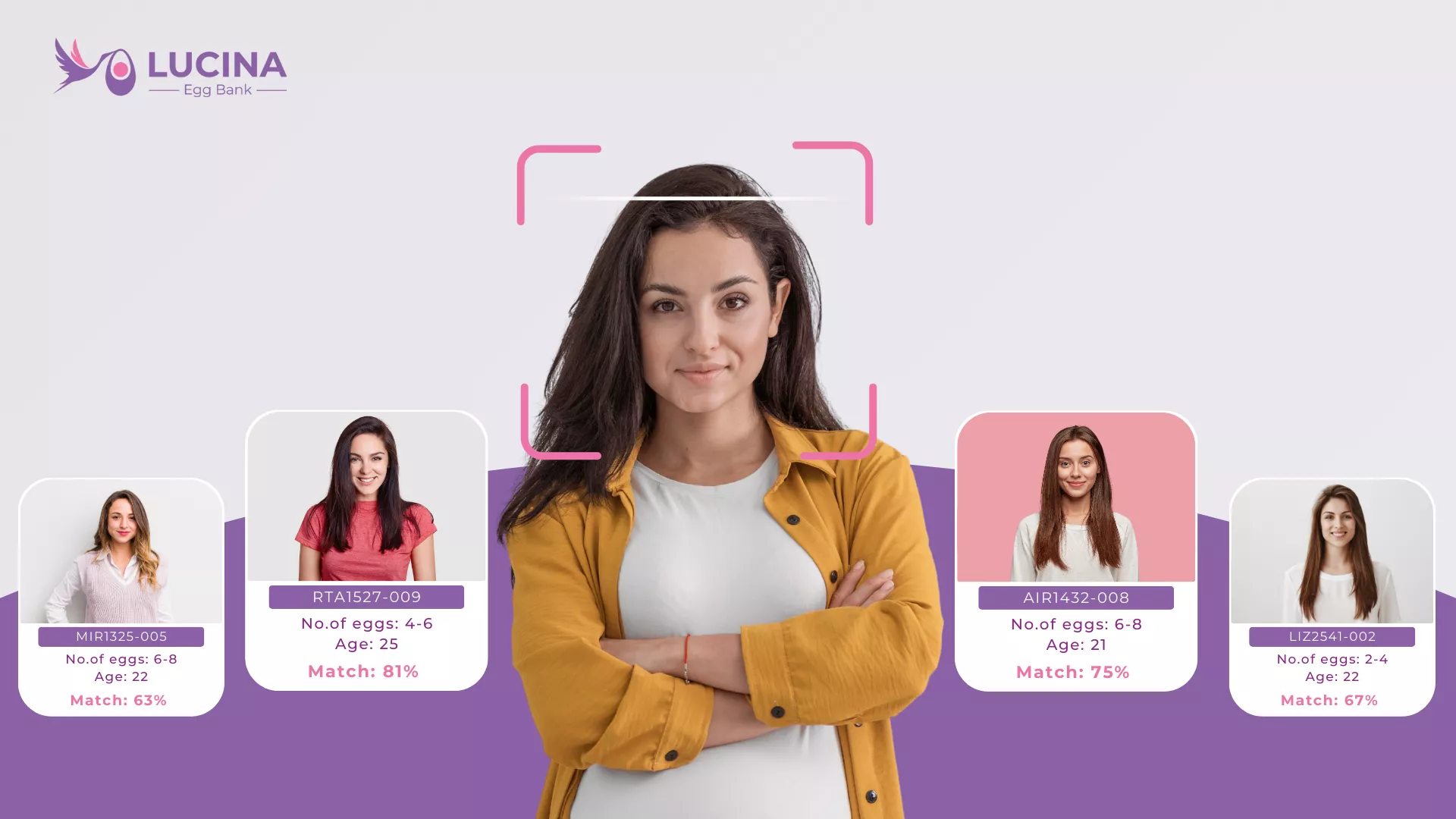
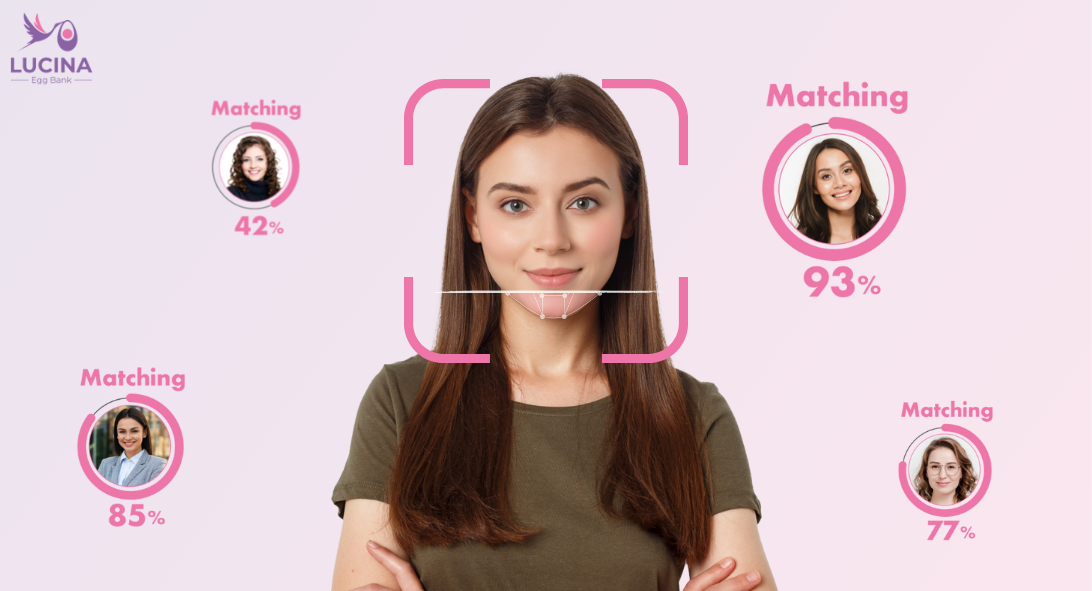
- Facial recognition matching. Lucina Egg Bank uses ReflEggction® AI to scan your photo and find donors who share your facial structures. It’s the first tool of its kind in the US, and it reduces search time by up to 70%.
- Detailed donor profiles. You can view childhood photos, medical histories, educational backgrounds, and personal essays. Browse our full donor gallery for free — there’s no upfront cost to look.
- Genetic screening is thorough. Every donor at Lucina is tested for genetic carrier conditions, undergoes a full medical exam, and completes a psychological evaluation before joining the pool.
What Does a Donor Egg Cycle Cost?
A typical egg cohort from a US egg bank costs $10,000–$25,000. This covers the eggs, donor coordination, and cryogenic shipping to your clinic. Your clinic’s IVF fees, medications, and embryo transfer costs are separate. Check Lucina’s financial resources page for current pricing and financing options.
Financial planning is a big part of donor egg IVF. Here’s what typically makes up the cost of working with a US egg bank:
- Donor coordination covers screening. This pays for recruitment, genetic testing, medical exams, and psychological evaluation of the donor.
- Medical processing includes freezing. This covers the retrieval procedure, vitrification, and storage until the eggs ship to your clinic.
- Shipping requires specialized handling. Frozen eggs travel in liquid nitrogen tanks and must meet strict temperature protocols throughout transit.
Guarantee Programs
One way egg banks in the USA reduce financial risk is through guarantee programs. These don’t guarantee pregnancy — they provide financial protection if things don’t go as planned.
Lucina offers a Triple Guarantee Program with three tiers: a Blastocyst Guarantee, a PGT-A (Preimplantation Genetic Testing for Aneuploidy) Guarantee, and a Live Birth Guarantee. If eggs don’t survive the thaw or embryos don’t develop, Lucina provides a replacement cohort rather than leaving you to start over at full cost. Learn more on the guarantee programs page.
For Prospective Egg Donors: What to Expect
If you’re considering donating, you’re looking at one of the most structured and well-compensated programs available. Here’s what the process actually involves.
Who Qualifies to Donate?
At Lucina, donors must be between 19 and 31 years old — the range associated with optimal egg quality. Beyond age, you’ll need to be in good overall health, a non-smoker, and have a BMI under 28. A full medical exam, genetic screening, and psychological evaluation are part of the process.
Step by Step: The Donation Process
Fill out a questionnaire covering your medical history, family background, and education. Takes about 30–45 minutes.
If accepted, you’ll complete blood tests, an ultrasound, genetic screening, and a psychological evaluation. All costs are covered.
For roughly two weeks, you’ll self-administer daily hormone injections to stimulate egg production. Monitoring appointments happen throughout.
The retrieval procedure takes about 20 minutes under sedation. You won’t feel pain during it. Most donors are back to their normal routine within a day or two.
How Much Can You Earn?
Compensation is payment for your time, physical effort, and the disruption to your schedule. It’s not a small amount. Standard donors at Lucina earn $8,000–$15,000+ per cycle, and you can donate up to six times — that’s up to $90,000+ in total earnings.
- First-cycle pay is generous. Most donors earn $8,000–$10,000 for their first cycle.
- Repeat donors earn more. Returning donors can earn up to $15,000 per cycle.
- All expenses are covered separately. Medical appointments, travel, and accommodation are fully covered on top of your compensation — not deducted from it.
- Referral bonuses are real. Refer a friend who donates and you earn a $1,000 bonus.
For candidates who are graduates of Ivy League or other top 20 universities — including those with bachelor’s, master’s, or doctorate degrees — the Iconic Donor Program offers the highest compensation tier available, with earnings of up to $50,000 per cycle and up to $300,000 across six cycles.
Safety, Risks, and Common Myths
Misinformation about egg donation circulates widely online. Here’s what the evidence actually shows.
Three Myths Worth Addressing
Myth 1: Donation causes infertility.
Fact: Donation doesn’t deplete your egg supply. The process stimulates eggs your body would have naturally discarded that month. Your remaining egg reserve is unaffected.
Myth 2: The procedure is dangerous.
Fact: Serious complications are rare. The process is closely monitored by a fertility specialist throughout, and modern protocols have significantly reduced risks compared to earlier generations of the procedure. Consult your medical team about your specific situation.
Myth 3: You’ll have no privacy.
Fact: Anonymous donation is an option. Reputable egg banks in the USA protect your identity strictly unless you opt into an ID-disclosure program. That decision is yours.
Side Effects to Know About
- Bloating is common. Hormone injections can cause bloating or PMS-like symptoms for one to two weeks during stimulation.
- Spotting can occur. Light bleeding or cramping after retrieval is normal and resolves quickly.
- Ovarian Hyperstimulation Syndrome (OHSS) is rare. Modern medication protocols have made OHSS uncommon, but your medical team will monitor for it throughout stimulation.
Legal and Ethical Considerations
The US legal framework is one of the clearest in the world for third-party reproduction. Contracts are standard practice before any medical procedures begin.
- Parental rights are clear. Donors sign away all rights to the eggs and any resulting children before the cycle begins. Intended parents are the sole legal parents.
- Anonymity is a choice. Some banks offer ID-release programs where a donor-conceived child may contact the donor at age 18. This is always a mutual agreement — not a default.
- Medical information is handled carefully. Donor health information is shared with intended parents for informed decision-making. Personal identity remains protected in closed donations.
How to Choose the Right US Egg Bank
Not every US egg bank operates at the same level. The quality of the bank directly affects your experience — whether you’re an intended parent evaluating outcomes or a donor assessing how you’ll be treated.
- Ask for outcome data. Request thaw survival rates and blastocyst conversion rates. A bank that publishes its numbers is one that stands behind them.
- Review the screening process. Genetic screening, psychological evaluation, and a thorough medical history review should all be standard.
- Evaluate support quality. The process is involved. You want a team that’s reachable, clear, and consistent — not just at application but throughout.
- Look for a guarantee program. Financial protection in case of poor outcomes is a sign of a bank that’s confident in its process. Review the best US egg banks to compare options.
Why Lucina Egg Bank Stands Apart
Among egg banks in the USA, Lucina brings together three things that matter most: technology for finding the right donor, financial protection if things don’t go as planned, and a donor pool large enough to serve families from all backgrounds.
- Our technology is one of a kind. We’re the only US egg bank using ReflEggction® AI — facial recognition matching that finds donors who share your features. It’s the first tool of its kind in the country, and it cuts search time by up to 70%.
- Our donor screening is thorough. Every donor passes genetic testing, a full medical exam, and a psychological evaluation before joining our pool of 3,000+ screened donors.
- Our guarantees provide real protection. The Triple Guarantee Program covers you from embryo development through live birth — a financial safety net, not a promise of pregnancy.
- Our donor compensation is competitive. Standard donors earn $8,000–$15,000+ per cycle. Iconic donors earn up to $50,000 per cycle. All travel and medical costs are covered on top of that.
Choosing the US is a strong foundation. Choosing Lucina means AI-powered matching, a triple guarantee, and 3,000+ screened donors from backgrounds. Browse our full donor gallery for free — or apply to join our donor program today.
FAQ: Egg Banks in the USA

Julianna Nikolic
Chief Strategy Officer Julianna Nikolic leads strategic initiatives, focusing on growth, innovation, and patient-centered solutions in the reproductive sciences sector. With 26+ years of management experience and a strong entrepreneurial background, she brings deep expertise to advancing reproductive healthcare.

Table of Contents
- Why Families Choose Egg Banks in the USA
- What the Science Says About Egg Donation in the USA
- For Intended Parents: Finding Your Donor
- For Prospective Egg Donors: What to Expect
- Safety, Risks, and Common Myths
- Legal and Ethical Considerations
- How to Choose the Right US Egg Bank
- Why Lucina Egg Bank Stands Apart
- FAQ: Egg Banks in the USA