
Anonymous vs. Known Egg Donation: What Every Donor Needs to Know
One of the first questions most women ask before applying to donate eggs is: who will know it was me? It’s a reasonable question, and the answer depends entirely on which type of donation you choose.
Most egg donors choose anonymous donation, and for good reason. It allows you to make a meaningful contribution without any ongoing obligation, contact, or disclosure. But understanding all four donation types helps you make the decision that actually fits your life. This guide covers what each type means in practice, what your information is used for, and what Lucina’s model protects by default.

Egg Donor Privacy: What’s Actually Shared (and What Isn’t)
Before getting into donation types, it helps to understand exactly what information flows through the process regardless of which type you choose. Lucina follows strict egg donor requirements that govern what is screened, stored, and shared.
The U.S. Food and Drug Administration (FDA) classifies donor eggs as reproductive tissue, which means federal law governs how your data is stored, handled, and shared. Egg banks are required to maintain records and follow strict protocols. Your information cannot be sold, transferred, or used for any purpose beyond the donation itself.
The Four Types of Egg Donation
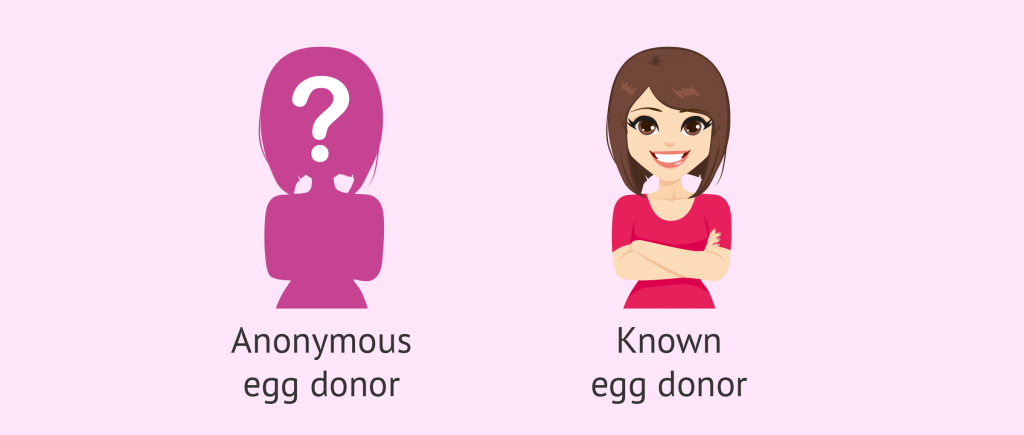
The right type depends on your comfort with contact, disclosure, and any potential future relationship with the family you help. Here’s what each one actually involves.
Anonymous Egg Donation
Your identity is fully protected. Intended parents receive non-identifying information only: your medical history, genetic results, physical characteristics, and personal essays. They do not know your name, and you do not know theirs. There is no contact before, during, or after the donation.
This is the most common choice among egg donors, and the default model at Lucina. It suits donors who want a clean, defined commitment: you donate, the process is complete, and your life continues without ongoing entanglement.
Consumer DNA testing has changed what anonymity means in practice. A donor who chooses anonymous donation today may still be identifiable through services like 23andMe or AncestryDNA if donor-conceived children choose to search. This doesn’t change your legal protections, but it’s worth understanding before you donate. Your coordinator can discuss this openly.
Semi-Open Egg Donation
Semi-open donation sits between anonymous and known. Some non-identifying information is shared between donor and intended parents, and limited communication may occur through a third party like the egg bank. Direct contact is not exchanged, but both parties may have agreed to some level of future communication if circumstances change.
This works well for donors who are comfortable with limited connection but aren’t ready for full disclosure. The boundaries are set in the legal agreement before the cycle begins, so expectations are clear on both sides.
Known Egg Donation
In known donation, the donor’s identity is disclosed to the intended parents. This most commonly happens when a donor is a family member or close friend of the intended parents. Both parties know each other before the cycle begins, and communication is direct.
Known donation requires all parties to navigate an emotionally layered dynamic. Legal agreements are especially important here, establishing clearly that the donor has no parental rights or responsibilities to any resulting children, regardless of the personal relationship.
Open Egg Donation
Open donation involves full transparency and ongoing contact. Both donor and intended parents exchange identifying information and may maintain a relationship over time. Some open donors stay in contact with the family they helped; others find that a single meeting satisfies the connection they were looking for.
Open donation requires the most emotional preparation and the clearest legal boundaries. It suits donors who feel strongly about maintaining a connection and are comfortable with the long-term dimensions of that choice.
How Anonymous Donation Works at Lucina
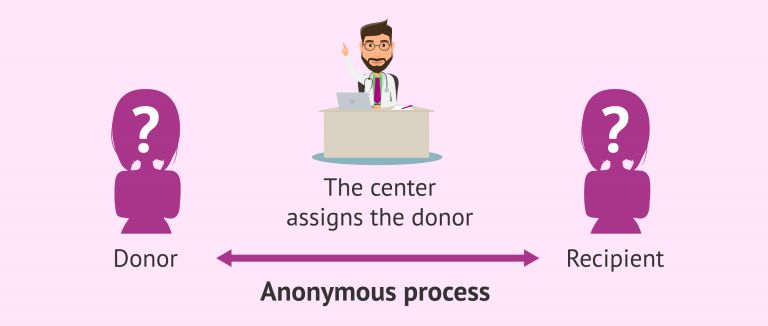
At Lucina, anonymous donation is the standard model for a practical reason: Lucina is a frozen egg bank, not a fresh egg donation agency. Your eggs are vitrified immediately after retrieval and shipped to fertility clinics as needed. There’s no cycle synchronization with a specific recipient, and no direct relationship with the family using your eggs. You can read more about egg donor screening and what each evaluation involves.
This structure makes anonymous donation straightforward. You never know which family received your eggs, and they never know your identity. The focus stays on the quality of the donation itself.
Here’s what the privacy protection looks like in practice at each stage. For a full walkthrough of the medical process itself, see the egg donation process guide.
You provide your full health and personal history to Lucina’s team. This information is used internally for screening purposes and to build your donor profile. Your identity is not shared during matching.
Intended parents browse non-identifying profiles: physical traits, medical history, personal essays, and childhood photos. Adult photos are only accessible with a signed confidentiality agreement.
Before your cycle begins, a legal agreement confirms your privacy terms, compensation, and that you have no parental rights to any resulting children. This is reviewed with an independent attorney.
Your information is securely stored under FDA-required record-keeping standards. If you donate again, your profile remains active but your privacy protections remain identical. You are never identifiable to intended parents.
What the Research Shows About Donor Privacy Preferences
Donor preferences around privacy have shifted over the past two decades as donor-conceived communities have grown and DNA testing has become mainstream. Understanding where things stand helps you make a more informed choice.
Research published in Fertility and Sterility has consistently found that donors who received thorough pre-donation counseling reported more positive long-term outcomes, regardless of whether they chose anonymous or identity-release donation. The quality of the informed consent process matters more than the type selected.
The American Society for Reproductive Medicine (ASRM) has moved toward recommending that programs offer identity-release options to donors, recognizing that donor-conceived individuals have a growing interest in accessing their genetic background.

Julianna Nikolic
Chief Strategy Officer Julianna Nikolic leads strategic initiatives, focusing on growth, innovation, and patient-centered solutions in the reproductive sciences sector. With 26+ years of management experience and a strong entrepreneurial background, she brings deep expertise to advancing reproductive healthcare.