The egg donation process is predictable. There are no surprises if you know what’s coming, and every step has a clear purpose, a defined timeline, and a medical team managing it with you.
This guide covers the full egg donation process at Lucina Egg Bank. It also addresses what happens right after you’re accepted: what the review looks at and what your first steps look like. Most guides skip that part entirely.
If you want to know how egg donation works, what your body goes through, when you get paid, and what to watch for at each stage, this covers all of it.

What Is Egg Donation and How Does It Work?
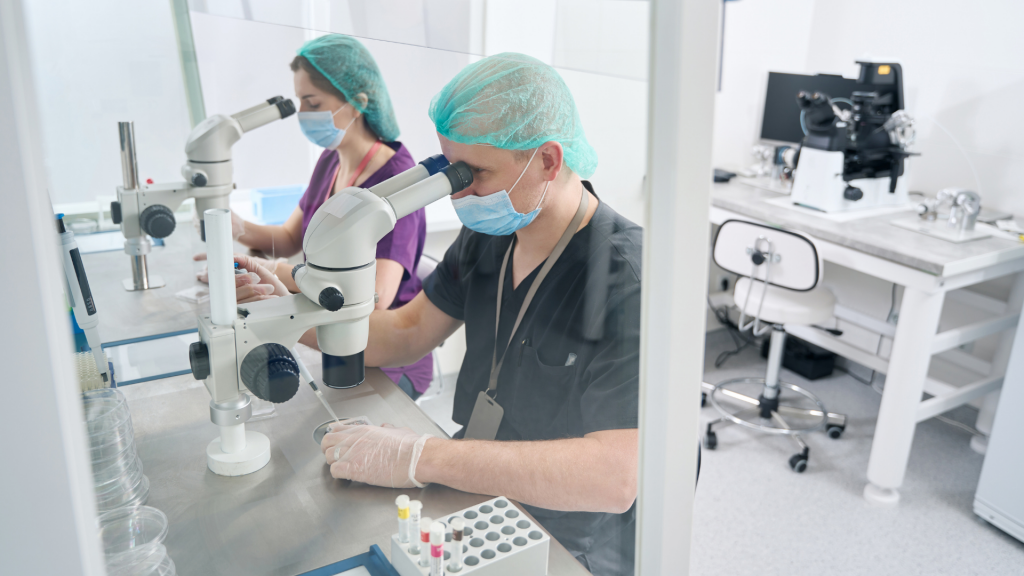
Egg donation begins with hormone injections that stimulate your ovaries to mature multiple eggs at once. Those eggs are collected in a brief outpatient procedure under light sedation.
At Lucina, donated eggs are vitrified (flash-frozen) immediately after retrieval and shipped to fertility clinics worldwide for use in In Vitro Fertilization (IVF) cycles. Lucina provides the eggs. The IVF procedure is performed by the patient’s own clinic.
These eggs go to intended parents building their families. The patient’s clinic thaws them, fertilizes them with sperm, and transfers an embryo in a process that has no further involvement from the donor.
Who Can Donate: Core Requirements
We accept only about 5% of applicants. The requirements exist to protect donors, protect egg quality, and protect the health of any resulting children. They align with the American Society for Reproductive Medicine (ASRM) and Food and Drug Administration (FDA) standards.
- Age: 19 to 31
- Body Mass Index (BMI): Within a healthy range. Egg donation weight requirements covers the exact ranges.
- Smoking and nicotine: Non-smoker, no nicotine products of any kind
- Menstrual cycles: Regular cycles when off hormonal suppression
- Health history: No disqualifying genetic conditions or medical history
- Availability: Able to commit to 5 to 10 clinic visits over the active cycle
- Lifetime limit: No more than 6 donation cycles total, per ASRM standard
Reviewing egg donor requirements before starting can save time. For a full breakdown of what does and doesn’t disqualify applicants, the egg donation disqualifiers page covers every common scenario.
The Egg Donation Process, Step by Step
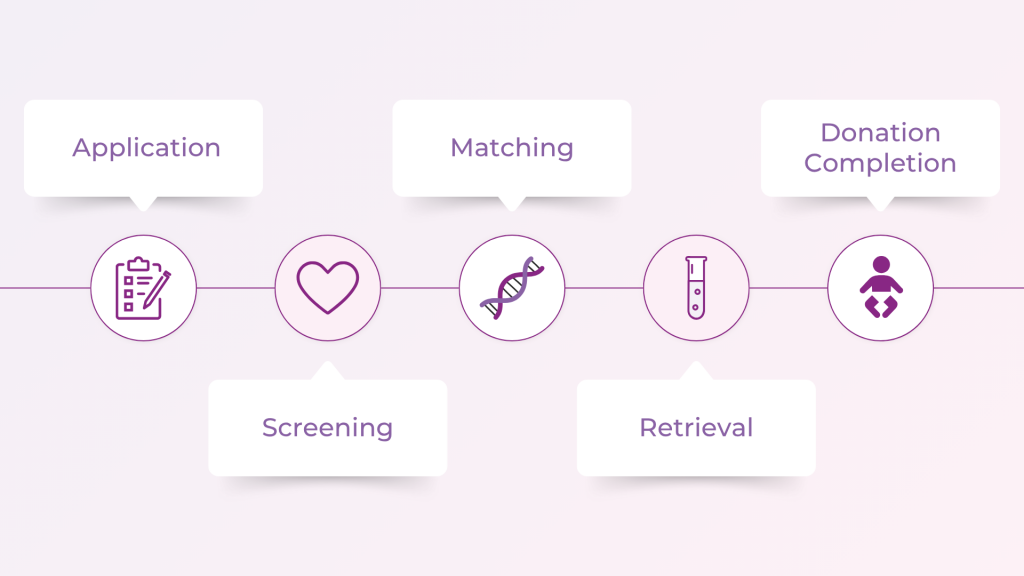
Nine steps make up the full egg donation cycle at Lucina. Each has a clear purpose, a defined timeline, and medical support throughout.
Step 1: Application and Pre-Screening
The process starts with a brief online application that takes about 15 minutes. You’ll share basic personal and health information so the team can do an initial eligibility check.
Questions cover your health history, family medical background, lifestyle, and general background. This is the paperwork-and-basic-fit stage. Low-stress medically, but personal.
If you go by a name different from what’s on your ID, use your application name consistently and let your coordinator know. It won’t affect eligibility. You’ll hear back within 72 hours of submitting.

Step 2: Application Review
After you submit, the intake team reviews your application against Lucina’s eligibility criteria. The review covers age, health history, lifestyle factors, and availability. You’ll typically hear back within a few days.
Accepted donors move directly into the next phase. From that point, your coordinator is your single point of contact for everything that follows.
Step 3: ID Verification and Donor Agreement
Once you’re accepted, you’ll receive a link to an audio overview of the full process and a donor acceptance agreement to review and sign.
You’ll also submit a photo of yourself holding your ID. If the upload isn’t going through, it’s almost always a file size or format issue. Try compressing the image or switching browsers. If it still won’t submit, reach out through our contact page rather than resubmitting repeatedly.
The same applies to the audio link. If it isn’t loading, contact us directly and we’ll resend it. A broken link shouldn’t stall your application.
The donor agreement covers compensation terms, privacy protections, and confirms you have no parental rights or responsibilities for any resulting children. You’ll sign it with an independent attorney before any medical steps begin. Your coordinator can answer questions about the legal process at any point.
Step 4: Medical, Genetic, and Psychological Screening
This is the most thorough phase of the egg donation process. Screening confirms that you’re physically and emotionally ready to donate and that your eggs are viable for intended parents.
These appointments happen at a clinic near your home, not in San Diego. Lucina arranges and covers all of it. What screening includes:
- Bloodwork. Anti-Müllerian hormone (AMH) levels, hormone panel, and infectious disease testing required by FDA standards.
- Antral follicle count ultrasound. A transvaginal ultrasound that counts resting follicles in each ovary, confirming your ovarian reserve is sufficient for stimulation.
- Genetic carrier screening. Tests for heritable conditions that could affect resulting children, reviewed alongside your three-generation family health history.
- Psychological evaluation. Conducted by a licensed professional experienced in reproductive medicine. Designed to confirm informed consent and emotional readiness, not to find reasons to disqualify you.
- Background check. Standard across all reputable programs, confirming no criminal history affecting the legal agreements involved.
Each of these evaluations in egg donor screening has specific criteria. Your coordinator will walk you through what to expect before each appointment.
Step 5: Ovarian Stimulation (10 to 14 Days)
This is the active medical phase. You’ll self-administer follicle-stimulating hormone (FSH) injections at home, typically once daily. The injections are subcutaneous: a small needle into the skin of the abdomen, similar to how people with diabetes inject insulin.
Normally, your body matures one egg per cycle. Stimulation medications give more of the naturally recruited follicles the signal they need to mature fully. The eggs retrieved are ones your body was already developing, ones that would otherwise have been lost.
What to expect physically: bloating, mild pelvic fullness, and fatigue are common in the second week. These are expected side effects of the process working as intended, not complications. Many first-time donors are surprised by how manageable the injections are once they’ve done the first one with guidance.
During stimulation, wear loose, comfortable clothing, especially on monitoring days. Your ovaries will be enlarged and tight waistbands become noticeably uncomfortable from around day 8 onward. Most donors also avoid high-impact exercise during this phase to reduce the risk of ovarian torsion.
The main risk during stimulation is ovarian hyperstimulation syndrome (OHSS). Mild OHSS causes temporary bloating and discomfort. Severe OHSS is rare, and the frequent monitoring visits exist specifically to catch and prevent it. Research published in Fertility and Sterility consistently shows that close monitoring reduces severe OHSS incidence in donation cycles.
Step 6: Monitoring Appointments
During the stimulation phase, you’ll have 5 to 9 early-morning monitoring appointments. These visits are quick, typically 20 to 30 minutes, and involve a blood draw and transvaginal ultrasound to track follicle development and adjust medication dosages in real time.
Many donors work during this phase, especially in the first week. Monitoring appointments need to happen on specific days, and the schedule can shift by a day based on how your follicles are developing. If you’re traveling from out of the area, Lucina coordinates accommodations so you can stay close to the clinic throughout.
Step 7: The Trigger Shot
About 36 hours before retrieval, you’ll administer a trigger injection. This final shot signals your follicles to complete their maturation, timing the eggs to be at peak readiness for collection.
Your coordinator gives you the exact time to administer it. Timing is specific, and the retrieval is scheduled precisely around this window. You’ll also receive instructions on when to stop eating and drinking before the procedure, since you’ll be under sedation.
Step 8: Egg Retrieval
Retrieval is an outpatient procedure performed at Lucina’s San Diego facility under light sedation, sometimes called twilight sedation or intravenous (IV) sedation. You’re comfortable and unaware of the procedure. It takes about 20 to 30 minutes.
A reproductive endocrinologist uses an ultrasound-guided needle inserted through the vaginal wall to aspirate the fluid from each mature follicle. The fallopian tubes are not involved at any point. After the procedure, you’ll rest at the facility before being discharged. You’ll need someone to drive you.
This is the one step that requires travel to San Diego. Lucina books and covers your flight, hotel, and ground transportation. The trip is typically 2 to 3 days total.
Step 9: Recovery and Follow-Up

Most donors rest for the remainder of retrieval day and return to light activity within 24 to 48 hours. Mild cramping and bloating are common and typically resolve within a few days. Over-the-counter pain relief and rest are usually sufficient.
Your care team stays in close contact during recovery, checking on your physical and emotional well-being. We provide a doctor’s note if needed for work or school. Your menstrual cycle returns to normal within 4 to 6 weeks.
Follow-up blood tests confirm your hormone levels are returning to your pre-donation baseline. Compensation is processed shortly after retrieval. Your recovery after egg retrieval follows a predictable pattern, with most donors back to light activity within 48 hours.
Safety, Legal Protections, and Privacy

The egg donation process is regulated at the federal level by the FDA, which classifies donor eggs as reproductive tissue, with strict requirements governing donor screening, testing, record-keeping, and tissue handling. Every Lucina cycle meets these requirements.
ASRM guidelines add further protections: the 6-cycle lifetime donor limit, psychological evaluation requirements, and informed consent standards. Donors who receive clear, honest information before the process consistently report better outcomes and lower rates of post-donation regret.
Your identity is protected throughout the entire process. Adult photos are shared only with appropriate confidentiality agreements in place. You’ll sign a legal agreement with an independent attorney before any medical steps begin, covering your privacy, your compensation terms, and confirming you have no parental rights or responsibilities.
What Happens to Your Own Fertility
This is the question that stops more women from applying than almost anything else. The answer is clear.
Egg donation does not deplete your ovarian reserve or affect your future fertility. The eggs retrieved come from the cohort your body was already going to discard that cycle. Your future cycles are untouched.
Each cycle, your ovaries recruit a cohort of follicles. One matures and ovulates. The rest undergo natural atresia: they’re discarded. Stimulation medications intercept that die-off, giving more of the already-recruited follicles the signal they need to mature fully.
The ASRM’s committee opinion on repeated oocyte donation confirms that available data show no long-term risk to ovarian reserve across multiple donation cycles within the 6-cycle limit. Every Lucina cycle includes full rescreening to verify your health before proceeding.
What You Earn

Lucina covers 100% of medical, screening, and travel costs. Compensation is for your time, commitment, and the physical process involved, not for the eggs themselves, in full compliance with U.S. law.
Up to $90,000+ cumulative over 6 cycles
All medical and travel costs covered for every cycle.
Up to $300,000+ cumulative over 6 cycles
For donors attending or graduated from top-ranked universities. Available by private request.
Lucina also offers a milestone-based referral program. You can earn up to $1,000 for a Standard referral, up to $3,000 for an Iconic referral from a top-20 university, or up to $10,000 for an Iconic referral from a top-10 university. Payments are made across three milestones: application accepted, screening passed, and donation completed.
Exactly how much egg donors make at Lucina depends on your tier, how many cycles you complete, and the timing of milestone payments.
The Application Takes 15 Minutes
The egg donation process is predictable, well-supported, and well-compensated. Screening happens near your home, travel to San Diego is fully covered, and your coordinator manages every step. Most health backgrounds don’t automatically disqualify you, and we review each applicant individually.
If you want to go deeper on any specific part before applying, these resources cover each topic in full:
- Egg donation risks: full breakdown of what the research shows
- Egg donation pros and cons: honest look at both sides
- Fertility after egg donation: the full picture on long-term impact
Apply to Donate Eggs With Lucina
You’ve just walked through the full process. The active medical phase runs just 2 to 3 weeks, and our team manages every appointment, travel detail, and question along the way.
$8,000–$15,000+ per cycle (Standard) · Up to $50,000 per cycle (Iconic) · 6–10 week process
All medical and travel costs covered. Compensation paid after retrieval. Up to 6 donation cycles allowed per ASRM lifetime guidelines.
Frequently Asked Questions

Julianna Nikolic
Chief Strategy Officer Julianna Nikolic leads strategic initiatives, focusing on growth, innovation, and patient-centered solutions in the reproductive sciences sector. With 26+ years of management experience and a strong entrepreneurial background, she brings deep expertise to advancing reproductive healthcare.