
You’re considering becoming an egg donor. The compensation is real, the process sounds manageable, and then you come across a question that stops you cold: Can you die from egg donation?
It’s a fair question, and it deserves a direct answer rather than reassuring spin.
Death from egg donation is extraordinarily rare. Large studies covering tens of thousands of cycles have reported serious complications in under 0.5% of cases, with fatalities appearing only in isolated case reports, typically linked to unusual underlying conditions or inadequate clinical oversight.

But “rare” only means something if you understand what the actual risks look like, how reputable programs manage them, and what to ask before you sign up.
At Lucina Egg Bank, donor safety shapes how every cycle is designed. Here’s what the research shows, and what working with a frozen egg bank like ours means for your safety.
Can You Die From Egg Donation? What the Research Actually Says
Peer-reviewed data is the right place to start, not forum threads or worst-case headlines.
A 2013 Fertility and Sterility analysis covering more than 10,000 donation cycles reported zero deaths, with serious complications in under 0.5% of cases. A later review confirmed that egg donation, when performed under proper clinical oversight, carries a low overall risk profile.
A Canadian follow-up study found no evidence of long-term harm to donor fertility or overall health within available follow-up periods.
When fatalities have appeared in case reports, they’ve typically involved unusual factors: an undetected underlying condition, a rare adverse reaction, or a program that failed to monitor closely enough. These are not arguments against egg donation. They’re arguments for choosing a program that takes screening and monitoring seriously.
The Real Risks of Egg Donation: What to Expect
Most donors experience mild, temporary side effects. Understanding what’s common versus what’s rare helps you evaluate the process realistically.
- Hormone injection side effects. Bloating, breast tenderness, mood shifts, mild headaches, and bruising at injection sites are the most common complaints. They’re uncomfortable but expected and resolve as the cycle ends.
- Ovarian Hyperstimulation Syndrome (OHSS). The most serious medical risk. Mild OHSS causes noticeable bloating and pelvic discomfort. Severe OHSS, which requires medical treatment, is considerably less common and is the complication reputable programs work hardest to prevent.
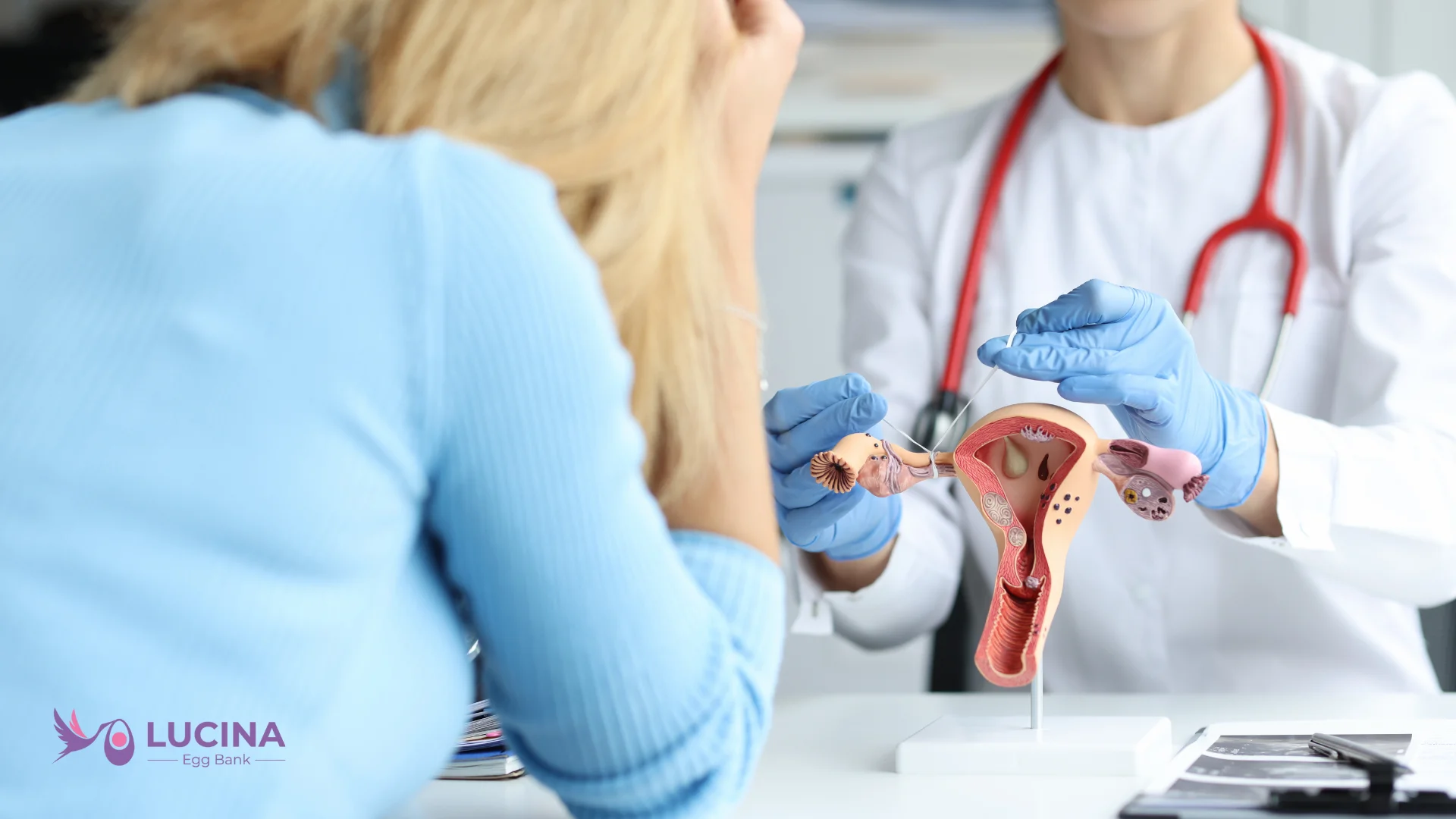
- Retrieval procedure risks. Egg retrieval is minimally invasive, but any medical procedure carries a small chance of bleeding, infection, or injury to surrounding structures. These events are uncommon and are managed by the clinical team if they occur.
- Post-retrieval recovery. Most donors feel bloated or crampy for several days after retrieval. Full recovery typically takes less than a week. Severe or prolonged symptoms warrant contact with your clinical team.
For a complete breakdown of all egg donation risks with clinical frequency data, see the egg donation risks guide.
Before committing to any donor program, ask directly: how do they monitor for OHSS, what’s the escalation process if something feels wrong, and who is your point of contact during the stimulation phase? A trustworthy program answers all of this without hesitation.
How Lucina’s Frozen Egg Model Changes the Safety Picture
We’re a frozen egg bank, not a fresh-cycle agency. That distinction matters more than most donors realize when it comes to how safe and supported the experience feels.
In fresh egg donation, timing is built around synchronizing your cycle with a recipient’s body. That creates calendar pressure, which can push clinics to adjust protocols in ways that aren’t always donor-first. Our frozen model removes that entirely.
Your cycle is timed around your body. Your medication doses are adjusted based on how your ovaries respond. Your retrieval date is set when your labs and imaging say you’re ready, not when a recipient’s schedule demands it. That’s a meaningful structural difference.
OHSS Prevention Through Personalized Monitoring
OHSS prevention starts with careful dosing and frequent check-ins. A 2019 study in Human Reproduction supports individualized stimulation approaches as a key factor in reducing OHSS risk in IVF and donation contexts.
Your medical team monitors blood hormone levels and ultrasound findings throughout the stimulation phase. If your ovaries are responding too aggressively, the protocol adjusts. “Push through it” is not a medical strategy we accept. If your body signals that something needs to change, it changes.
Monitoring does more than catch problems early. It also informs a second layer of safety: the screening process that happens before stimulation ever begins.
Screening That Protects You First
Every Lucina donor goes through a thorough screening process before stimulation begins. We screen in compliance with Food and Drug Administration (FDA) requirements and American Society for Reproductive Medicine (ASRM) standards, which means the process covers:
- Physical examination and full bloodwork, including hormone levels and infectious disease markers
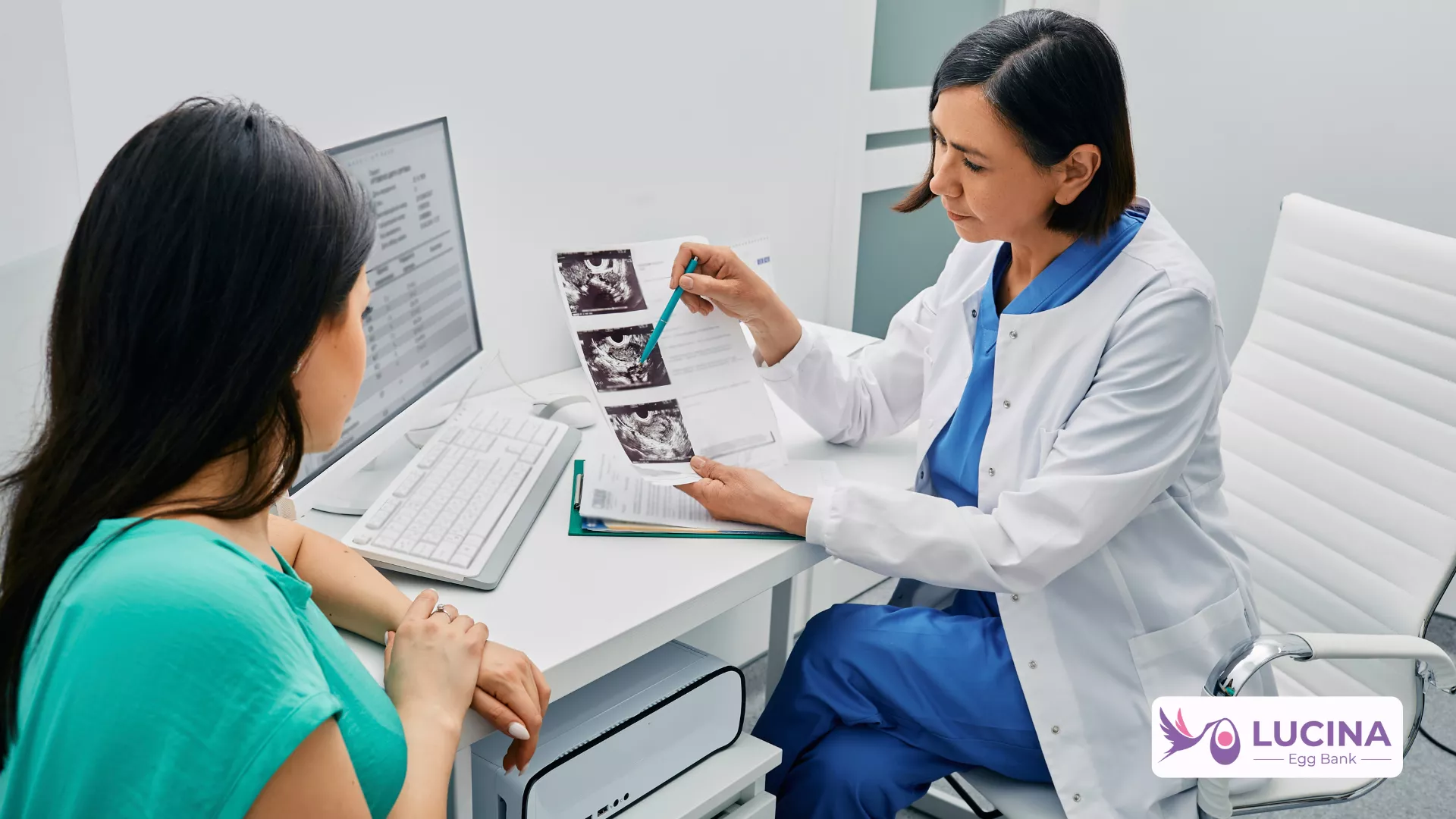
- Ovarian ultrasound to assess baseline response potential
- Genetic testing across a broad panel of conditions
- Psychological evaluation
- Full family health history review
Most applicants don’t make it through. The 3,500+ donors currently in our pool passed every element of that process. Screening this thorough isn’t only about donor quality for intended parents. It’s also how we identify any condition that could make stimulation riskier for you before a single injection is given, which is part of why donors choose Lucina.
Egg donation does not replace the eggs your body uses naturally in that cycle. The eggs retrieved come from a group your ovaries recruit each month that would otherwise not be used. Current research has not shown long-term harm to donor fertility within available follow-up periods, though your own reproductive endocrinologist is the right person to discuss your individual situation with.
What the Donation Process Looks Like, Step by Step
Here’s how the process unfolds from application to retrieval when you donate with us.
Complete our donor application online. It takes about 15 minutes and confirms you meet basic eligibility criteria (age 19 to 31, overall health, pregnancy history if applicable).
Physical exam, hormone bloodwork, infectious disease screening, ovarian ultrasound, genetic testing, and a psychological evaluation. Many donors say this phase gave them more insight into their own reproductive health than any previous checkup.
Once cleared, you’ll start hormone injections for roughly 10 to 12 days. Monitoring appointments (bloodwork and ultrasounds) track your response and allow dose adjustments. The goal is a safe, comfortable cycle, not maximum egg output.
Travel logistics are fully coordinated. Retrieval is a short, minimally invasive procedure performed under sedation, so you won’t feel pain during it. Most donors rest the same day and recover over the following few days, with temporary bloating the most common after-effect.
We cover all donor-related medical and travel expenses. You’re not paying out of pocket for any part of the process, and our San Diego-based team supports you throughout. If you want to understand the full egg retrieval process in detail before you apply, that’s worth reading first.
Compensation: What You Actually Earn
Egg donation is a genuine physical commitment. You’re showing up for screening appointments, giving yourself daily injections, attending monitoring visits, and undergoing a medical procedure. Compensation exists because that commitment deserves recognition.
Lucina uses a two-tier compensation structure.
You can donate up to six times under the ASRM lifetime limit. Compensation is paid on a structured, clear timeline so you know what to expect and when. Before comparing programs, ask the direct questions: when exactly is payment released, what happens if a cycle is cancelled for medical reasons, and what expenses are covered beyond the retrieval itself.
For a full breakdown of what affects donor earnings and how compensation compares across programs, our donor compensation guide covers it in detail. You can also read the pros and cons of donating if you’re still in the research phase.
When you’re ready, the application steps are straightforward. You can also review emotional preparation tips to understand what the experience is really like from start to finish.
Make the Decision With Accurate Information
If “can you die from egg donation” is the question that brought you here, you now have the honest answer: it is extremely rare in well-supervised programs, and the data from thousands of cycles backs that up.
The risks that do exist, primarily OHSS and the standard risks of any minor procedure, are manageable, and the program you choose shapes them.
A frozen egg bank model like ours removes the cycle-synchronization pressure that exists in fresh donation. Our screening catches conditions that could increase your personal risk before stimulation begins. And if something looks off during monitoring, the protocol changes.
You should feel fully informed before moving forward. Review the egg donation disqualifiers guide if eligibility is something you’re unsure about, talk to our team about anything that still feels unclear, and take the next step only when the answer to “can you die from egg donation” feels settled for you.
Apply to Donate Eggs With Lucina
Our frozen model times your cycle around your body, and a coordinator stays with you through screening, monitoring, and recovery. The application takes about 15 minutes.
$8,000–$15,000+ per cycle (Standard) · Up to $50,000 per cycle (Iconic) · 1–3 day typical recovery
All medical and travel costs covered. Compensation paid after retrieval. Up to 6 donation cycles allowed per ASRM lifetime guidelines.
Frequently Asked Questions

Julianna Nikolic
Chief Strategy Officer Julianna Nikolic leads strategic initiatives, focusing on growth, innovation, and patient-centered solutions in the reproductive sciences sector. With 26+ years of management experience and a strong entrepreneurial background, she brings deep expertise to advancing reproductive healthcare.

Table of Contents
- Can You Die From Egg Donation? What the Research Actually Says
- The Real Risks of Egg Donation: What to Expect
- How Lucina's Frozen Egg Model Changes the Safety Picture
- What the Donation Process Looks Like, Step by Step
- Compensation: What You Actually Earn
- Make the Decision With Accurate Information
- Frequently Asked Questions