
Smoking is one of the few lifestyle factors that reliably disqualifies egg donors. If you currently smoke cigarettes, the answer is no. Not right now. But “right now” matters more than most people realize.
Egg banks screen donors for nicotine use for a specific medical reason, not as a moral judgment. Nicotine and the chemicals in cigarette smoke affect egg quality, ovarian response to stimulation, and retrieval outcomes in measurable ways. The same applies to vaping. Whether you’re smoking tobacco, using a vape pen, or using nicotine replacement products, the screening process is looking at nicotine exposure, not just the method of delivery.
Here’s what Lucina Egg Bank’s screening actually checks, how long you need to be smoke-free before applying, and what happens if you’ve quit recently or used to smoke in the past.

Why Smoking Disqualifies Egg Donors
The disqualification isn’t arbitrary. Nicotine and tobacco smoke have well-documented effects on female reproductive function that directly affect donation outcomes.
According to a review published in the journal Fertility and Sterility, smoking is associated with reduced ovarian reserve, lower egg counts during stimulation, higher rates of chromosomal abnormalities in retrieved eggs, and reduced fertilization rates. These effects are dose-dependent, meaning heavier or longer-term smokers show more pronounced impact, but even light smoking affects outcomes.
For an egg bank, this matters on two levels. First, it affects the number and quality of eggs retrieved from the donor. Second, it affects the intended parents who are relying on those eggs for their IVF cycle. Egg banks have a clinical obligation to screen out factors that predictably compromise outcomes.
Current smokers cannot donate eggs. This includes cigarettes, cigars, vaping, and nicotine replacement products. If you’ve quit, your eligibility depends on how long you’ve been nicotine-free. A history of past smoking that is fully resolved is not an automatic lifetime disqualifier. The screening process tests for nicotine metabolites, so the timeline matters more than your word alone.
Vaping: Does It Count as Smoking?
Yes. This is one of the most common misconceptions among potential donors.
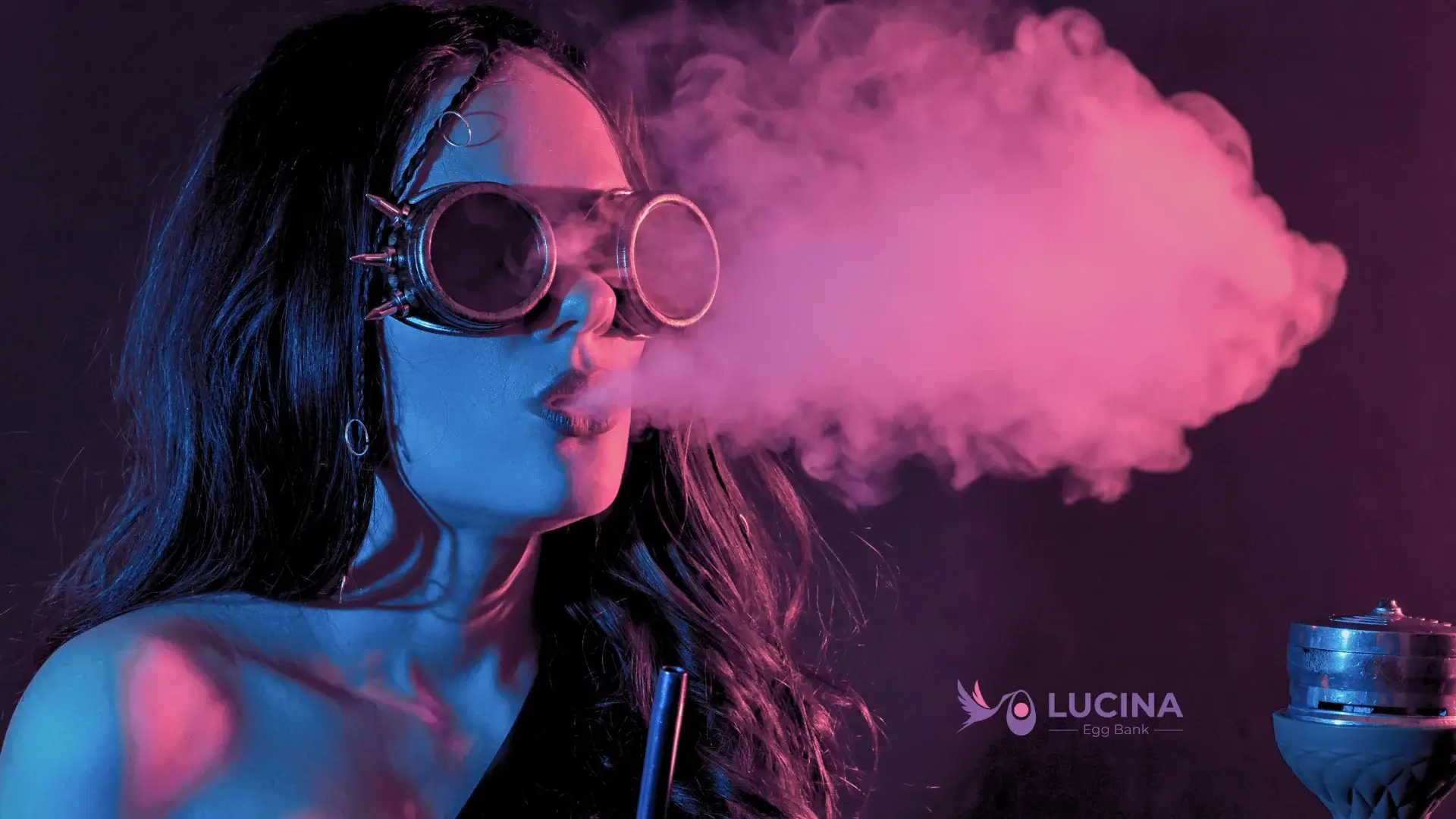
Vaping delivers nicotine. The egg bank’s concern is nicotine exposure and its effect on ovarian function, not the specific act of combustion. Whether you’re using a traditional cigarette, an e-cigarette, a disposable vape pen, or a nicotine pouch, the relevant question is the same: is nicotine present in your system?
Nicotine testing looks for cotinine, a metabolite produced when your body processes nicotine. Cotinine shows up in blood and urine tests regardless of whether the nicotine came from a cigarette or a vape. If you’re vaping and applying to donate, you will not pass the nicotine screening.
Nicotine patches, gums, lozenges, and pouches used to quit smoking also contain nicotine and will produce a positive cotinine result. If you’re in the process of quitting with nicotine replacement therapy, you’re not yet nicotine-free from the screening perspective. The goal is to be completely nicotine-free, including from cessation products, before applying.
How Long Do You Need to Be Smoke-Free?
This is where donors who have recently quit need to pay close attention.
Cotinine, the nicotine metabolite tested in screening, clears from urine within 3–4 days for most people and from blood within 1–2 weeks. But egg donation screening doesn’t just check whether cotinine is present at the moment of testing. It also asks about your smoking history and how recently you quit.
Most egg banks require donors to have been nicotine-free for a meaningful period before they’ll accept a former smoker’s application. The specific timeframe varies by program.
What’s consistent across programs is that passing a single cotinine test right after quitting is not sufficient. Your medical team will want to see that you’ve been smoke-free, not that you abstained for a week before the test.
If you’ve recently quit and want to donate, the most practical step is to apply honestly, disclose your quit date, and let the screening team tell you where you stand. The former smoker evaluation covers how quit date and smoking history factor into eligibility once nicotine-free.
What About Marijuana? A Separate Question
Marijuana and tobacco are evaluated differently in egg donation screening, and the rules around marijuana are more nuanced than most donors expect.
The concern with tobacco is nicotine and the chemical burden of combustion products on egg quality. Marijuana doesn’t involve nicotine, so the cotinine test doesn’t apply. But cannabis does have its own set of effects on reproductive function and on the hormone stimulation protocol that require separate evaluation.
Marijuana and egg donation involves a different set of clinical concerns and testing requirements than the nicotine framework covered here.
Smoking and Egg Quality: What the Research Shows
Understanding why smoking matters clinically helps explain why egg banks treat it as a firm disqualifier rather than a case-by-case consideration.
Nicotine reduces blood flow to the ovaries, which can impair follicle development. The toxic chemicals in cigarette smoke, including polycyclic aromatic hydrocarbons, are directly toxic to oocytes (eggs). Smoking accelerates the depletion of a woman’s ovarian reserve. The CDC links smoking to reduced fertility and earlier menopause onset, among other reproductive health effects.
During ovarian stimulation for egg retrieval, these effects translate directly to fewer eggs retrieved and higher rates of egg abnormalities. For a frozen egg bank, where the entire product is the quality of the eggs, this is not a marginal concern.
The good news is that these effects are largely reversible with sustained cessation. Ovarian reserve doesn’t recover, but the acute toxic effects on egg quality improve over time once nicotine and combustion chemicals are out of the system.
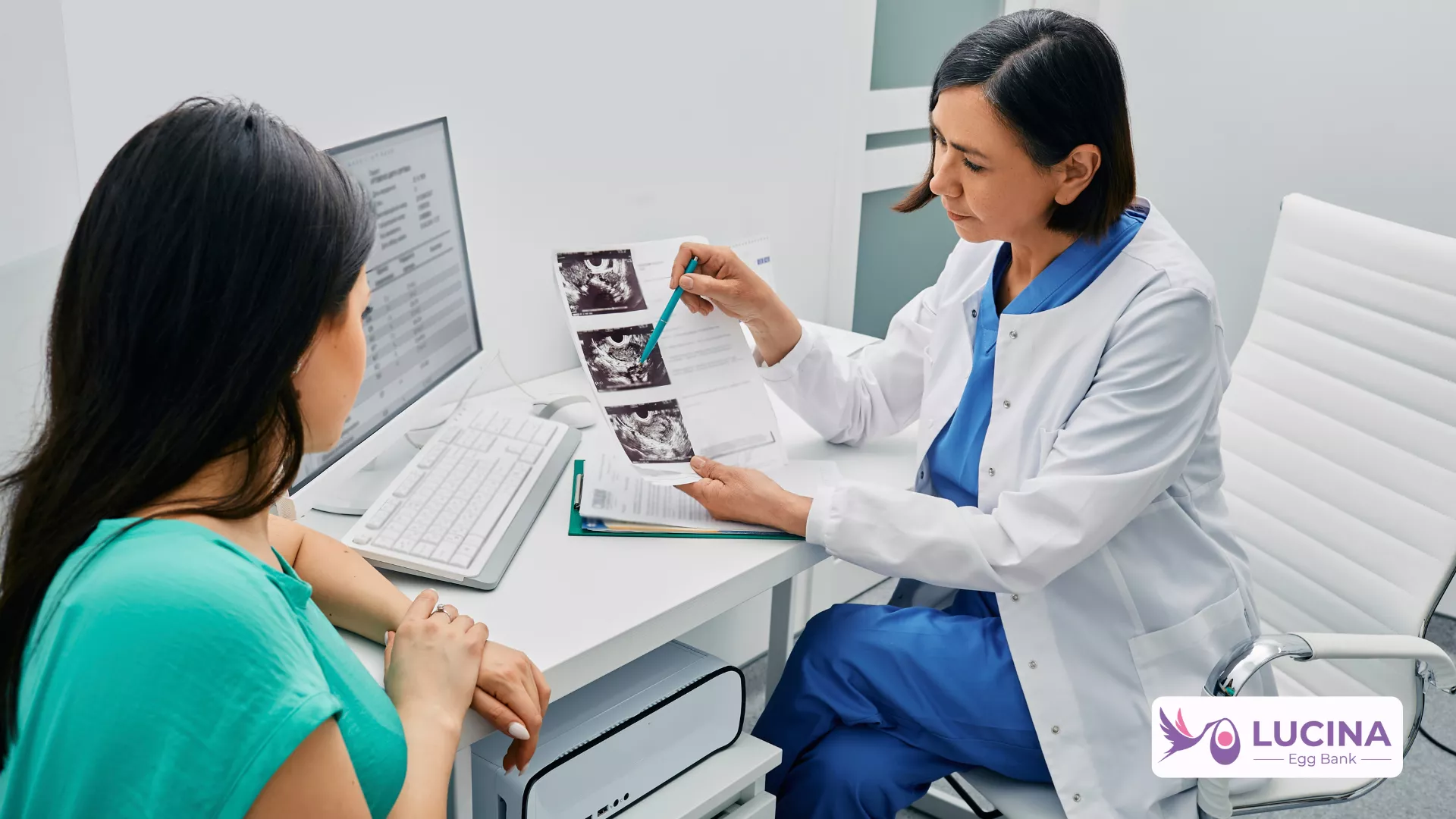
Egg donation involves hormone injections that stimulate the ovaries to produce multiple eggs in a single cycle. In donors with reduced ovarian reserve from smoking, this stimulation may produce fewer eggs and a lower-quality cohort. The full egg donation risks overview covers stimulation outcomes and what affects them. Your fertility specialist will evaluate your ovarian reserve as part of screening.
Other Lifestyle Factors Evaluated Alongside Smoking
Smoking doesn’t get evaluated in isolation. It’s part of a broader lifestyle and health assessment that the medical team conducts during screening.
Other factors that come up alongside smoking include alcohol use, recreational drug use, BMI, and current medications. Donors using hormonal contraceptives face specific timing requirements before the stimulation cycle can begin.
What disqualifies egg donors extends across lifestyle, medical history, and health criteria. Smoking is among the clearest-cut items on that list.
What the Donation Process Looks Like if You Qualify
If you’re nicotine-free and meet the other eligibility requirements, here’s what happens from application to payment.
A short online application. Disclose your smoking history honestly, including your quit date if applicable. You’ll know your pre-qualification status right away.
Blood work including nicotine/cotinine testing, hormone levels, ovarian reserve assessment, physical exam, and genetic screening. All screening costs are covered by Lucina.
A clinical interview with a licensed mental health professional to confirm you understand the commitment and are emotionally prepared for the donation process.
About 10–14 days of self-administered hormone injections, monitored closely with blood tests and ultrasounds to track follicle development.
A minor outpatient procedure under light sedation at a partnered fertility clinic. Takes about 15 minutes. Most donors return to normal activity within 24–48 hours.
Standard donors earn $8,000–$15,000+ per cycle after retrieval. Iconic donors from top-ranked universities can earn up to $50,000 per cycle. All travel and medical costs are covered.
All medical and travel costs are covered. Compensation is paid after retrieval. Our San Diego-based team supports you through every step of the process. We evaluate each applicant’s full clinical picture, not just their smoking history.
Start Your ApplicationIf You Currently Smoke, What to Do Next
Current smoking means you can’t donate eggs right now. That’s the honest answer. But it doesn’t close the door permanently.
If donation is something you want to do, quitting nicotine entirely is the path forward. That means all nicotine, including vapes, patches, gum, and pouches. Once you’ve been nicotine-free for a sufficient period, you can apply and the screening team will assess whether you’re ready.
Standard donors at Lucina earn $8,000–$15,000+ per cycle, with Iconic donors from top-ranked universities earning up to $50,000 per cycle. The process typically spans 6–10 weeks, and all medical and travel costs are covered. If you smoke, quitting and donating is a realistic path for a lot of women. Getting nicotine-free first, and staying that way, is the only prerequisite.
Nicotine-Free? Apply With Lucina
If you’re nicotine-free and meet the other eligibility criteria, the application takes 15 minutes. Disclose your smoking history fully and let the screening team evaluate where you stand.
$8,000–$15,000+ per cycle (Standard) · Up to $50,000 per cycle (Iconic) · 3,500+ screened donors
All medical and travel costs covered. Compensation paid after retrieval. Up to 6 donation cycles allowed per ASRM lifetime guidelines.
Frequently Asked Questions

Julianna Nikolic
Chief Strategy Officer Julianna Nikolic leads strategic initiatives, focusing on growth, innovation, and patient-centered solutions in the reproductive sciences sector. With 26+ years of management experience and a strong entrepreneurial background, she brings deep expertise to advancing reproductive healthcare.

Table of Contents
- Why Smoking Disqualifies Egg Donors
- Vaping: Does It Count as Smoking?
- How Long Do You Need to Be Smoke-Free?
- What About Marijuana? A Separate Question
- Smoking and Egg Quality: What the Research Shows
- Other Lifestyle Factors Evaluated Alongside Smoking
- What the Donation Process Looks Like if You Qualify
- If You Currently Smoke, What to Do Next
- Frequently Asked Questions