
If you’re on a GLP-1 medication (or thinking about starting one), egg donation can suddenly feel confusing.
You might be asking: Will I get disqualified? Do I have to stop? What if I’m still adjusting my dose or dealing with nausea and constipation?
Well, you’ve come to the right place. This guide breaks down how GLP-1 use usually comes up during donor screening, why timing matters during a donation cycle, and what to ask your coordinator and prescribing doctor so you can make a safe, informed plan.
Can You Donate Eggs on GLP-1 Meds?
Let’s get straight to the point: can you donate eggs while taking a GLP-1 medication?
The short answer is yes, it’s possible to be an egg donor while taking GLP-1 medications. However, there’s a big ‘but’ – it requires careful coordination. Many programs will ask about your use of these medications because they affect digestion, hydration, and appetite.
The most critical factor is safety during the egg retrieval procedure. Because GLP-1s slow down digestion, they can increase risks during anesthesia.
Consequently, most fertility clinics will require a medication pause (typically 1 week or more) before the retrieval day. Your eligibility depends on your overall health, the stability of your dose, and your clinic’s specific safety protocols.

Mini Glossary
Before we get started, let’s refresh some common terms first.
- GLP-1 medication: A class of drugs that helps regulate appetite and blood sugar (often used for diabetes and weight management).
- GLP-1 injection / shot: The delivery method for many GLP-1s (weekly or daily, depending on the medication).
- Dose escalation (titration): Gradually increasing your dose to reduce side effects.
- Compounded GLP-1: A custom-prepared version from a compounding pharmacy; documentation and consistency matter.
- Ovarian stimulation: The phase where you take fertility medications to mature multiple eggs.
- Egg retrieval: A short procedure (often with sedation) to collect eggs.
What Are GLP-1 Medications?
GLP-1 medications (glucagon-like peptide-1 agonists) are a class of drugs originally designed to treat type 2 diabetes but are now widely prescribed for weight management.
Common brand names include Ozempic, Wegovy, Mounjaro, and Zepbound. These medications mimic a natural hormone in your body that signals fullness.
GLP1: How Does It Work?
When you take a GLP1 injection or GLP1 shot, the medication works on three main fronts:
- Slowing digestion. It delays “gastric emptying,” meaning food stays in your stomach longer.
- Regulating blood sugar. It helps the pancreas release insulin when blood sugar is high.
- Reducing appetite. It targets the brain’s hunger centers to reduce cravings and “food noise.”
While effective, these mechanisms are exactly why fertility clinics need to know about them—specifically the slowed digestion aspect.
Can You Donate Eggs While on a GLP-1 Medication?
Many potential donors worry that taking these meds automatically disqualifies them. This is not necessarily true. However, GLP1 eligibility for egg donation involves a few specific checks.
What Egg Donor Programs Usually Care About
When you apply to a top-tier donor egg bank like Lucina Egg Bank, the medical team looks at the whole picture:
- Stability. Are you on a stable GLP1 dosage, or are you currently increasing it? Side effects are most severe during dose escalation, so clinics prefer donors who are stable.
- BMI Requirements. While GLP-1s aid in weight loss, egg donation programs still have BMI criteria (usually under 30-32) for anesthesia safety.
- Side Effect Pattern. If you suffer from severe GLP1 nausea or dehydration, you may struggle with the egg donation process.
- Reason for Use. Are you taking it for general weight management or for diabetes? Donors with type 1 or type 2 diabetes may face different eligibility rules than those using it for weight loss alone.
Why Donation Cycles Can Feel Different on GLP-1s
The egg donation process involves about 10–14 days of hormone injections. These hormones cause the ovaries to expand, which can lead to bloating and mild nausea.
- Combined symptoms. If you already experience GLP1 bloating or GLP1 gas pain, the fertility medications might amplify these sensations.
- Hydration challenges. Fertility medications require you to drink a lot of electrolytes. If you struggle to drink large volumes of fluid due to early satiety, you will need a solid plan to stay hydrated.
If You Only Read One Section:
When you go to your screening, bring a “Medication cheat sheet.” List the GLP1 name, your current GLP1 dosage, the date of your last dose change, and your typical injection day. This saves time and shows you are responsible.
Do You Have to Stop GLP-1 Meds Before Egg Donation?
You generally do not need to stop the medication to apply or to pass screening. However, you will likely need to pause the medication for a short window during the actual donation cycle.
The Science Behind the “Medication Pause”
The biggest concern for clinics is aspiration risk under anesthesia. This is when stomach contents are inhaled into the lungs during sedation.
A pivotal guideline updated by the American Society of Anesthesiologists (ASA) highlights that GLP-1 agonists significantly delay gastric emptying. Because of this, following the standard “no eating after midnight” rule might not be enough.
The ASA guidelines recommend withholding daily doses on the day of the procedure and withholding weekly injections (like Wegovy or Ozempic) for one week prior to any elective procedure involving sedation.
Timing Questions to Ask Your Clinic
Some common questions you may want to ask your clinic include:
- “Do you require a pause before stimulation?”
- “Do you require a pause before retrieval day?”
- “If I pause, how do you want me to restart?”
Based on these safety protocols, your clinic will likely ask you to:
- Weekly Injections: Skip the GLP1 injection that falls within the week of your egg retrieval.
- Daily Medications: Hold the medication for the day of the procedure.
As long as you follow these, you should be good to go.
What Not To Do
There are also a few things you should never do.
- Don’t self-stop or restart without your prescriber. Never stop or restart your medication without telling both your prescribing doctor and your fertility nurse. Stopping abruptly can cause blood sugar fluctuations, and restarting at a high dose can cause severe vomiting.
- Don’t hide meds on screening forms. We ask these details for your own safety. We don’t want to risk anything interacting with your meds.
GLP-1 Side Effects That Matter During Egg Donation
It’s important to distinguish between general GLP-1 side effects and those that impact the egg donation process.
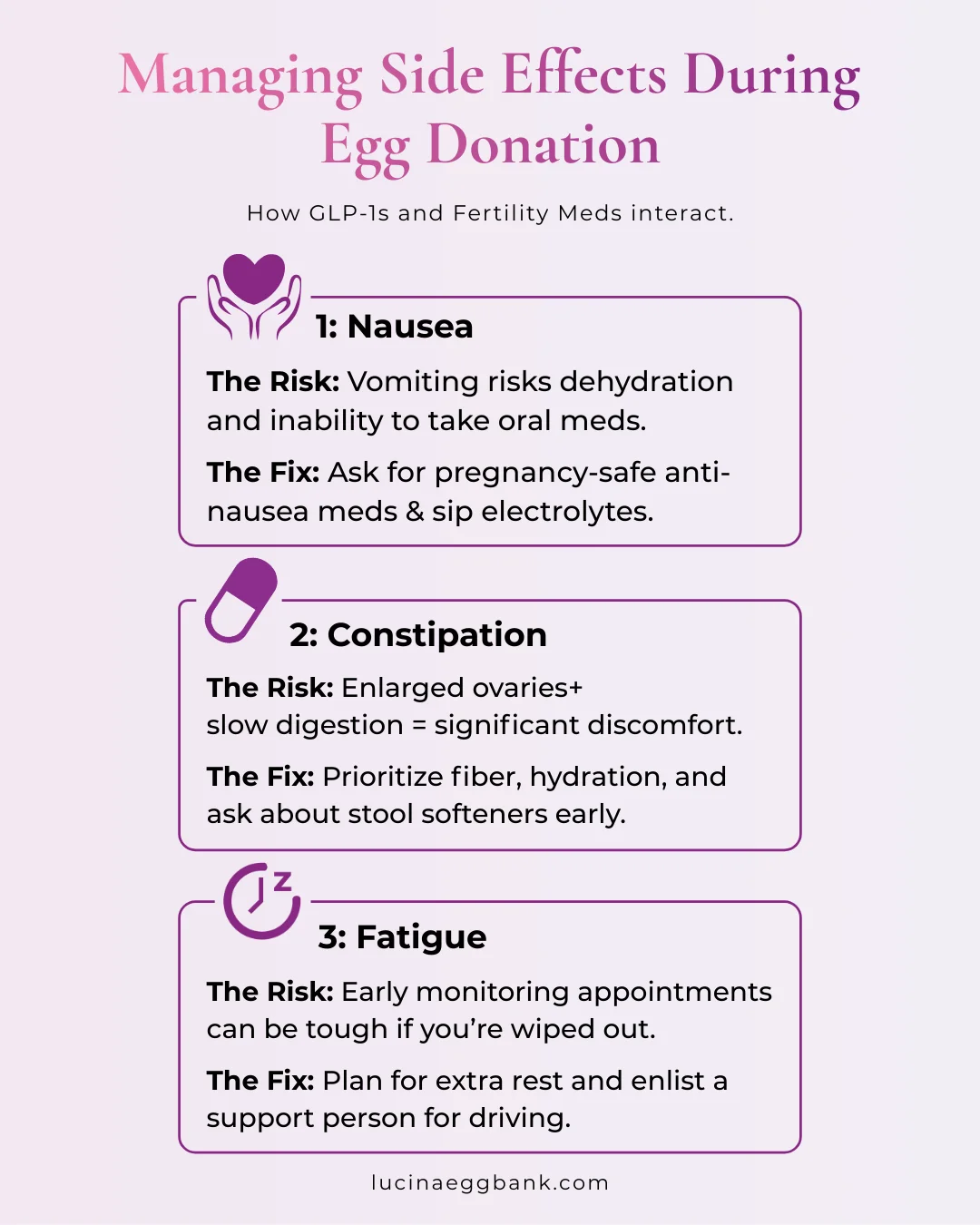
Stimulation already affects appetite, bloating, hydration, and energy. If GLP-1 symptoms stack on top, your clinic may adjust timing or give you a symptom plan so you can safely complete monitoring and recover well after retrieval.
GLP1 Nausea
This is the most common side effect. During ovarian stimulation, high estrogen levels can also cause mild nausea.
- The Impact: If you are vomiting, you cannot take the oral medications sometimes prescribed during a donation cycle, and you risk dehydration.
- Management: Discuss anti-nausea options with your clinic that are safe to take alongside fertility meds.
GLP1 and Constipation
GLP1 and constipation is a very common search term for a reason—slow digestion slows everything down.
- The Impact: Egg retrieval can cause temporary constipation due to enlarged ovaries pressing on the bowel. If you are already constipated from the GLP-1, the discomfort can be significant.
- Management: Your clinic may recommend stool softeners leading up to the retrieval. Prioritize fiber and hydration.
GLP1 Fatigue and Insomnia
Some users report GLP1 fatigue (feeling wiped out) or GLP1 insomnia (trouble sleeping).
- The Impact: You need rest during the stimulation phase. If you are exhausted, early morning monitoring appointments can be difficult. Ensure you have a support system in place.
GLP1 Hair Loss
A common topic on GLP1 Reddit threads is hair shedding.
- The Reality: This is usually “telogen effluvium,” caused by rapid weight loss or nutritional stress, not the drug itself.
- The Impact: This does not affect egg quality or eligibility, but it is good to be aware that the physical stress of an egg retrieval cycle could temporarily add to this shedding.
Serious but Uncommon Risks
While rare, conditions like GLP1 pancreatitis or severe GLP1 eye issues (vision changes) are serious. If you experience sudden, severe abdominal pain or blurry vision during your cycle, alert your medical team immediately.
Compounded GLP-1 vs. Brand-Name Prescription
Because of shortages and GLP1 price, many people use compounded versions.
GLP1 Compound
A GLP1 compound is a version of the medication made by a compounding pharmacy rather than the brand-name manufacturer.
- Why Clinics Ask: Compounded medications vary in potency and additives (some have B12 added). Clinics want clear documentation on the active ingredient, dose, and prescribing oversight.
- What to do: Be honest if you are using a compound. The clinic needs to know exactly what is in your system to manage your anesthesia safely.
Using compounded GLP1 doesn’t automatically disqualify you, but it can trigger extra questions about consistency and pharmacy records.
GLP1 Supplements, Drops, and Gummies
You might see ads for GLP1 drops, GLP1 gummies, or a GLP1 supplement. These are generally not the same as prescription GLP-1 agonists. They are often herbal supplements claiming to boost natural GLP-1 levels.
- The Donor Rule: You must disclose all supplements to the donor egg bank. Even “natural” drops can interact with blood clotting or anesthesia.
Food, Hydration, and the Donor Cycle
Egg donation isn’t a single appointment. Instead, it’s a short season of frequent monitoring and multiple medications.
If GLP-1s reduce appetite or make fluids hard, you’ll want a realistic plan for steady intake. Egg donor banks like Lucina Egg Bank don’t judge your diet. The only reason we ask is that we want to protect your safety through stimulation and recovery.
GLP1 Diet and Meal Prep
Users often search for a GLP1 meal plan or GLP1 grocery list because their relationship with food has changed.
- Protein is Priority: During egg stimulation, your body needs protein to support egg development and prevent fluid retention (OHSS).
- Small, Frequent Meals: Because of the “fullness” effect, you might not be able to eat a large dinner. Try grazing on high-protein snacks throughout the day.
GLP1 Food Noise
GLP1 food noise refers to constant intrusive thoughts about food. When this quiets down, you might forget to eat.
- Donor Tip: Set alarms to eat and drink. You cannot fast your way through an egg donation cycle; your body needs the energy.
GLP1 Breakfast Ideas
On the morning of your monitoring appointments (which are very early), you might not be hungry.
- Tip: Focus on liquid calories if solids are hard. Protein shakes are an excellent way to get nutrients in without feeling overly full.

Cost and Access Questions
A lot of donors worry about GLP-1 cost, insurance coverage, and access. Still, if cost affects consistency (missed doses, frequent switching), it’s worth mentioning so your team can plan around stability and side effects.
GLP1 Price and Insurance
Donors often ask if the egg bank insurance covers their GLP-1s.
- The Answer: No. The egg bank covers all fertility medications and medical costs related to the donation. Your personal prescriptions, including GLP1 no insurance costs, remain your responsibility.
GLP1 Doctor Near Me
If you need to adjust your medication for the donation cycle, who do you ask?
- The Answer: Do not rely on the fertility clinic to manage your weight loss meds. You must coordinate with your prescribing provider (primary care, endocrinologist, or telehealth provider).
What to Ask at Your Screening
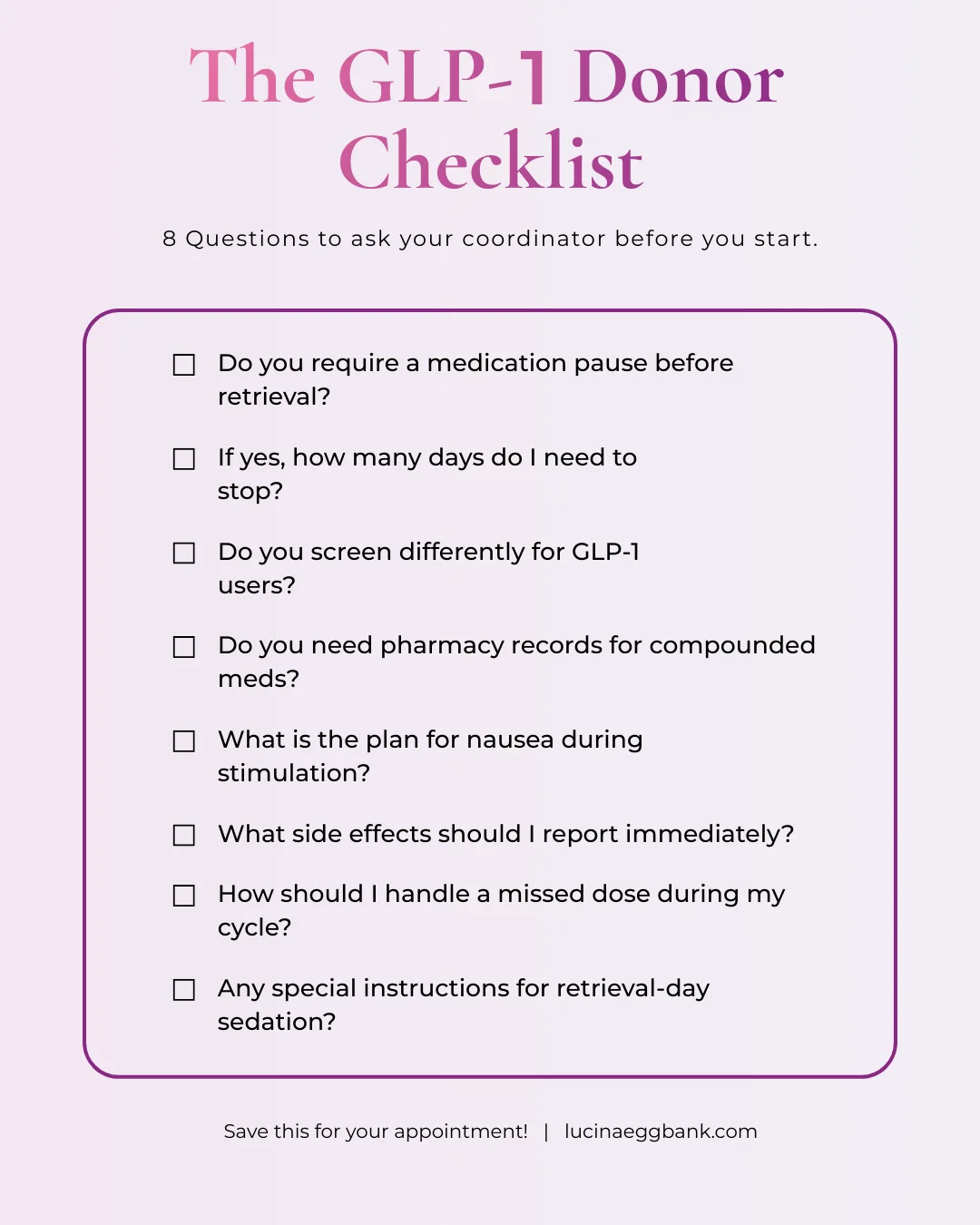
When you have your interview with Lucina Egg Bank or any other agency, use this checklist to ensure you are clear on the protocol.
Questions to Bring:
- “Do you screen differently for GLP-1 users?”
- “Do you require a medication pause?”
- “If yes, is it before stimulation, before retrieval day, or both?”
- “What symptoms should I report right away?”
- “What’s your plan for nausea during stimulation?”
- “What’s your plan for constipation during stimulation?”
- “Do you have restrictions around compounded GLP-1s?”
- “Do you need pharmacy records or a prescription note?”
- “How should I handle a missed dose during my cycle?”
- “If I’m still titrating, should I wait until my dose is stable?”
- “Does my reason for taking GLP-1 change anything (diabetes vs weight)?”
- “Any special instructions for retrieval-day sedation?”
FAQs: GLP-1s and Egg Donation
Can you donate eggs on a GLP-1 medication?
Yes, in many cases, provided you are medically stable. You will likely need to pause the medication for at least one week prior to the egg retrieval procedure to ensure anesthesia safety. That said, it does depend on your clinic, your dose stability, and your side effects.
Do you have to stop GLP-1 before egg retrieval?
Some clinics ask for a temporary pause before retrieval day, especially if you have strong GI side effects or recent dose changes. Ask your donor coordinator for their protocol and confirm any changes with your prescriber. Recent data confirms that these drugs significantly slow gastric emptying, increasing aspiration risks during sedation if not paused appropriately.
Does GLP-1 affect egg quality?
There isn’t a simple one-size answer, but current research is promising. A narrative review published in The Journal of Clinical Endocrinology & Metabolism 2024 suggests that for women with metabolic dysfunction, GLP-1 agonists may improve reproductive outcomes by restoring hormonal balance and reducing inflammation. That said, direct data on oocyte quality in healthy donors is still emerging.
Can GLP-1 side effects disqualify you?
Side effects don’t automatically disqualify you, but severe GLP-1 nausea, dehydration, or ongoing constipation can delay your cycle or trigger extra medical review. The goal is keeping you safe through stimulation and recovery.
Are compounded GLP-1 meds treated differently by clinics?
Sometimes. Because compounded meds vary in formulation, clinics may ask for detailed documentation from your prescriber to ensure they understand exactly what you are taking.
What if I’m taking GLP-1 for diabetes vs weight loss?
Tell your donor team, because diabetes care can involve other medications and monitoring needs. It doesn’t mean you can’t donate, but it may change what labs, clearance steps, or safety planning the clinic uses.
Start Your Journey with Lucina
Being on a GLP-1 doesn’t automatically close the door on egg donation. It just means you deserve a program that takes your health seriously, asks the right questions, and helps you plan the timing in a way that feels safe—not stressful.
That’s what we do at Lucina Egg Bank. We’ll walk you through screening with real clarity, talk through your medication and side effects without judgement, and make sure you feel supported from your first call to retrieval day and beyond.
If egg donation has been on your mind, this is a solid moment to take the next step. Start an application with Lucina today and see if you qualify—you’ll get answers fast, and a team that actually has your back.
[Medical disclaimer: The information in this guide is for educational purposes only and does not constitute medical advice. Always consult your prescribing physician and your fertility clinic team regarding medication management.]

Julianna Nikolic
Chief Strategy Officer Julianna Nikolic leads strategic initiatives, focusing on growth, innovation, and patient-centered solutions in the reproductive sciences sector. With 26+ years of management experience and a strong entrepreneurial background, she brings deep expertise to advancing reproductive healthcare.

Table of Contents
- Can You Donate Eggs on GLP-1 Meds?
- What Are GLP-1 Medications?
- Can You Donate Eggs While on a GLP-1 Medication?
- Why Donation Cycles Can Feel Different on GLP-1s
- Do You Have to Stop GLP-1 Meds Before Egg Donation?
- GLP-1 Side Effects That Matter During Egg Donation
- Compounded GLP-1 vs. Brand-Name Prescription
- Food, Hydration, and the Donor Cycle
- Cost and Access Questions
- What to Ask at Your Screening
- FAQs: GLP-1s and Egg Donation
- Start Your Journey with Lucina