How Much Do Donor Eggs Cost? A Complete Guide for Intended Parents

Building a family through egg donation is a big financial decision. As an intended parent, you need to know the cost of donor eggs and what exactly it covers before beginning the process. Having a clear idea of the total pricing will allow you to budget properly and prevent any unexpected expenses along the way.
In this guide, we’ll walk through what donor eggs cost, what’s included in the price, and what insurance or employer fertility benefits may help cover, so you can plan your budget realistically.
Because coverage varies by plan and employer, we’ll also outline simple steps to verify benefits before making financial commitments.

Average Cost of Donor Eggs in the U.S.

The cost of donor eggs in the US typically ranges between $12,000 and $45,000. The exact price will depend on whether you are choosing frozen or fresh eggs, your location, and the additional services you may require.
Fresh vs Frozen Donor Eggs: What’s the Difference in Cost?
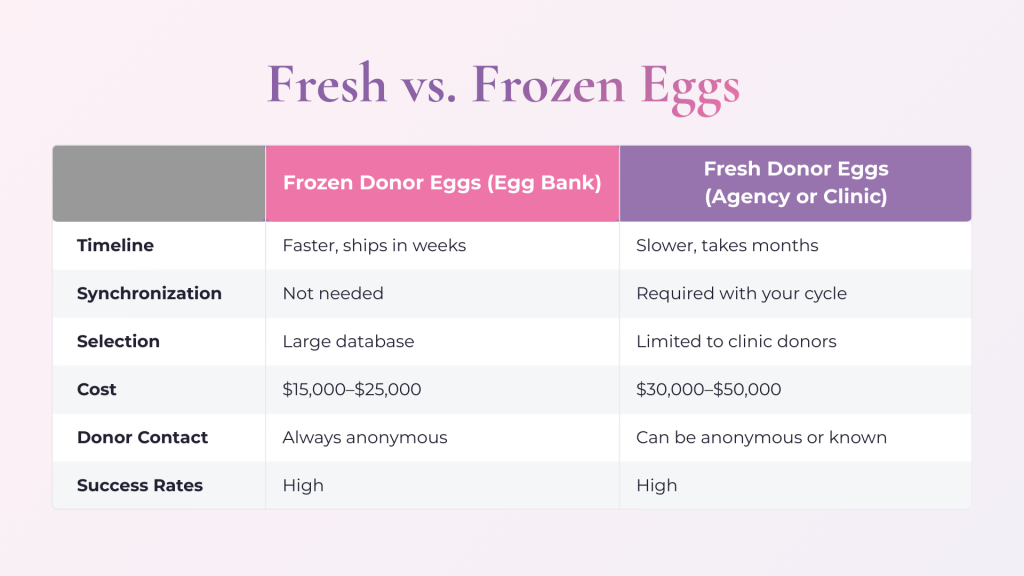
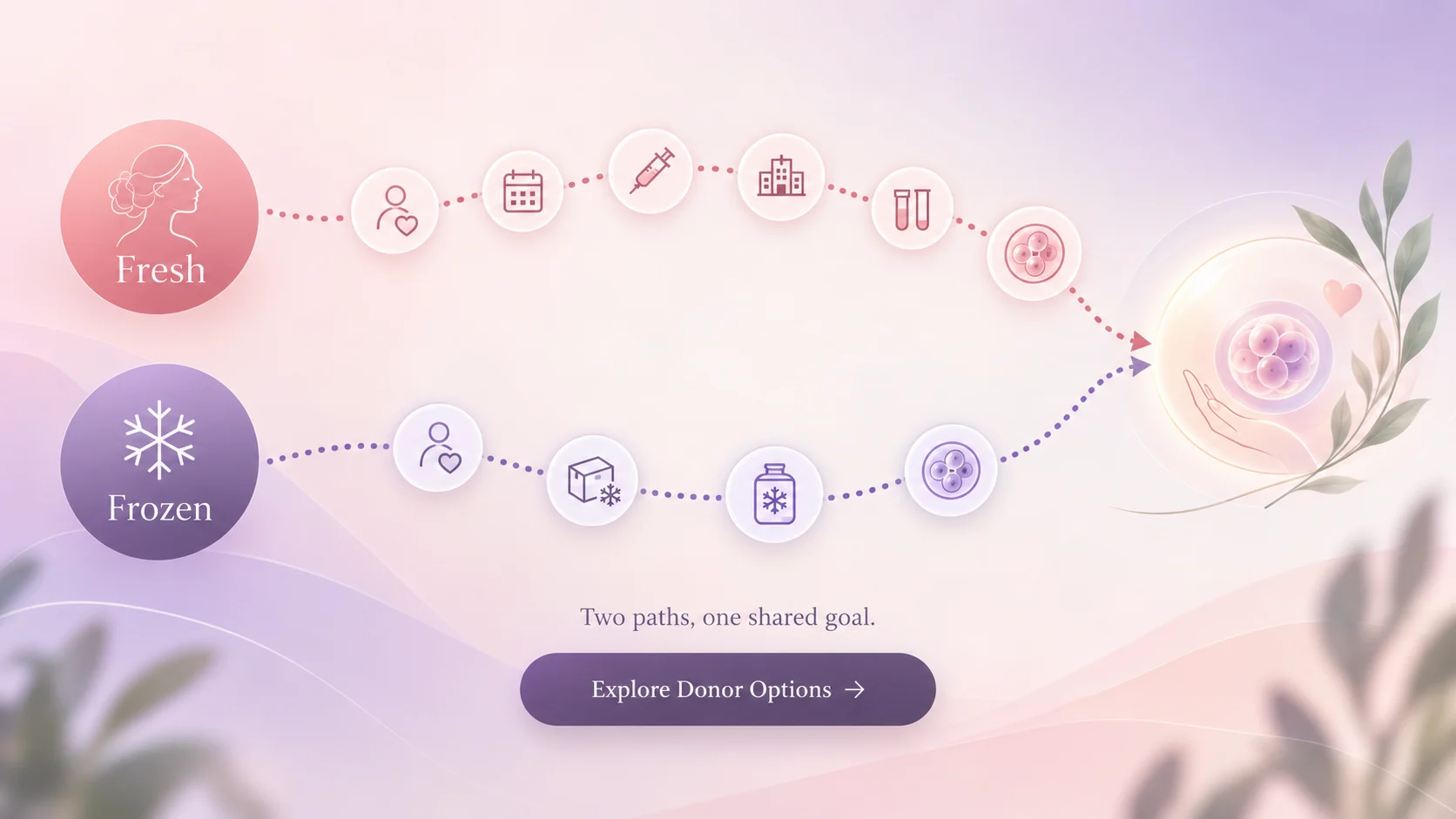
Fresh donor eggs are typically more expensive than frozen eggs. While a fresh donor egg cycle may cost between $30,000 and $45,000, a batch of frozen donor eggs (usually 6-8 eggs) costs around $15,000 to $30,000.
This big price difference is due to how each option works and who pays for what. In a fresh egg cycle, the donor undergoes the process specifically for you. So, you will have to cover the entire costs of the program, including medical screening, medications, donor compensation, and agency fees.
Meanwhile, the expenses of frozen donor eggs are shared by multiple parents. The egg donor has already gone through the retrieval process and received her compensation. Her eggs are then divided into batches and sold separately, so each intended parent only pays a portion of the overall costs.
There’s also no need for cycle synchronization or real-time coordination in a frozen egg cycle, which further reduces the overall costs. The benefits of frozen donor eggs extend beyond cost — availability and flexibility are major factors too.
What You’re Really Paying For: Breaking Down the Costs
Donor egg costs usually include a mix of medical, laboratory, donor-related, legal, and storage expenses — and not all of these categories are treated the same way by insurance or employer fertility benefits.
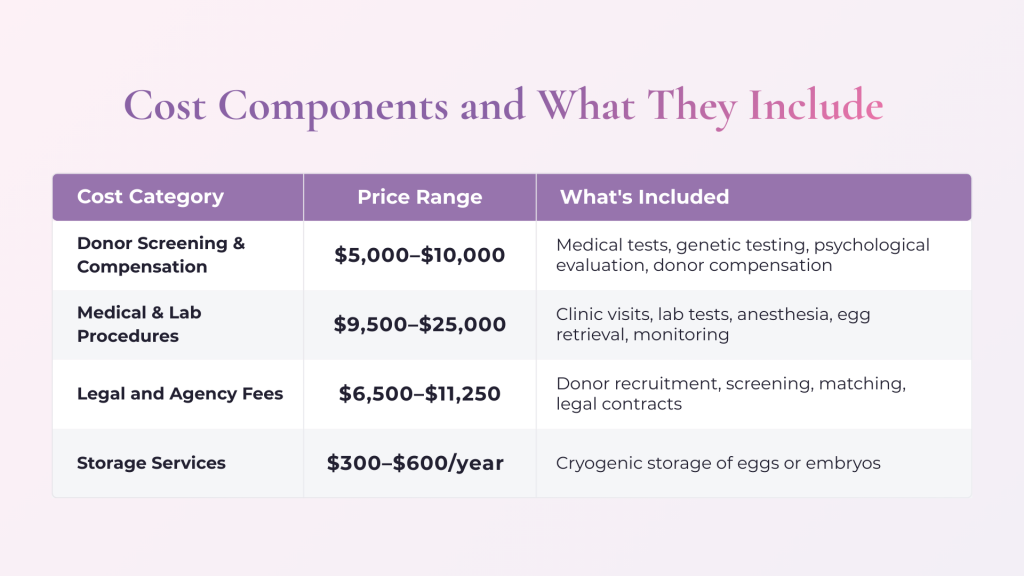
The costs of donor eggs include many expenses. Here’s what goes into the total price of an egg donation cycle:
Donor Screening & Compensation
Each donor undergoes a comprehensive screening process before donation. This includes medical tests, genetic tests, and psychological evaluation to ensure the donor is healthy and fit to donate eggs. These screenings follow the guidelines set by the American Society for Reproductive Medicine (ASRM).
Egg donors are also paid for their time, commitment, and participation during the program. Standard donor compensation typically ranges from $8,000 to $15,000+ per cycle, depending on the program and donor profile. You can learn more about what drives donor egg costs in our detailed breakdown.
Medical & Lab Procedures
These fees cover the medical services you and your egg donor may require during the donation. This includes clinic visits, laboratory tests, anesthesia, and the egg retrieval procedure itself. The exact costs range from $9,500 to $25,000 based on the clinic or agency you choose.
Legal and Agency Fees
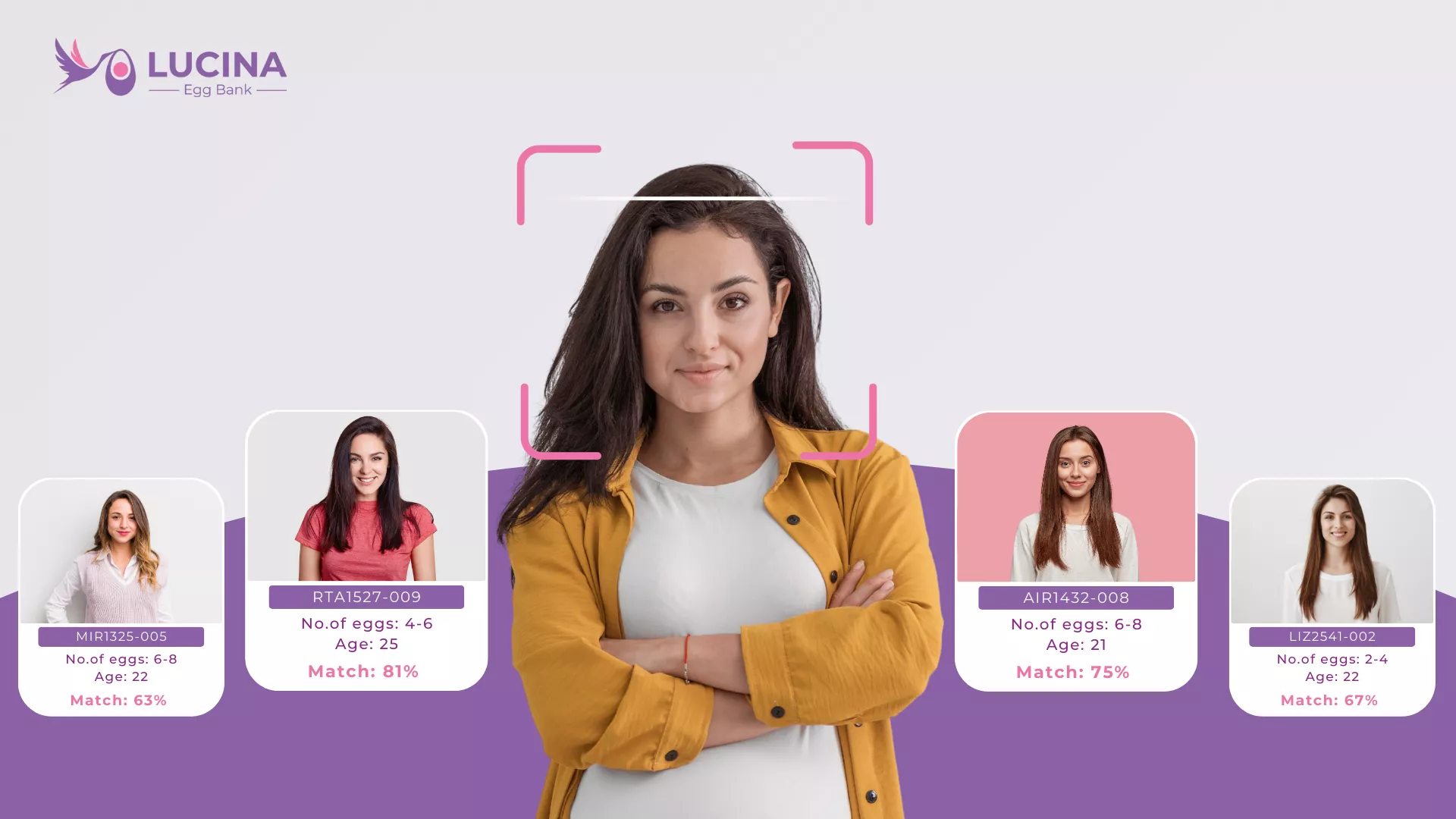
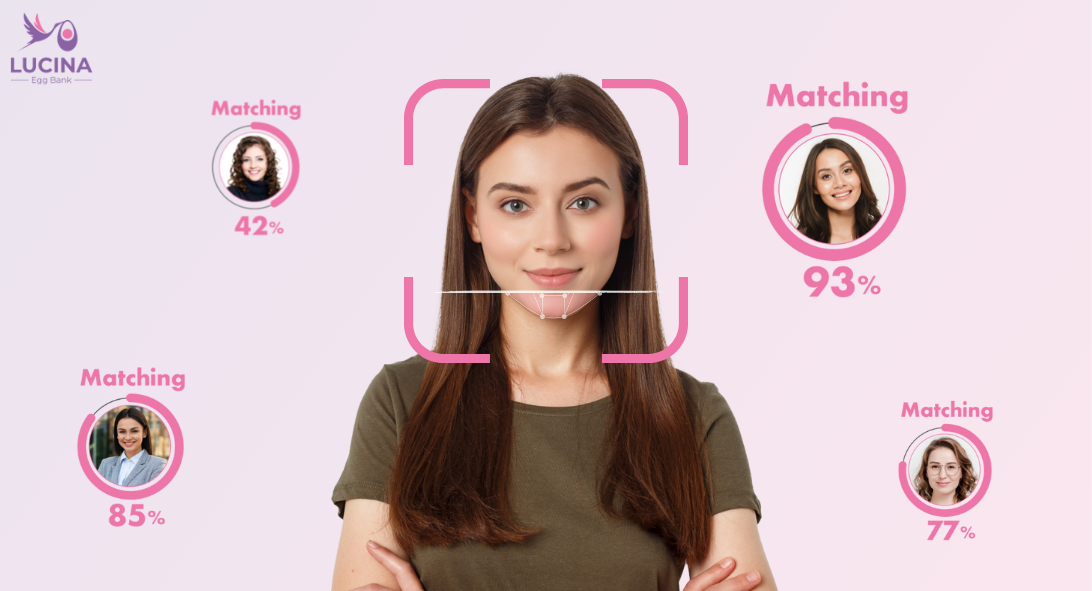
Agencies charge between $5,000 and $9,000 for their services. This fee covers the costs of finding, screening, and AI donor matching you with an egg donor. You will also need to pay the lawyer who will draft the contract and handle other legal aspects of the egg donation process. This fee is typically between $1,500 and $2,250.
Storage Services
If you don’t want to use the eggs or embryos immediately, you’ll have to pay to store them. Storage fees typically range from $300 to $600 per year.
Factors That Influence the Cost of Donor Eggs
Many factors can influence the price of donor eggs, including:
1. Fresh Eggs vs Frozen Eggs
Fresh donor eggs tend to cost more than frozen eggs since you’re covering the expenses and not sharing them with other families.
2. Donor Compensation
Donor compensation accounts for a significant portion of the egg donor costs. The higher the compensation, the pricier the donor eggs.
3. Fertility Clinic
The clinic you choose also determines how much you will pay for donor eggs. Each clinic has its own prices for medical procedures, monitoring, and lab services.
4. Agency and Matching Fees
Agency and matching fees cover the cost of recruiting the egg donor, screening them, and coordinating the whole process.
5. Medical Costs
These include the costs of medication, blood tests, egg retrieval, and other procedures that donors may undergo during the donation process.
6. Donor’s Location
Another factor that can influence the price of donor eggs is her location. You may have to pay more if your donor has to travel for clinic appointments.
7. Legal and Administrative Fees
These are the fees for the legal contracts and documentation to protect everyone in the donation.
8. Storage
Storage fees can also increase the cost of donor eggs if you’re planning to store them for future use.
Because these factors vary from case to case, it’s important to confirm both pricing details and any potential insurance or fertility benefit coverage before finalizing your budget.
How Lucina Keeps Donor Egg Costs Transparent
Lucina offers transparent, all-inclusive pricing for our eggs. We show you the full cost upfront — no hidden fees or surprise charges. Also, you don’t pay anything before choosing an egg donor, so there’s no pressure to commit until you are ready. Our straightforward pricing allows you to plan your budget without worrying about unexpected costs popping up along the way.
Intended parents can browse our donor gallery for free, with no upfront payment required to access profiles. If you want to compare egg banks before deciding, our guide to the best egg banks walks through what to look for on pricing, guarantees, and donor pool size.
Financial Planning Tips for Intended Parents
Building a family with donor eggs requires careful planning. Here’s how to prepare yourself financially for the egg donation journey.
Understand the Total Costs
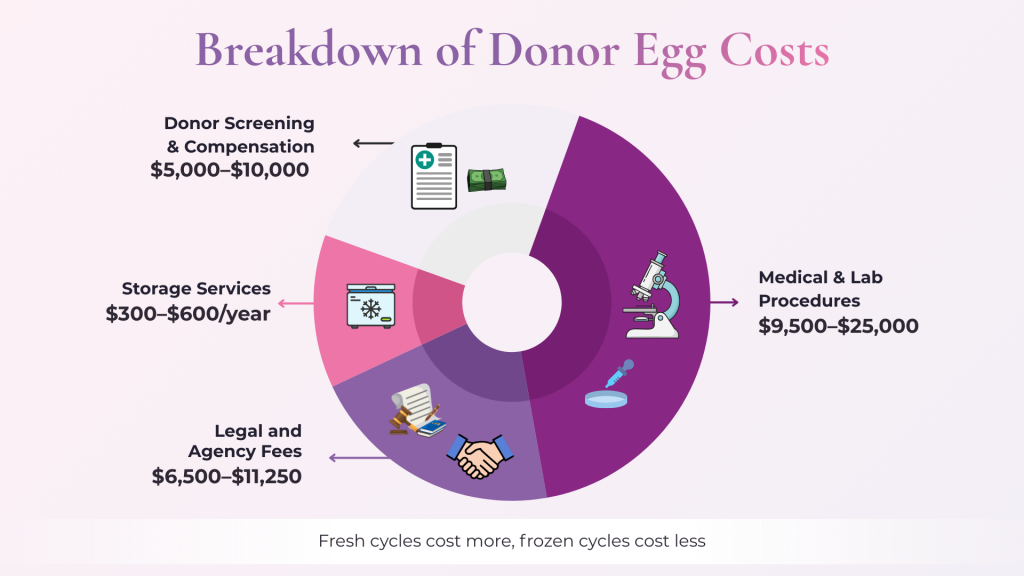
You need to know how much the donor eggs would cost. Break down each expense: agency fees, donor compensation, lawyer fees, medical procedures, and consider what can make these costs go up or down. Knowing the actual costs upfront will make budgeting a lot easier.
Create a Realistic Budget
Once you understand the costs, make a budget that includes all the expenses. Don’t forget about other costs like the donor’s flight and accommodation if she lives out of state. You should also budget extra money for any unexpected expenses that might come up during the process.
Explore Financing Options
Companies like CapexMD and PatientFi provide loans to people who want to finance donor egg IVF. You can also consider a personal loan, a home equity line of credit, or seek help on crowdfunding platforms.
Many egg banks and fertility programs now offer flexible payment plans that can allow you to pay in installments. If you’re weighing the financial and emotional dimensions of this decision, our article on using donor eggs covers what intended parents often wish they had considered earlier.
Check Insurance Coverage and Employer Fertility Benefits Before You Finalize Your Budget
Insurance may cover some parts of donor egg IVF treatment, but coverage for donor services and related fees varies widely by plan, employer, and policy rules. Checking coverage early can help you estimate your true out-of-pocket cost before you choose a donor or commit to treatment.
In many cases, standard medical insurance and employer fertility benefits are not the same thing. Your medical plan may cover certain diagnostics, medications, or treatment-related services, while donor egg-specific expenses may be excluded, limited, or handled through a separate employer fertility benefit program.
This section focuses on intended parents’ cost planning and coverage verification. Insurance for an egg donor’s medical complications is a separate issue and is typically arranged through the agency or intended parents as part of the donor process.
What may be covered vs. what to verify (examples only):
| Category | May Be Covered (depends on plan) | Commonly Excluded / Limited (varies) | What to Verify |
|---|---|---|---|
| Fertility evaluation & testing | Consultations, labs, diagnostics | Testing limits, prior authorization requirements | In-network rules, referrals, prior authorization |
| IVF treatment-related medical care | Monitoring, medications, parts of IVF cycle care | Cycle caps, medication caps, coverage limits | Medical vs pharmacy benefits, lifetime/max limits |
| Donor egg-related services | Some plans/employer benefits may include certain donor egg IVF costs | Donor compensation, egg bank fees, legal fees, storage, shipping may be excluded or separate | Exact donor egg wording in the plan and exclusions |
| Employer fertility benefits | May supplement standard insurance | Benefit design varies by employer/vendor | Whether donor eggs are included, reimbursed, capped, or excluded |
Because coverage terms can change by insurer, employer, and plan renewal period, confirm details directly with your insurer, HR/benefits team, and your clinic’s billing or financial coordinator before paying deposits or signing agreements.
Simple coverage verification workflow:
- Review your plan documents first (Summary of Benefits & Coverage, exclusions, fertility rider, pharmacy benefits).
- Call your insurer and ask specifically about donor egg IVF-related coverage (not just “IVF” in general).
- Check with HR/benefits to see whether your employer offers a separate fertility benefit or reimbursement program. If you’re unsure how to start that conversation, RESOLVE offers workplace coverage resources that can help you prepare questions for HR/benefits.
- Share your benefit details with your clinic billing team or financial coordinator so they can help you understand what is likely to be medical-billed vs out-of-pocket.
- Save key answers in writing (or keep call reference numbers/names) before making financial commitments.
Questions to ask your insurer, HR/benefits team, and clinic billing team:
- Does my plan cover donor egg IVF-related treatment costs? If yes, which parts?
- Are there exclusions for donor eggs, donor compensation, egg bank fees, legal fees, storage, or shipping?
- Is preauthorization required for treatment, medications, or embryo transfer?
- Are there separate caps for medical benefits vs pharmacy benefits?
- Is there a separate employer fertility benefit or reimbursement program I can use with my medical insurance?
- Do I need to use specific in-network clinics, labs, or pharmacies?
This information is educational and not legal, medical, or insurance advice. Coverage varies by plan and employer. Confirm details with your insurer, HR/benefits team, and your clinic’s billing/financial coordinator.
Tighten Your Finances
You need to get your finances in order before getting started. Look at what you’re constantly spending money on and cut out the things you don’t really need. Also, you should find ways to earn extra income and save more money to improve your financial situation.
Seek Professional Guidance
You may also want to see a financial advisor who specializes in infertility for advice. They can help you understand the costs of egg donation, create a solid budget, and teach you how to manage your finances throughout the program.
Start Your Journey with Confidence
You deserve clarity and transparency when building a family through egg donation. At Lucina Egg Bank, we break down every cost upfront — no hidden fees, no surprises. Browse our donor gallery for free, and only commit when you’re ready.
When you’re ready to take the next step, our team can walk you through guarantee programs designed to protect your investment, and our financial partners page covers the financing options available to you.
Browse 3,500+ Donor Profiles at Lucina
Transparent, flat pricing with $0 to browse. See every cost upfront before you commit to a donor or a program.
3,500+ screened donor profiles · 92.2% frozen egg survival rate (2022) · $0 to browse donors
$0 to browse the gallery. Triple Guarantee programs available. ReflEggction AI matches donors by facial recognition.
FAQs

Julianna Nikolic
Chief Strategy Officer Julianna Nikolic leads strategic initiatives, focusing on growth, innovation, and patient-centered solutions in the reproductive sciences sector. With 26+ years of management experience and a strong entrepreneurial background, she brings deep expertise to advancing reproductive healthcare.

Table of Contents
- Average Cost of Donor Eggs in the U.S.
- Fresh vs Frozen Donor Eggs: What's the Difference in Cost?
- What You're Really Paying For: Breaking Down the Costs
- Factors That Influence the Cost of Donor Eggs
- How Lucina Keeps Donor Egg Costs Transparent
- Financial Planning Tips for Intended Parents
- Start Your Journey with Confidence
- FAQs