Genetic Matching in Egg Donation: How It Works for Intended Parents

Genetic matching is the process of comparing the genetic information of the egg donor and intended parents to see if they are compatible for family building. It is often carried out before fertility treatments to improve the chances of success and prevent the transfer of genetic diseases to the baby.
In this article, we’ll look at what genetic matching involves and why it’s important for people who want to become parents through egg donation.
Key Takeaways:
- Genetic matching increases the chances of a healthy pregnancy and reduces the risk of passing on inherited conditions.
- The process involves three key steps: donor genetic screening, intended parents screening, and a comparative analysis of all results to identify any genetic risks.
- Genetic screening tests for a wide range of conditions, including sickle cell disease, cystic fibrosis, and spinal muscular atrophy.
- The number of genetic conditions tested for varies by egg bank or agency. So, it’s important to ask about the specific screening panel before making your choice.
- Genetic matching provides intended parents with crucial data to compare potential donors. This allows you to choose the best genetic match for your family.
- Knowing you and your donor are genetically compatible gives you peace of mind and confidence to move ahead in your parenthood journey.
Why Genetic Compatibility Matters for Intended Parents

Genetic compatibility is essential when building a family with donor eggs. When you choose a donor whose genetic material aligns with yours, you can significantly reduce the risk of passing on certain inherited conditions to your future child. You can also prevent miscarriage and increase the chances of a healthy pregnancy.
As an intended parent, you need to ensure that you and the egg donor are genetically compatible before IVF to protect your baby’s health and overall well-being.
How the Genetic Matching Process Works
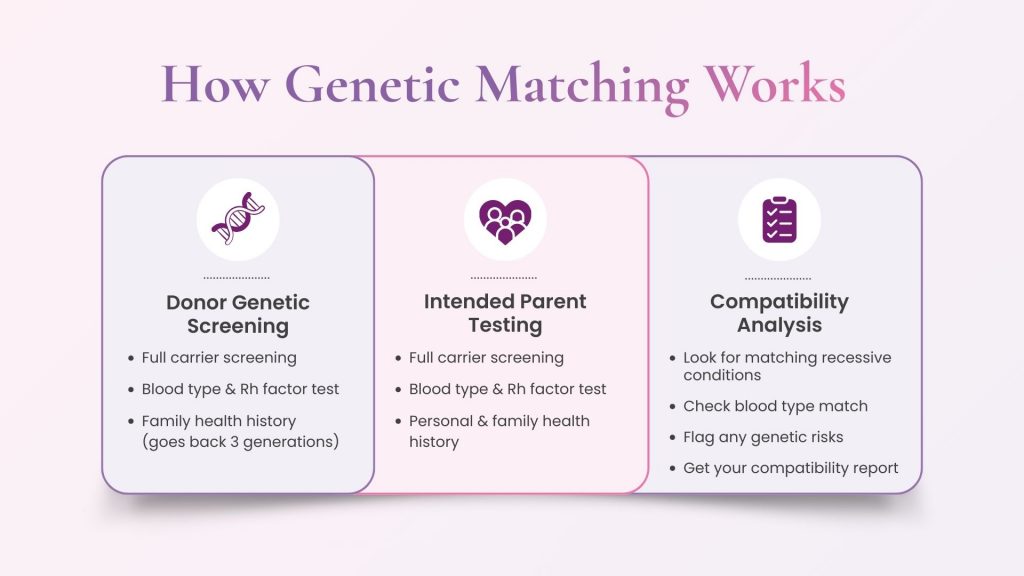
The genetic matching process involves three main steps: egg donor genetic testing, intended parents’ testing, and analysis of the results.
Donor Genetic Screening
The donor undergoes comprehensive screening to check for genetic conditions that she might transfer to the baby. She also undergoes blood tests to determine her blood type and Rh factor.
In addition to laboratory tests, the doctor interviews the egg donor to learn her personal and family medical history, going back at least three generations. They ask about any genetic conditions, hereditary diseases, or health issues that are common in her family. This conversation often reveals possible genetic conditions lab tests might miss.
Intended Parent Testing
Intended parents go through the same process. You will undergo comprehensive carrier screening to know your own genetic baseline and recessive conditions you carry. Blood tests will also be performed to determine your blood type and Rh factor.
Your medical history will be reviewed, too. The fertility experts will ask about your family’s health background, any genetic disorders in your line, and your own health. This is extremely important if you have a genetic condition or have a family history of inherited disease.
Comparison and Compatibility Analysis
Once the results of the screenings are out, they are compared side by side to see if there are any overlapping genetic conditions that could be passed to the baby.
If both of you carry the same recessive condition, there’s a 25% chance your child could inherit it from both of you and develop the disorder.
Doctors also compare blood types to avoid problems like Rh incompatibility, which can cause serious complications during pregnancy. In addition, both of your medical histories will be reviewed to determine any possible genetic risks.
You will get a compatibility report showing what they found and whether the donor is a good match. You can then compare results from different donors to make the right choice for your family.
What Conditions Are Screened?
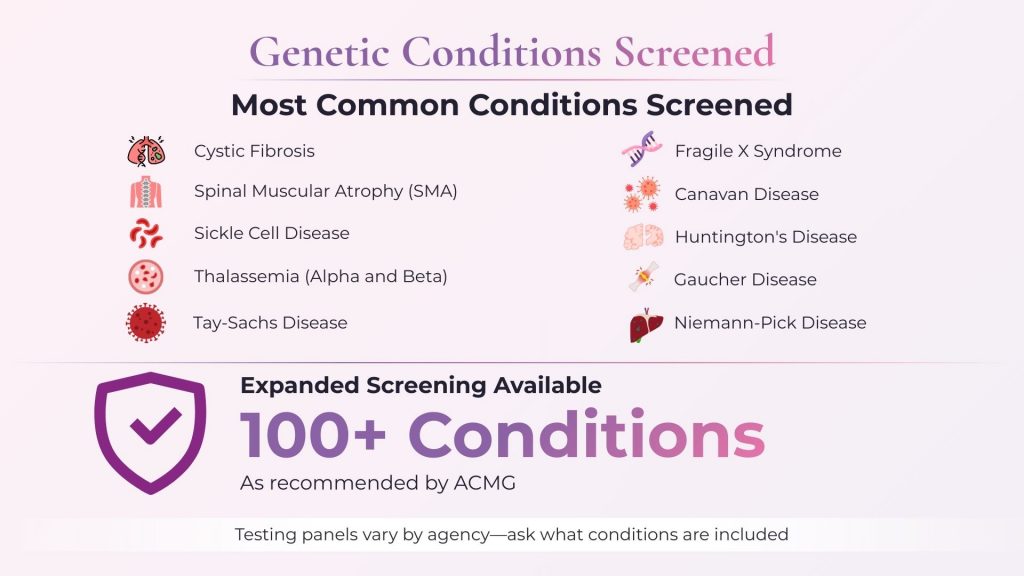
Egg donors and intended parents are screened for various conditions during the genetic matching process. The most common ones are:
- Cystic Fibrosis
- Spinal Muscular Atrophy (SMA)
- Sickle Cell Disease
- Thalassemia (Alpha and Beta)
- Tay-Sachs Disease
- Fragile X Syndrome
- Canavan Disease
- Huntington’s Disease
- Gaucher Disease
- Niemann-Pick Disease
Not all egg banks or agencies screen for the same conditions. Some offer broader testing that covers 100+ conditions as recommended by the American College of Medical Genetics and Genomics (ACMG), while others only focus on the most common ones.
Before choosing a company to work with for your egg donation, ask them which genetic conditions are included in their standard screening panel to know exactly what they check for and make the right choice for your family.
Benefits of Genetic Matching Before IVF
Genetic matching can be very beneficial to intended parents. Here are five main reasons why you should consider this process before beginning your IVF treatment.
- Reduces the Risk of Genetic Disorders
No matter how a baby is conceived, there’s always a chance that the child will be born with an inherited condition. Genetic matching can help identify any genetic risks in the egg donor or parents beforehand, reducing the odds of passing them on to the future baby.
- Improves Success Rates
IVF with donor eggs has a very high success rate, with around 50% live birth rate per embryo transfer. Genetic matching can make it even more successful. It reveals any chromosomal abnormalities in the egg donor that can lead to complications during pregnancy, allowing the intended mother or surrogate to carry the baby to full term.
- Helps You Make Better Decisions
Genetic matching gives you important information about potential egg donors before you commit. When you know a donor’s genetic makeup and risks upfront, you can compare your options and choose the right egg donor for your family.
- Lowers the Overall IVF Costs
While genetic matching does add to the IVF cost, it can actually save you money in the long run. Working with a genetically compatible donor can increase the chances of a healthy and successful pregnancy. This often means you won’t need to spend on multiple IVF cycles.
- Gives You Peace of Mind
When you know you and the egg donor are a genetic match, you can feel relaxed and hopeful about the process. Selecting a compatible donor will ease your worries, allowing you to focus on the physical and financial side of the egg donation journey.
How Lucina Prioritizes Genetic Safety
At Lucina, we take genetic safety very seriously. Each of our potential egg donors undergoes comprehensive genetic screening before they are approved. During this process, we test donors for various genetic disorders and review their personal and family health history to find any pattern of inherited conditions.
We also offer additional genetic testing that can detect genetic mutations that might be passed on to the baby. All these tests are carried out according to the guidelines set by the American Society for Reproductive Medicine (ASRM). We also help intended parents find their ideal match and guide them every step of the way.
Emotional Reassurance: Knowing You’re a Perfect Match
Egg donation can bring up a mix of complex emotions, including anxiety, fear, and doubt. Knowing you and your donor are genetically compatible reduces your worries and allows you to move forward with confidence.
When the results show you’re a good match, you won’t have to worry as much about passing on certain genetic conditions to your baby. This will make you less anxious about the process and give you peace of mind about your choice.
Before selecting an egg donor, you may want to see a genetic counselor for professional advice and guidance. They can review your compatibility report, explain any genetic risks, and help you make the right decision for your family.
FAQs
What is genetic matching in egg donation?
Genetic matching is the process of comparing the genetic information of the egg donor and intended parents to see if they are compatible for family building.
Why is genetic matching important?
It ensures you and the donor are genetically compatible, which increases your chances of a healthy pregnancy and helps avoid potential health problems down the line.
What does Lucina test for?
We test for a broad range of genetic conditions, including cystic fibrosis, SMA, and Tay-Sachs. The exact tests depend on the donor’s ethnicity and family history.
Do all donors go through genetic testing?
Yes. Every Lucina donor undergoes rigorous genetic and medical screening before they are approved.
Can I request additional testing?
Yes. You can ask for expanded genetic panels or extra compatibility testing before finalizing your match.
Does genetic matching affect the cost?
Yes, genetic matching may add to your upfront costs. It depends on your clinic, egg bank, or agency. Testing is included in our all-inclusive pricing at Lucina Egg Bank, so you won’t get any hidden or surprise fees.
Start Your Journey with Confidence — Connect with Lucina’s Genetic Counselors
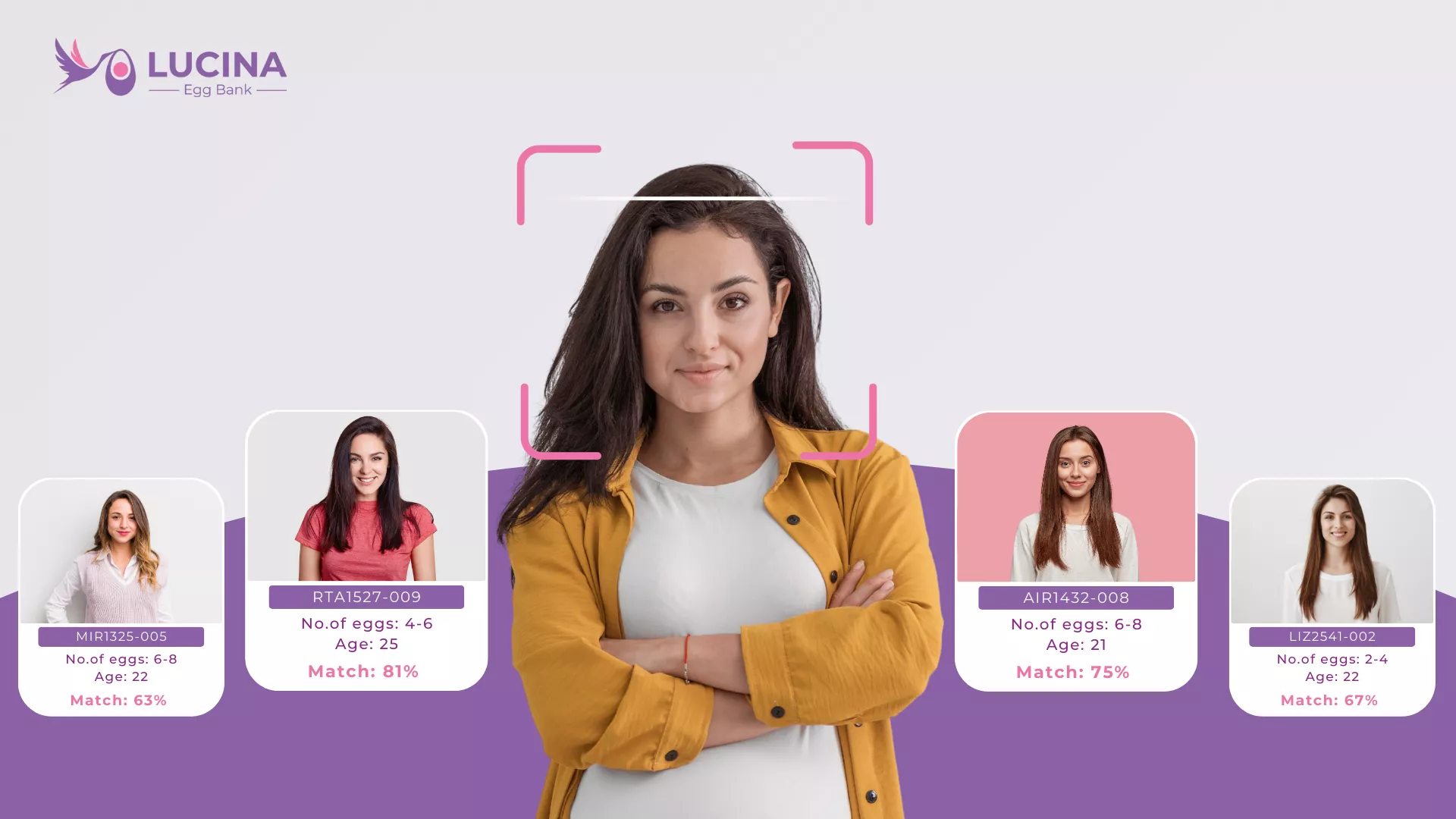
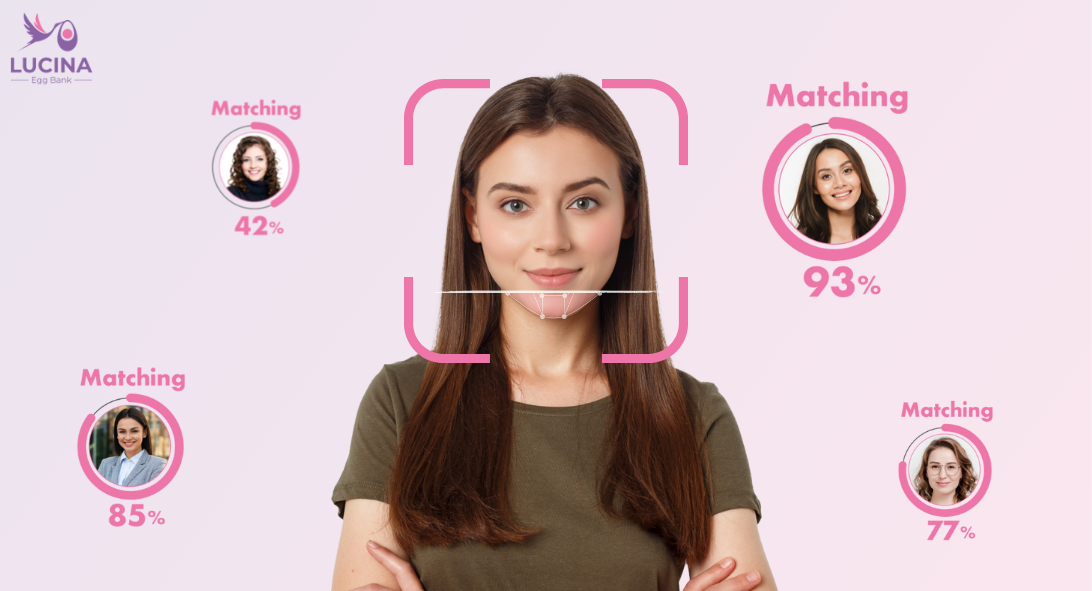
Genetic disorders not only affect the baby’s health but also their quality of life. At Lucina Egg Bank, we ensure genetic safety through our comprehensive donor screening and AI-enhanced matching process.
Explore our extensive database today to begin your donor search with confidence. You can also reach out to our team to ask any questions about genetic compatibility and other aspects of the egg donation process.

Julianna Nikolic
Chief Strategy Officer Julianna Nikolic leads strategic initiatives, focusing on growth, innovation, and patient-centered solutions in the reproductive sciences sector. With 26+ years of management experience and a strong entrepreneurial background, she brings deep expertise to advancing reproductive healthcare.

Table of Contents
- Key Takeaways:
- Why Genetic Compatibility Matters for Intended Parents
- How the Genetic Matching Process Works
- What Conditions Are Screened?
- Benefits of Genetic Matching Before IVF
- How Lucina Prioritizes Genetic Safety
- Emotional Reassurance: Knowing You're a Perfect Match
- FAQs
- Start Your Journey with Confidence — Connect with Lucina's Genetic Counselors