How to Emotionally Prepare for Parenthood Through Egg Donation

Egg donation offers a path to parenthood for people who cannot conceive on their own. But while it’s an incredible and highly rewarding journey, intended parents often experience a wide range of complex emotions when using donor eggs to build their family.
Preparing yourself mentally and emotionally for these difficult feelings can help you deal with them when they come.
Key Takeaways
- Intended parents commonly feel grief, fear, guilt, jealousy, and relief during egg donation.
- Accepting your emotions instead of ignoring them helps you process and manage them better.
- Open conversations with your partner can help clear things up and strengthen your bond during the process.
- Learning about each step of the egg donation process reduces anxiety and uncertainty.
- It’s good to speak with an infertility counselor for guidance when facing emotional challenges.
- Join support groups and online communities to get advice from families who’ve been through it.
- Start discussing egg donation with your child when they’re still young and use simple language they can easily understand.
Understanding the Emotional Journey

The decision to use donor eggs is a deeply emotional one. For many intended parents, it means letting go of dreams they’ve had since childhood—the dream of sharing a biological connection with their baby and passing down family traits.
Besides, many intended parents turn to egg donation after a long battle with infertility. They might have experienced miscarriages, failed IUI cycles, and other fertility treatments that didn’t work. After previous disappointments, it can be scary for these people to invest emotionally and financially in another attempt.
There’s also the uncertainty that comes with using donor eggs. While IVF with donor eggs has very high success rates, there’s no guarantee that it will lead to a successful pregnancy. This can make people anxious as they go through the process.
Common Feelings Intended Parents Experience
Here are the common emotions you may experience when building a family with donor eggs:
Grief: You may grieve that your child won’t inherit your features, carry your family’s genes, or share your heritage.
Fear: It’s also normal to feel anxious about the donation process because of previous disappointments.
Inadequacy and Guilt: You might feel inadequate for not being able to conceive on your own or guilty about the financial and emotional strain the process places on your family.
Jealousy: Some people struggle with jealousy. So, you may find yourself envying the egg donor, women who conceive easily, or even your partner who may share a genetic connection to the baby.
Relief: Many people feel a deep sense of relief during their egg donation journey. They see it as a new path that could help them have a baby after years of struggling with infertility.
Gratitude: You will likely feel immense gratitude towards the egg donor for helping you create a family. You may also appreciate the doctors, friends, and family members for their support during the process.
How to Prepare Mentally and Emotionally
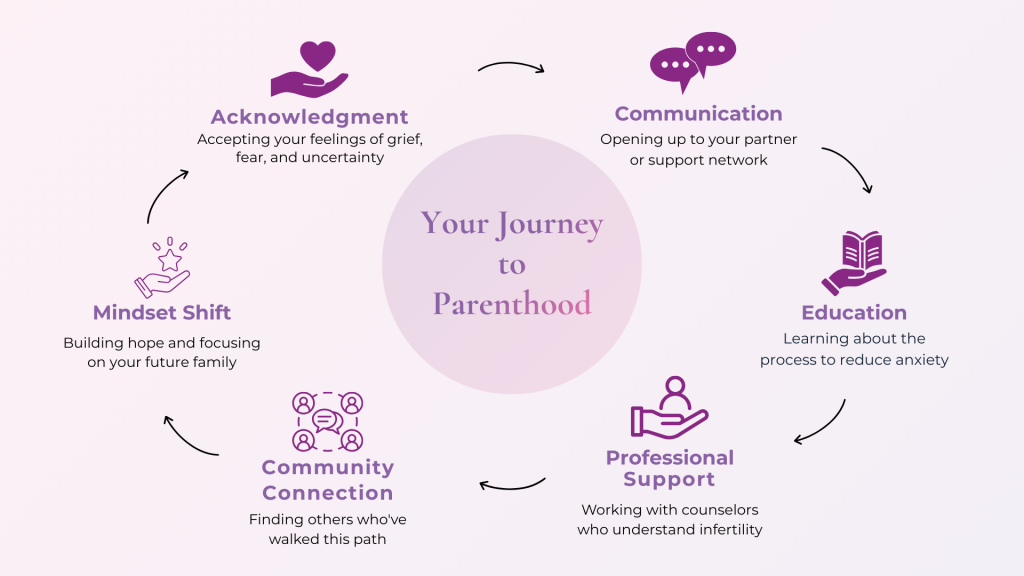
Creating a family through egg donation can bring up many complex emotions. It’s important to prepare for these feelings, so you can manage them easily when they arise. Here are four tips that can help you cope with your emotions during egg donation.
- Acceptance and Openness
The first step in managing difficult emotions is to admit you have them. It’s completely normal to feel grief, fear, and anxiety during the egg donation process.
Accepting these emotions doesn’t mean you like them. It simply means you’ve stopped denying them and are ready to work through them. This will help you make peace with any complicated feelings.
Remember, you don’t have to face it all alone. While you don’t have to tell the whole world about your feelings, keeping them to yourself can make them worse. Look for one person that you trust and let them know what you’re going through.
- Communication with Your Partner or Support Network
Have an open conversation with your partner about building your family with donor eggs. Ask if they’re afraid the process might not work. Find out whether they would feel any differently about a child they aren’t genetically related to.
While these discussions may be difficult, they can help you understand where both of you stand regarding the egg donation.
And if you’re embarking on this journey alone, identify one person in your life with whom you can share your feelings and concerns before starting the process.
- Working with a Counselor
You might also want to speak with a counselor who specializes in infertility or third-party reproduction. They deeply understand the complex emotions that come with egg donation and can guide you on how to navigate the emotional side of donor IVF.
- Connecting with Other Families
Connect with other people who have built their families through egg donation. They have probably experienced the negative feelings you might be facing and can give invaluable support.
Look for online communities or local support groups for egg donation to meet with people who have gone through the same process and are now raising their kids.
- Educating Yourself About Egg Donation
Knowing what to expect from each step of the donation process can reduce anxiety. Find time to learn the basics about egg donation. Understand how donor egg cycles work, what medications are involved, what happens during egg retrieval, and how long it typically takes.
Don’t hesitate to ask your clinic any questions if you need more clarification before starting your journey.
Building a Positive Mindset for Your Journey
The path to parenthood through egg donation is often filled with many ups and downs. Cultivating a positive mindset can help you stay strong and confident when going through emotional and physical challenges. Here are tips that can help you build a positive outlook for your journey.
Remember Your Why
Whenever the process feels overwhelming, remind yourself of the reason you’re doing it. You are doing it because you want to become a parent. You want to hold your baby, raise them, and love them. Focus on the family you’re building, not what you’re enduring.
Stop Comparing Yourself with Other People
Comparing your path to others will only breed resentment and make you feel worse. While the story of your child may be different, it does not make it less beautiful. The most loved children are often those we fought the hardest for.
Focus on What You’re Gaining
Using donor eggs means one of you won’t be biologically related to the child. But instead of focusing on the genetic connection you’re losing, shift your mind to what you are gaining—the chance to have your own baby.
Visualize Your Desired Outcome
Picture what it will feel like if the egg donation cycle works. Imagine the joy of finally holding your baby and starting the family you’ve longed for. You don’t need a guarantee to allow yourself to dream. Giving yourself that hope will make the whole journey feel lighter.
Surround Yourself with the Right People
The people around you can determine your mindset. Avoid those who constantly drain you or make you feel worse. Look out for people who’ve been through the same process and came out okay. Read stories of successful donor egg families and check out resources on emotional preparation for egg donation.
How Lucina Supports Emotional Well-being
At Lucina, we provide ongoing emotional support for intended parents. Our streamlined process gives you immediate access to frozen eggs, so you can skip the long wait and uncertainty of a fresh cycle.
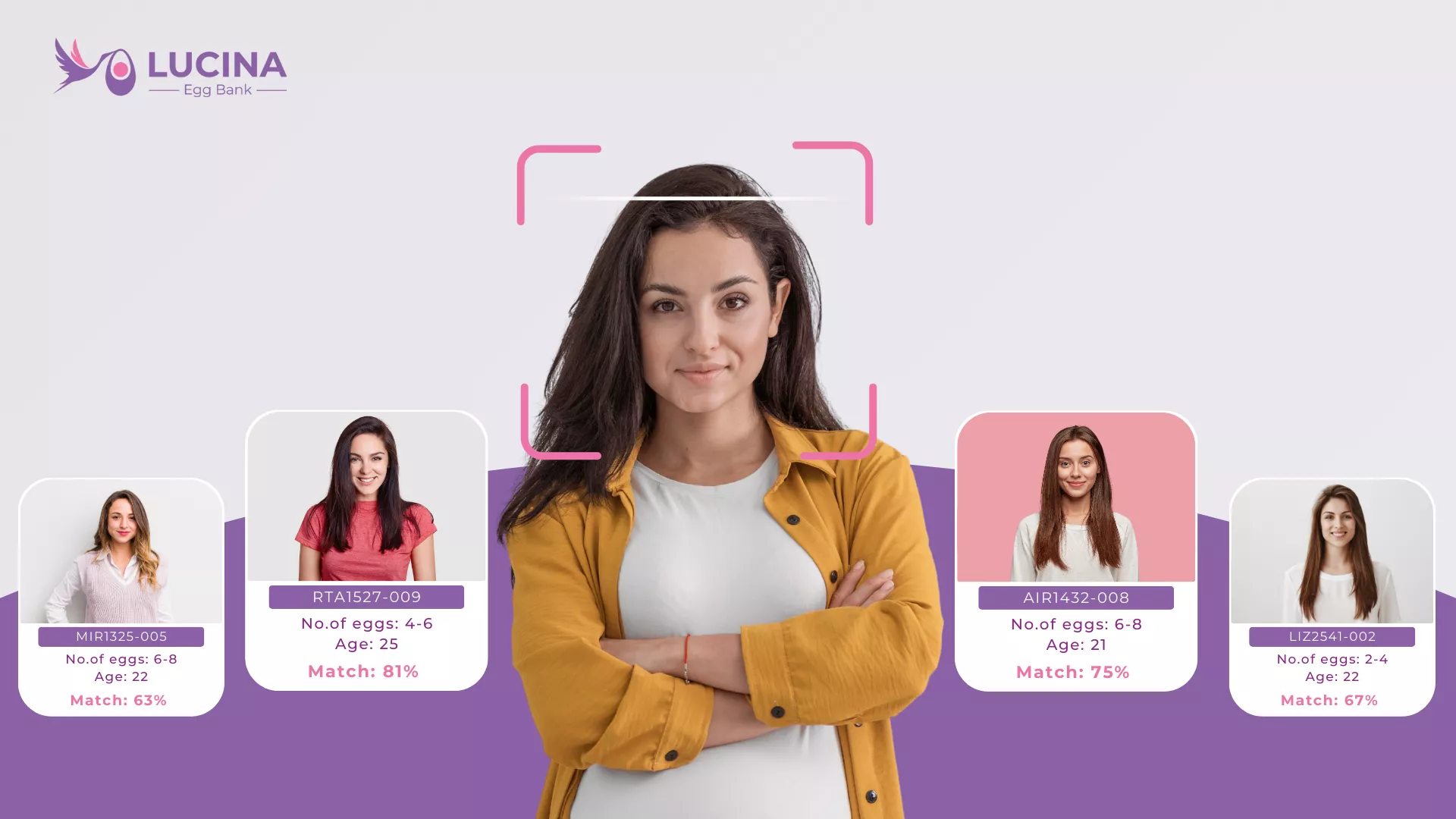
We can also help you explore our donor database and select the right egg donor for your family while guiding you on how to work with your clinic.
Lucina also provides educational resources that can help you navigate the emotional side of your egg donation journey.
Talk about Egg Donation with Family and Your Future Child
Discussing egg donation with your loved ones can feel daunting. But it’s important to have these conversations to make sure they understand and fully embrace your story. Here’s how to explain egg donation to your family.
Choosing the Right Time
There’s no perfect time to tell your family about using an egg donor. While some people share early to have emotional support through the process, others prefer to wait until they’re pregnant or even until after the baby is born.
It all comes down to what feels right for you, your relationships with family members, and whether you want them alongside you or want to keep it private for now.
As for your future child, experts recommend starting the conversation when they’re toddlers. You don’t have to explain it all at once. Just use simple terms they can understand and provide more details as they grow up.
Setting the Tone
The way you talk about egg donation may determine how your family and baby take it. If you approach the topic with facts and genuine excitement, your loved ones will also be excited and see it as a normal way of having children. Be straightforward and don’t overwhelm them with unnecessary information.
Establishing Boundaries
Before starting the conversation, set clear boundaries about what you’re comfortable sharing. You don’t have to tell anyone details about your health history, the donor’s identity, or fertility struggles.
Your family may ask intrusive questions out of curiosity. So, you need to be firm with your answers without sounding rude.
Handling Difficult Reactions
If your family members react poorly, try to give them time to process the information. People who seem uncomfortable at first often come around once they’ve had time to think and learn about egg donation.
FAQs
Why Is Emotional Preparation Important Before Egg Donation?
It helps intended parents handle complex feelings and start the journey with clarity, confidence, and emotional balance.
How Can I Manage Feelings Of Loss Or Uncertainty?
Seek counseling if you’re experiencing any complicated emotions. Focusing on your future family can also help you accept these negative feelings and handle them effectively.
What Emotions Do Intended Parents Experience?
Intended parents often go through a mix of difficult emotions, including grief, fear, anxiety, guilt, jealousy, hope, relief, and uncertainty.
How Do I Talk To My Child About Being Conceived Through Egg Donation?
Start the conversation when they’re young. Be honest and use simple language. This will allow your children to embrace their story with pride and understanding.
What If I Feel Anxious About Using Donor Eggs?
This is a common and normal feeling for intended parents. If you’re getting cold feet, seek emotional guidance from a trusted professional. Connecting with others in similar situations can also make these feelings easier to overcome.
Begin Your Path to Parenthood with Confidence
Building a family through egg donation is a big decision. It’s a journey filled with hope, courage, grief, and uncertainty. And at Lucina Egg Bank, we’re here to support you every step of the way.
Are you looking to create a family with donor eggs? Explore our extensive donor database to find the best match for your journey. If you are experiencing any complex emotions about the process, check out our emotional preparation guides for helpful tips. Or contact us to talk with a Lucina Counselor today.

Julianna Nikolic
Chief Strategy Officer Julianna Nikolic leads strategic initiatives, focusing on growth, innovation, and patient-centered solutions in the reproductive sciences sector. With 26+ years of management experience and a strong entrepreneurial background, she brings deep expertise to advancing reproductive healthcare.

Table of Contents
- Key Takeaways
- Understanding the Emotional Journey
- Common Feelings Intended Parents Experience
- How to Prepare Mentally and Emotionally
- Building a Positive Mindset for Your Journey
- How Lucina Supports Emotional Well-being
- Talk about Egg Donation with Family and Your Future Child
- FAQs
- Begin Your Path to Parenthood with Confidence