
Building a family is one of life’s most profound journeys, but the path isn’t always a straight line. When natural conception isn’t an option, surrogacy with an egg donor bridges the gap between hope and reality.
By uniting the genetic potential of a donor with the carrying capacity of a gestational surrogate, this approach offers a transformative solution for those facing complex fertility challenges.
It is more than just a medical procedure; it is a collaborative pathway that allows intended parents to overcome biological barriers and finally bring their baby home.
Key Takeaways
- In this process, the egg donor provides the genetics, while the gestational surrogate carries the pregnancy. They are two different people.
- Using frozen donor eggs can shorten your journey by 3–6 months because you do not need to synchronize the donor’s cycle with the surrogate.
- While surrogacy is a significant investment ($100k+), using frozen donor eggs is typically 30–40% more affordable than a fresh donor cycle.
- Combining young, healthy donor eggs with a screened surrogate offers one of the highest success rates in fertility medicine.
The Difference: Egg Donor vs. Gestational Surrogate
To navigate this journey successfully, it is critical to understand the specific roles involved. In modern IVF, the egg donor and the surrogate are almost always two different women:
- The Egg Donor: She provides the oocytes (eggs). She undergoes rigorous FDA-mandated screening, ovarian stimulation, and egg retrieval, but does not carry the baby. Her role ends once the eggs are retrieved or, in the case of Lucina Egg Bank, once the frozen eggs are selected.
- The Gestational Surrogate: She is the “carrier.” She has no genetic link to the child. Her uterus is prepared to receive the embryo created from the donor’s egg and the intended father’s (or donor’s) sperm.
This distinction is important not only medically but also ethically, as it adheres to the specific guidelines for gestational carrier arrangements established by the American Society for Reproductive Medicine (ASRM).
How Egg Donation and Surrogacy Work Together
Egg donation provides healthy, high-quality donor eggs to create embryos, while surrogacy ensures that these embryos are carried safely to term.
This combination is particularly common for intended mothers unable to produce viable eggs, single fathers, and same-sex couples building a family who require both genetic material and a gestational carrier.
The IVF Process: Connecting the Pieces
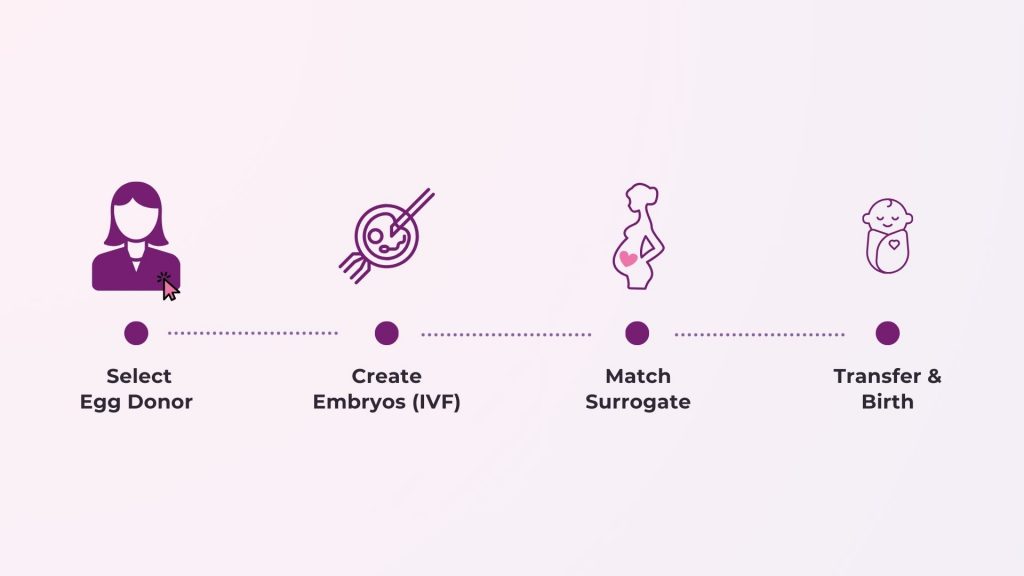
In vitro fertilization (IVF) is the cornerstone that connects egg donation and surrogacy. By enabling the fertilization of donor eggs in a controlled laboratory environment, the donor egg IVF process allows fertility specialists to perfectly synchronize the donor’s cycle with the intended parents’ timeline to create viable embryos.
The 4 Key Steps:
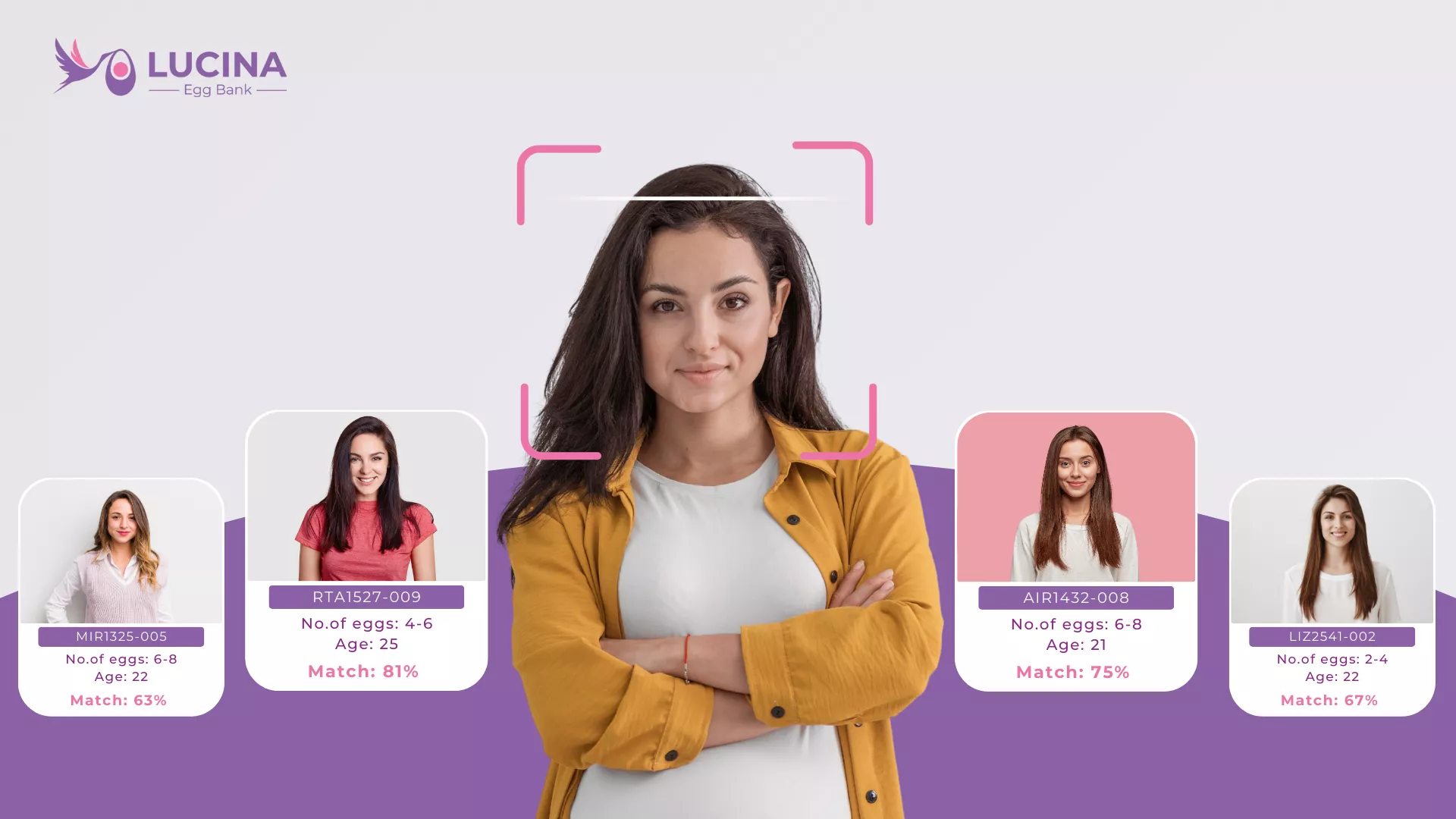
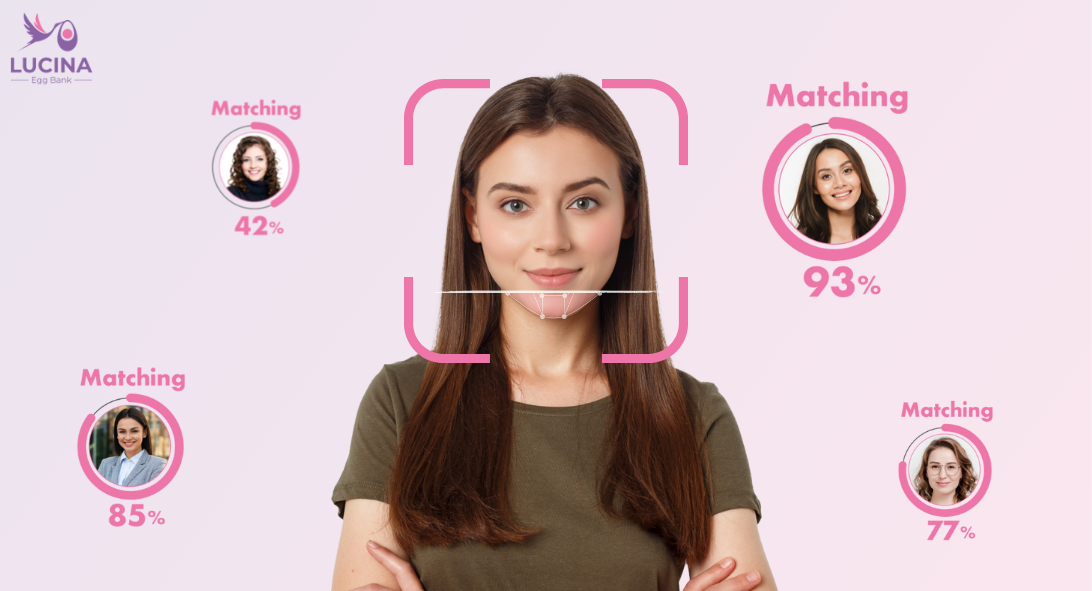
- Selecting an Egg Donor: Intended parents work with an egg bank to choose a donor based on physical characteristics, education, or ethnicity.
- Creating Embryos: The donated eggs are fertilized using the intended father’s sperm. Because Lucina uses vitrified (flash-frozen) eggs, we consistently achieve success rates with frozen eggs that are comparable to fresh cycles.
- Finding a Gestational Surrogate: The next step involves choosing a gestational surrogate. This individual undergoes medical and psychological screening to ensure she is prepared. However, the decision to work with a surrogate is not just medical—it involves understanding the emotional and legal bond you will share for the next nine months.
- Embryo Transfer: Once the surrogate’s lining is ready, the embryo is transferred to her uterus to begin the pregnancy.
Timeline: Fresh vs. Frozen Donor Eggs
When planning a surrogacy journey, one of the biggest decisions is choosing between a “Fresh” donor cycle and “Frozen” donor eggs.
Option A: Frozen Donor Eggs (The Faster Route)
- Timeline: Immediate start.
- Why it helps: Because the eggs are already retrieved and stored at a bank like Lucina, you do not need to wait for a donor’s cycle to synchronize with your surrogate. You simply select your cohort, and the eggs are shipped to your fertility clinic. This streamlined logistics is often why comparing fresh vs. frozen costs tends to favor the frozen option for those on a strict budget.
Option B: Fresh Donor Cycle
- Timeline: 3–6 months (or longer).
- Why it takes longer: You must match with a donor, wait for her medical screening and legal contracts, and then synchronize her menstrual cycle perfectly with your surrogate’s cycle.
| Feature | Frozen Donor Eggs (Lucina) | Fresh Donor Cycle |
| Timeline | Immediate Start | 3–6 Months |
| Cost (Eggs) | $14k – $20k | $25k – $45k+ |
| Egg Quantity | Fixed Cohort Size | Variable / Unpredictable |
| Flexibility | High (Your schedule) | Low (Donor’s schedule) |
The Cost of Surrogacy with Egg Donation
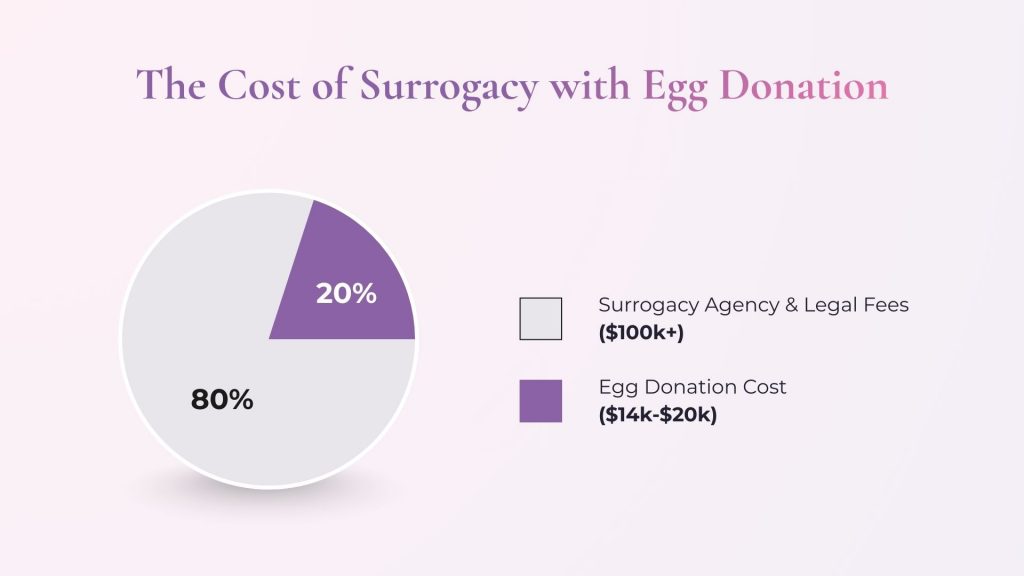
Budgeting is a major consideration for intended parents during the planning stage. While costs vary by clinic and agency, you should budget for two distinct cost centers:
- The Surrogacy Component (agency fees, surrogate compensation, legal fees, and prenatal care)
- Estimated Range: $100,000 – $150,000+
- The Egg Donation Component
- Frozen Eggs (Lucina): Typically range from $14,000 – $20,000per cohort. This is often more cost-effective because you avoid paying for the donor’s travel, insurance, and specific legal fees directly.
- Fresh Cycle: Can range from $25,000 – $45,000+due to variable medical, travel, and logistical costs.
To help protect your investment, Lucina offers unique outcome-based guarantee programs, including a Live Birth Guarantee, which can provide financial peace of mind during this complex process.
Important Considerations: Emotional, Medical & Legal

Choosing egg donation and surrogacy is a decision that requires careful thought, planning, and preparation.
Emotional Preparation
For many intended parents, this path is chosen after experiencing infertility, which can bring feelings of grief, hope, and vulnerability. It’s important to prepare emotionally for the highs and lows of the process.
Medical Success
Working with experienced fertility clinics is vital. According to CDC data on Assisted Reproductive Technology, success rates rely heavily on the quality of the egg and the health of the carrier’s uterus. Using a young, healthy egg donor maximizes the embryo‘s genetic potential.
Legal Guidance
From a legal perspective, surrogacy laws vary significantly by location. Clear contracts are crucial for protecting the rights of all parties involved. We strongly recommend checking the surrogacy laws in your specific state before beginning. Key legal considerations include:
- Drafting agreements that outline the roles, rights, and responsibilities of the gestational surrogate and intended parents.
- Ensuring parental rights are established, particularly for intended parents in same-sex relationships.
- Addressing financial arrangements, such as compensation for the surrogate and medical expenses.
Frequently Asked Questions
Whose DNA does the baby have in surrogacy?
The baby will inherit DNA from the egg donor and the sperm provider (intended father or sperm donor). The gestational surrogate does not share DNA with the child.
Can a surrogate also be the egg donor?
In “Gestational Surrogacy” (the modern standard), the surrogate is not the egg donor. This reduces legal risks and ensures the surrogate has no genetic claim to the child.
Is it cheaper to use frozen donor eggs for surrogacy?
Yes, generally using frozen donor eggs is 30-40% cheaper than a fresh cycle because the donor’s retrieval costs are shared, and the logistics are simplified.
Final Thoughts: Moving Forward at Your Own Pace
Building a family through surrogacy involves complex logistics, but securing your egg donor can be the single step that brings your future into focus.
Because frozen donor eggs are immediately available, you have the flexibility to secure your cohort now, ensuring your embryos are created and ready whenever your gestational carrier is cleared for transfer. You don’t need to make every decision today to start visualizing the possibilities.
We invite you to simply explore. Browse our diverse gallery of FDA-screened donors to see who resonates with your family’s story—completely free of cost and without obligation.

Julianna Nikolic
Chief Strategy Officer Julianna Nikolic leads strategic initiatives, focusing on growth, innovation, and patient-centered solutions in the reproductive sciences sector. With 26+ years of management experience and a strong entrepreneurial background, she brings deep expertise to advancing reproductive healthcare.